

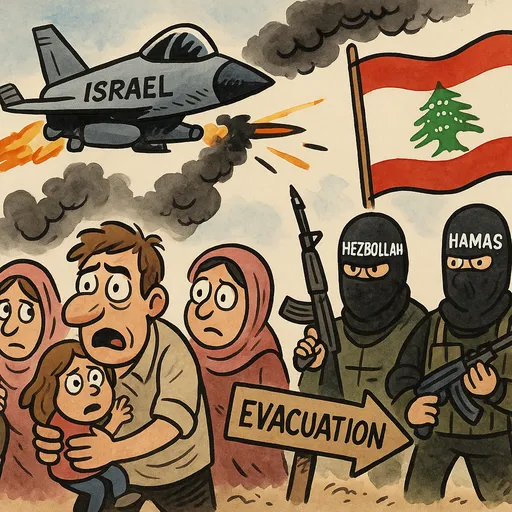
Recent Israeli airstrikes have targeted Hezbollah and Hamas positions in southern and eastern Lebanon, marking a significant escalation in ongoing hostilities along the Israel-Lebanon border. Israel has issued evacuation warnings for several Lebanese villages, reflecting the seriousness of the military operations and the risk posed to civilians. Lebanese authorities and regional leaders have condemned the strikes, emphasizing that these actions undermine fragile peace efforts and increase the potential for broader conflict. The situation remains highly volatile, with both sides preparing for possible further confrontations while international observers express concern over escalating instability in the Middle East.
Articles from Israeli and allied sources emphasize the airstrikes as targeted operations against Hezbollah and Hamas facilities, portraying them as necessary measures to disrupt militant capabilities and protect Israeli security. They highlight the evacuation warnings as precautionary steps to minimize civilian casualties amid ongoing regional hostilities. This viewpoint frames the strikes as justified responses to persistent threats along Israel's northern border.
Lebanese and regional sources strongly condemn the Israeli airstrikes, arguing that these attacks undermine efforts to de-escalate tensions and threaten fragile peace initiatives. They stress the negative impact on civilian populations and warn that such military actions exacerbate instability and increase the risk of wider conflict in the region. This perspective calls for restraint and highlights the diplomatic challenges posed by continued hostilities.