
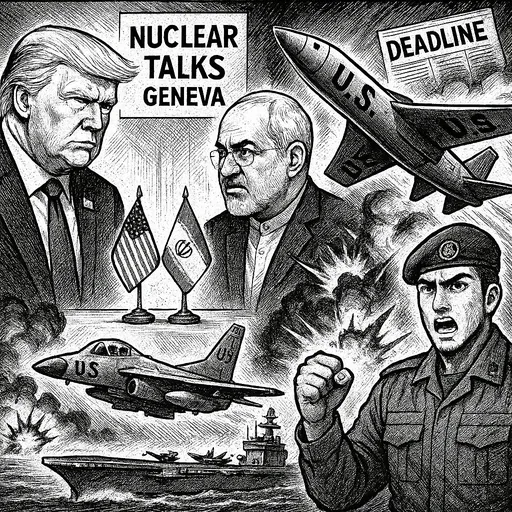
The US and Iran are engaged in a complex mix of diplomatic negotiations and military posturing amid escalating tensions. While nuclear talks in Geneva have shown some progress and cautious optimism, the US, under President Trump, has issued ultimatums with looming deadlines, warning of potential military action if agreements are not reached. Concurrently, the US has significantly increased its military presence near Iran, preparing for possible strikes, which Iran has met with threats of decisive retaliation. International actors, including Russia and the European Union, have called for restraint to avoid unprecedented escalation, while Israel remains vigilant, warning of severe responses to Iranian aggression. The situation remains highly volatile, balancing fragile diplomatic efforts against the risk of imminent conflict in the Middle East.
This cluster reflects the US perspective, particularly under President Donald Trump, emphasizing a tough stance on Iran with deadlines for nuclear agreements and readiness for military action. The US combines diplomatic negotiations with significant military build-up and threats of strikes to pressure Iran into compliance. The narrative underscores a strategy of ultimatums and preparedness for conflict if diplomacy fails, highlighting the urgency and high stakes perceived by the US administration.
This group represents Iran's stance, which combines openness to nuclear negotiations with firm warnings against military aggression. Iran signals willingness to discuss nuclear issues and has reported progress in talks, yet it simultaneously strengthens military defenses and issues threats of decisive retaliation against any attacks. Iran's perspective stresses sovereignty, deterrence, and readiness to respond to perceived imperial aggression, reflecting a dual approach of diplomacy and military preparedness.
This cluster includes viewpoints from other international actors such as Russia, the European Union, Israel, and regional observers who express concern over escalating tensions and the risk of conflict. Russia and the EU call for restraint and diplomatic solutions to prevent unprecedented escalation, while Israel issues stern warnings about Iran's regional threats. These perspectives highlight the broader geopolitical implications and the fragile stability of the Middle East amid US-Iran tensions.