
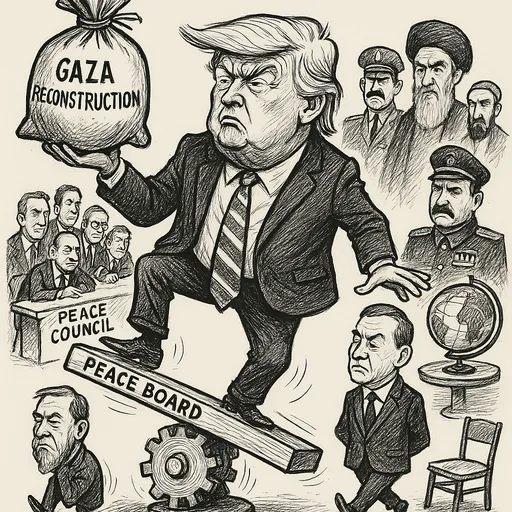
U.S. President Donald Trump launched the Peace Board and Peace Council initiatives aimed at fostering peace and reconstruction in Gaza, pledging billions of dollars and coordinating troop contributions from various countries. The inaugural meetings gathered representatives from over 40 nations, with significant financial commitments announced, including $10 billion from the U.S. However, the initiatives faced skepticism and criticism regarding their feasibility, transparency, and geopolitical implications, especially concerning Iran and the involvement of authoritarian leaders. Notably, some countries like Belarus and the Vatican declined participation due to diplomatic tensions or differing approaches. The efforts reflect Trump's continued engagement in international diplomacy, blending aid promises with strategic warnings, while the global community remains divided on the council's legitimacy and effectiveness.
This group includes countries and leaders actively participating in the Peace Board and Council, endorsing Trump's initiatives to rebuild Gaza and promote peace. They highlight the significant financial pledges, troop contributions, and diplomatic cooperation aimed at stabilizing the region. The perspective is optimistic about the council's potential to coordinate international efforts and foster dialogue among diverse stakeholders.
This cluster reflects skepticism and criticism from various international observers and countries regarding the Peace Board and Council's effectiveness, transparency, and geopolitical motives. Concerns include the dominance of authoritarian figures, unresolved political issues in Gaza, the ambiguous role of the council vis-à-vis the United Nations, and the mixed messages combining peace efforts with military threats, especially towards Iran. The perspective questions the feasibility and impartiality of Trump's peace initiatives.
This group focuses on countries and entities that declined or were unable to participate in the Peace Board and Council meetings due to diplomatic issues, visa denials, or differing policy approaches. Belarus notably faced visa refusals, while the Vatican chose not to join, signaling fractures and challenges in achieving broad international consensus. These absences underscore ongoing geopolitical tensions and the limits of the council's inclusivity.