
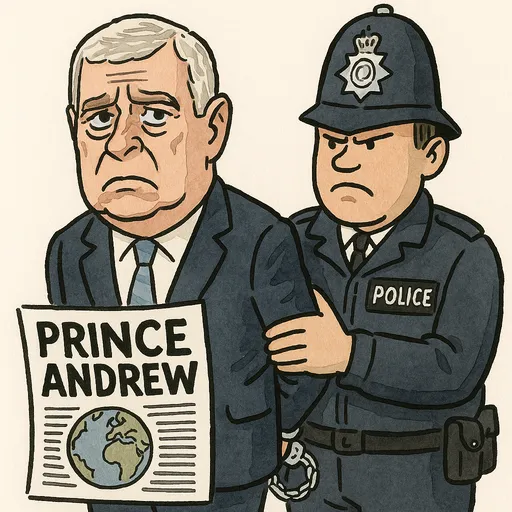
Prince Andrew Mountbatten-Windsor was arrested in the United Kingdom on suspicion of misconduct in public office, linked to allegations involving Jeffrey Epstein. The arrest, unprecedented for a senior royal, has led to intense legal scrutiny and public debate about the monarchy's future and potential political repercussions. Various countries report on the ongoing investigations, police searches, and the royal family's responses, including statements from King Charles III emphasizing the rule of law. The case has reignited global calls for justice related to Epstein's crimes and raised questions about the British government's handling of the situation. Andrew was held in custody for several hours before being released under investigation, with further inquiries continuing.
Articles from the UK, New Zealand, Australia, and related Commonwealth countries focus on the legal procedures following Prince Andrew's arrest, the unprecedented nature of the event for the British monarchy, and the potential impact on royal succession and public trust. They highlight official statements, including King Charles III's remarks, and detail the custody and release of Andrew under investigation.
European sources emphasize the broader political consequences of the arrest, discussing the potential destabilization of the British monarchy and government pressures. They analyze the historical significance of the arrest, possible unprecedented government measures, and the implications for the Windsor family's reputation amid ongoing investigations.
Articles from Africa, Latin America, and Asia highlight the connection between Prince Andrew's arrest and the Jeffrey Epstein scandal, underscoring global demands for accountability and justice. They report on police searches, allegations of leaking state secrets, and the international dimension of the investigations, reflecting widespread media and public interest beyond the UK.