
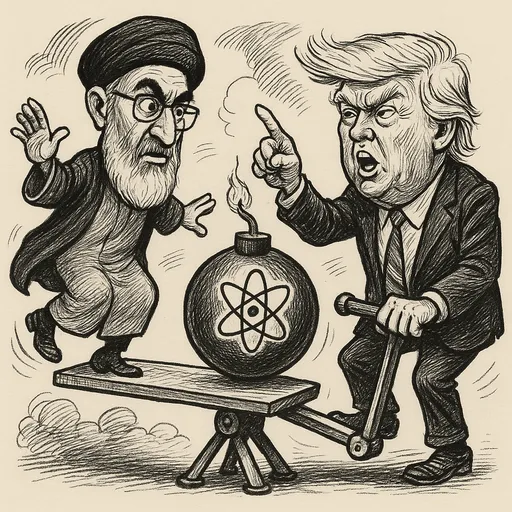
The US-Iran nuclear talks are marked by cautious optimism from Iranian officials who see a historic opportunity to reach an agreement, contingent on prioritizing diplomacy and mutual concessions. Meanwhile, US President Donald Trump maintains a dual approach, combining threats of military action with calls for diplomacy, reflecting internal divisions within US leadership and military caution about potential conflict. The international community watches closely as negotiations resume in Geneva under mediation, amid persistent risks of escalation and complex regional dynamics. Iran asserts its right to peaceful nuclear technology while rejecting US pressure, emphasizing readiness to negotiate but also warning against yielding to coercion. Overall, the situation remains fragile with diplomatic efforts balanced against military posturing and geopolitical tensions.
Iranian officials express a hopeful and proactive stance towards reaching a nuclear agreement with the United States. They emphasize readiness to make concessions and prioritize diplomacy to resolve longstanding disputes, viewing the current moment as a historic opportunity to achieve a deal that balances Iran's nuclear ambitions with international concerns. This perspective highlights Iran's desire to avoid conflict and engage constructively in negotiations.
US President Donald Trump adopts a confrontational rhetoric, combining threats of military strikes with a stated preference for diplomacy, reflecting a 'carrot and stick' approach. His public statements reveal frustration and a willingness to consider force if negotiations fail, while also facing internal military skepticism about the feasibility and consequences of such actions. This viewpoint underscores the tension between aggressive posturing and cautious strategic calculation within US leadership.
Senior US military officials and analysts express hesitation and caution regarding military action against Iran, warning of high casualties and complex regional repercussions. This perspective contrasts with political rhetoric, emphasizing the risks and challenges of a potential strike and advocating for careful consideration of diplomatic alternatives. It reflects a pragmatic approach within the US defense establishment amid escalating tensions.
Analyses highlight the US-Iran conflict as part of deeper structural tensions in global power dynamics and hegemonic transitions, with Iran positioned at a critical crossroads. The potential for wider regional conflict involving various armies and militias is underscored, illustrating the complexity and volatility of the Middle East amid nuclear negotiations. This viewpoint situates the talks within a larger framework of imperial competition and geopolitical instability.