
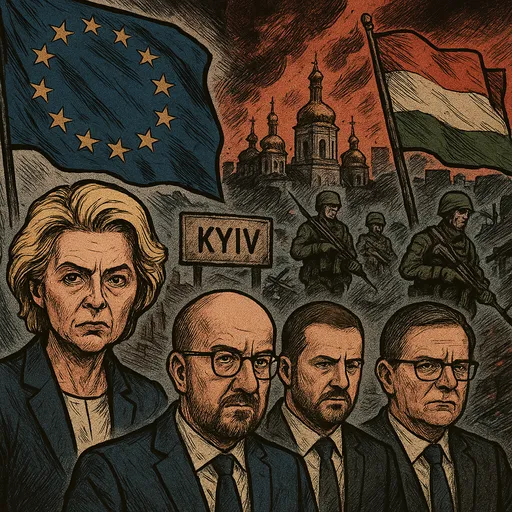
European Union member states and leaders have consistently reaffirmed their political, financial, and military support for Ukraine in response to Russia's ongoing aggression. High-profile visits to Kyiv by EU officials and leaders underscore a strong commitment to Ukraine's sovereignty and territorial integrity, alongside efforts to bolster defense capabilities and economic resilience. However, internal challenges persist, including delays in sanction packages, vetoes by some member states like Hungary, and uneven burden-sharing among EU countries. While some voices call for increased military aid and sanctions, others highlight logistical difficulties and political divisions within the EU. Overall, the EU remains a key actor in supporting Ukraine, balancing solidarity with complex internal dynamics and strategic considerations.
Countries such as France, Germany, Portugal, and the Netherlands emphasize robust military aid, including supplying equipment, training, and advanced weaponry like drones and missiles. They also highlight the importance of unity and coordinated sanctions against Russia, with leaders visiting Kyiv to demonstrate solidarity and commitment to Ukraine's EU accession prospects. This group stresses the necessity of sustained and increased support to ensure Ukraine's defense and political integration with Europe.
Nations including Croatia, Romania, Slovakia, Lithuania, Latvia, and Moldova focus on unwavering support for Ukraine's sovereignty and territorial claims, opposing any concessions in peace negotiations. They actively engage in defense cooperation, humanitarian aid, and political backing, often highlighting regional security concerns and the risk of conflict spillover. This cluster underscores the strategic importance of Ukraine's stability for Eastern Europe and advocates for continued EU financial and military assistance.
Some voices within the EU, including from Slovakia, Hungary, and certain MEPs, point to internal divisions, vetoes, and logistical obstacles that hinder effective support for Ukraine. Reports of delayed aid, disagreements over sanctions, and uneven burden-sharing reveal political complexities and differing national interests. Criticism also arises about the EU's policies potentially exacerbating the conflict, reflecting ongoing debates about the best approach to the war and the limits of European unity.