
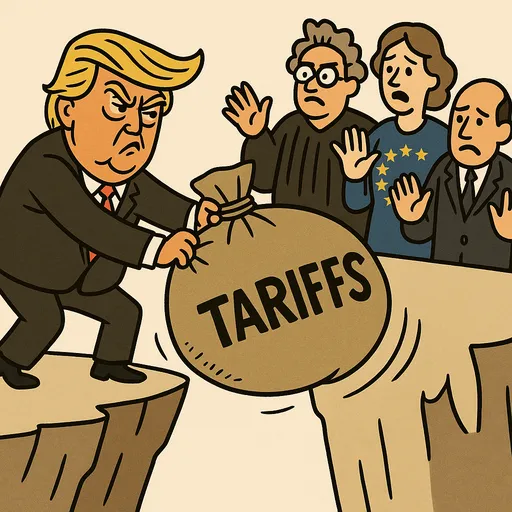
President Donald Trump's imposition of global tariffs, initially set at 10% and later increased to 15%, has significantly influenced international trade relations. The U.S. Supreme Court struck down many of these tariffs, ruling that Trump exceeded his authority under emergency powers, leading to suspension of tariff collections and legal uncertainty. Despite the rulings, Trump vowed to maintain and even strengthen tariffs, emphasizing protectionism and economic nationalism. The European Union and other global partners responded by pausing or suspending trade agreements, reflecting heightened tensions and concerns over trade stability. Various countries and exporters have expressed apprehension about the economic impact, while some leaders called for fair treatment and dialogue to ease trade conflicts.
From the U.S. perspective, Trump's administration pursued aggressive tariff hikes to protect domestic industries, initially imposing a 10% global tariff and planning to raise it to 15%. Despite the Supreme Court ruling that invalidated many of these tariffs as exceeding presidential authority, Trump insisted on maintaining and strengthening tariffs, framing them as essential to a new economic 'golden age.' The U.S. government adjusted enforcement by suspending tariff collections on invalidated tariffs while continuing to implement new duties under different legal bases. This reflects a stance of economic protectionism combined with legal and political maneuvering to sustain trade pressure.
The European Union and allied countries have reacted to the U.S. tariff measures and Supreme Court rulings by pausing or suspending trade agreements with the United States, citing uncertainties and the need for clarity on tariff policies. European exporters and businesses face increased costs and disruptions, leading to concerns about escalating trade tensions and economic instability. The EU's stance emphasizes protecting its industries and seeking fair negotiations while signaling disapproval of unilateral U.S. tariff actions.
China and other international partners have expressed strong opposition to the unilateral tariffs imposed by the U.S., urging cancellation of these measures following the Supreme Court's decision. China highlights issues such as tariff evasion and the negative impact on bilateral relations, advocating for stabilized economic ties. Other countries, including Brazil, call for equitable treatment and dialogue to avoid escalating trade conflicts and promote cooperation. These perspectives reflect concerns over protectionism and the desire for a more balanced global trade environment.