
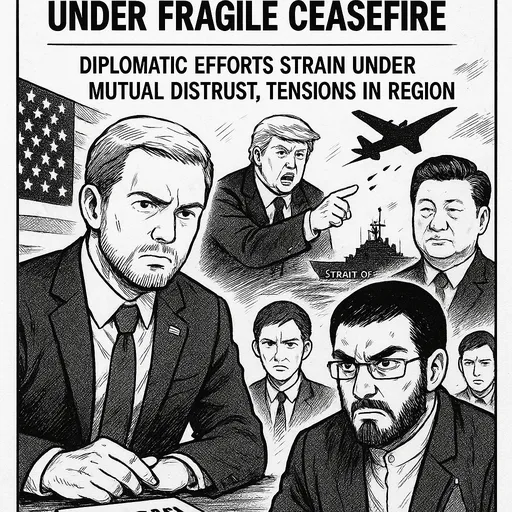
High‑stakes US–Iran negotiations have been convened in Islamabad under a fragile two‑week ceasefire brokered by Pakistan, but widespread mutual distrust and competing preconditions limit expectations for a rapid breakthrough. The United States combines heavy pressure — including repeated threats by President Trump and a sustained military posture — with a diplomatic push led by envoys such as J.D. Vance and other officials seeking constrained, ‘good‑faith’ engagement. Iran has presented formal proposals and tied talks to conditions such as a Lebanon ceasefire and release of frozen assets, while hardline elements in Tehran signal a firm negotiating stance. Regional and global actors, notably China and Russia, have sought to mediate or endorse talks, and analysts warn that Israeli strikes, Strait of Hormuz tensions and market reactions (notably oil and stocks) could quickly derail the process. Overall, reporting emphasizes cautious diplomacy amid low expectations and the persistent risk that threats or ceasefire violations will reopen confrontation.
U.S. official rhetoric and actions are dominated by pressure: threats of renewed strikes, extended military deployments, and public claims that Iran lacks leverage. This posture mixes coercion with conditional pauses aimed at extracting concessions while maintaining readiness to escalate if talks fail.
Alongside hardline messaging, U.S. envoys and officials publicly push for direct talks and pragmatic steps, emphasizing negotiations under defined 'good‑faith' conditions and seeking detainee releases and sanctions discussions. The administration projects cautious optimism while warning Iran against undermining the process.
Tehran has set clear preconditions for substantive talks (including a Lebanon ceasefire and release of assets), circulated a 10‑point plan, and deployed a multi‑committee delegation led by senior figures; parts of the Iranian political spectrum are adopting a firm negotiating posture. Iran’s messaging stresses reciprocity and links regional issues to any bilateral settlement, reflecting deep mistrust of U.S. intentions.
Pakistan is foregrounded as the host and facilitator, tightening security around Islamabad while preparing to receive delegations and mediate discussions aimed at converting a tentative ceasefire into a longer truce. Reporting highlights Islamabad’s diplomatic spotlight and logistical role, though analysts stress limits to what a third‑party venue alone can achieve.
External actors and analysts play active mediator or commentator roles: Moscow and Beijing publicly support diplomacy and mediation, regional states call for guarantees or de‑escalation, and organizations such as the UN warn that unrelated strikes (e.g., in Lebanon) could undermine the truce. Independent commentary critiques U.S. strategy and highlights geopolitical levers shaping negotiations.
Many outlets provide situational, often cautious accounts: live updates on delegations and negotiators, explanations of the key sticking points, and coverage of market responses to ceasefire developments. This body of reporting emphasizes low expectations, the fragility of agreements, and how external events (strikes, Hormuz closures) and verification issues could quickly derail talks.