
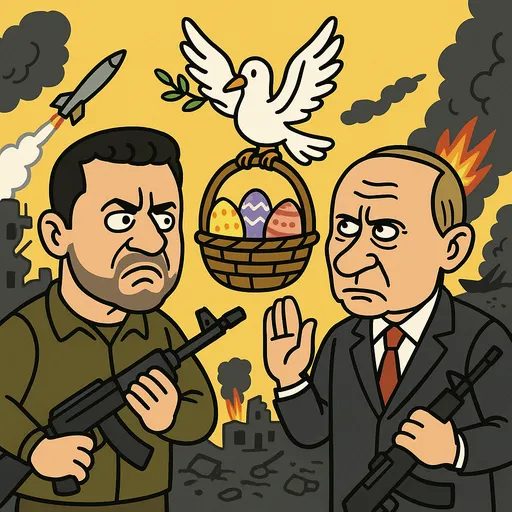
Many outlets report a temporary Easter ceasefire announced by Moscow and observed by Kyiv, framed as a short humanitarian pause amid continuing diplomacy. Ukrainian leaders express cautious readiness to observe the truce while also pushing diplomatic outreach and reporting continued counter‑strikes on Russian assets. Observers and civilians across several countries voice deep scepticism about the ceasefire’s durability as attacks and casualties continue ahead of and during the pause. Regional security concerns — especially naval activity in northern European waters and NATO deterrence operations — have increased tensions beyond the land front. Economic and analytical pieces underline wider effects, from defense‑industry strains in Russia to market reactions and scrutiny of international political messaging.
Sources in this group focus on announcing and documenting the Easter ceasefire and related diplomatic activity, presenting the pause as a limited humanitarian and religious window. Reporting is largely descriptive, noting timing, leaders' declarations, and planned international meetings without endorsing either side.
This cluster collects articles conveying Ukrainian government positions: readiness to observe a ceasefire, willingness to negotiate, and continued military action against Russian assets. Kyiv sources combine cautious optimism about diplomacy with reports of active operations and outreach for broader security cooperation.
These pieces foreground civilian reactions and analyst doubts, emphasising fear, scepticism and the fragility of any truce given recent violations and fatalities. The reporting highlights how residents and commentators across countries expect the pause to be short‑lived or easily breached.
Regional and security‑focused outlets highlight rising naval tensions: submarine detections, shadow‑fleet interceptions and allied deterrence operations aimed at Russian maritime activity. The coverage frames these incidents as extensions of the conflict with implications for NATO readiness and regional stability.
This group reflects coverage of the Kremlin’s official lines — assertions of self‑defence, reluctance to extend ceasefires, and diplomatic moves such as envoy visits — alongside reporting on strains in Russia’s defence industry. The articles capture Moscow’s messaging and the limits of its material and diplomatic options as seen by outside observers.
These reports document ongoing attacks, civilian casualties and strikes on energy and other infrastructure, underscoring that fighting continues despite ceasefire efforts. Coverage focuses on immediate humanitarian impact and operational developments across multiple regions of Ukraine.
This cluster groups analytical and contextual pieces on market reactions, fact‑checking diplomatic claims, morale and strategic forecasts about frontline shifts. The viewpoint emphasizes second‑order effects of the war — economic, informational and societal — and interrogates political messaging about the conflict.