
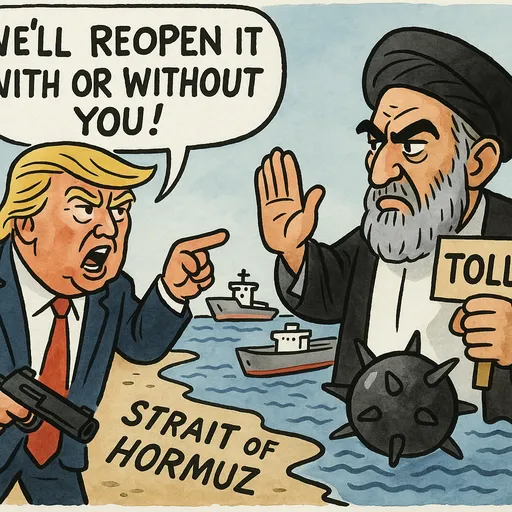
Reports show a tense diplomatic balancing act as Iran leverages control of the Strait of Hormuz—proposing tolls, alternative routes and even claiming sea mines—while insisting on bargaining leverage ahead of talks. The United States, led by President Trump’s repeated warnings and threats, has signalled it will reopen the strait ‘with or without’ Iran and opposed any Iranian fees, keeping military options and strong rhetoric on the table. Several pieces describe a fragile, conditional two‑week ceasefire and plans to reopen the strait tied to negotiated guarantees, though traffic remains limited and observers caution the arrangement may not hold. Regional states and industry warn of immediate economic consequences—hundreds of tankers are waiting and aviation fuel shortages are a risk—while international diplomacy is divided, evidenced by a Russia/China Security Council veto and urgent calls from European leaders for coordinated action.
Articles in this group present Tehran as asserting strong leverage over Hormuz, proposing tolls, alternative routes and a ‘‘new phase’’ of management while using maritime measures (including claims of mines) to influence negotiations. The perspective highlights Iran’s strategic bargaining position and its willingness to condition reopening on political and security demands.
These articles reflect a U.S.-led hardline approach: repeated public warnings from President Trump that the strait will be reopened ‘with or without’ Iran, opposition to any Iranian tolls, and readiness to use diplomatic or military pressure. The framing emphasizes U.S. insistence on freedom of navigation and portrays Iran’s moves as coercive or extortionate.
This cluster focuses on diplomatic threads reporting a conditional two‑week ceasefire and arrangements to reopen the strait, stressing cautious optimism but noting persistent risks and limited shipping activity. The perspective treats the reopening as contingent on verification, reduced hostilities and sustained talks among the principal actors.
Regional governments and industry sources in these pieces stress immediate practical impacts: calls for unconditional reopening, long tanker queues and warnings of fuel shortages for aviation and other sectors. The emphasis is on the economic vulnerability created by restricted navigation and the need for rapid, reliable solutions to restore trade flows.
This group highlights fractured international responses—Western and European leaders urging coordinated action and warning about tolls and disruptions, while Russia and China blocked a UN resolution—underscoring diplomatic fault lines. Coverage also examines possible allied contributions (e.g., minehunters) and political debates over legal and strategic options.