
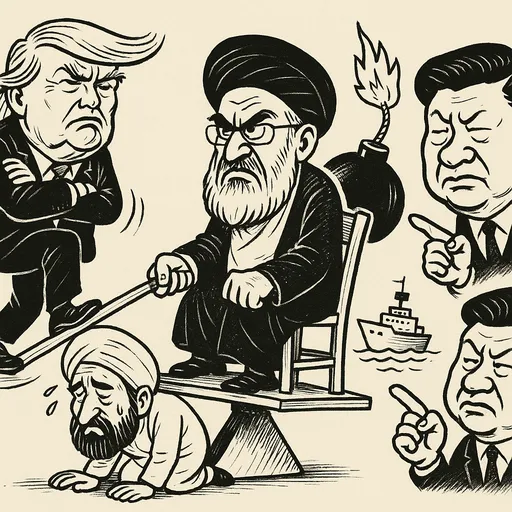
Direct US–Iran talks convened in Islamabad under Pakistani mediation, marking the highest‑level engagement in decades, but marathon sessions ended without a deal. U.S. negotiators said Iran rejected their terms while Tehran blamed what it called unreasonable American demands; both sides signalled continued channels but no breakthrough. President Trump’s public posture ranged from dismissive ('I don't care') to hardline threats and warnings to China, complicating diplomatic optics. Regional actors and international commentators offered cautious optimism about de‑escalation even as the fragile ceasefire and control of the Strait of Hormuz remain central sticking points.
CRI reports highlight U.S. statements and varied international reactions, combining Trump’s dismissive rhetoric with commentary from other leaders and intelligence developments. The pieces frame the Islamabad talks within the broader high‑stakes diplomacy and regional security dynamics.
Reporting is factual and focuses on the opening of talks in Islamabad as a diplomatic step toward easing tensions. Coverage emphasizes diplomacy over confrontation.
Japanese pieces stress U.S. political messaging and caution about nuclear risks, noting U.S. statements on the talks’ inconclusive outcome. Coverage connects negotiations to regional stability concerns.
Coverage links the US–Iran dynamics to wider geopolitics, including Ukrainian appeals to Washington, while highlighting Trump’s threats of renewed bombing if talks fail. The pieces underscore escalation risks.
Reports note the historic shift to direct dialogue and Iran’s cautious engagement, underlining skepticism about U.S. seriousness. Coverage presents an optimistic tone tempered by mistrust.
Analytical reporting examines U.S. negotiating style, presenting explanations (e.g., 'good cop, bad cop') for Washington’s mix of rhetoric and diplomacy. The piece situates tactics within broader policy debates.
Coverage highlights temporary ceasefire measures and the uncertain environment around negotiations, stressing the lack of verification details. Reporting underscores Pakistan’s role and the talks’ tentative nature.
Cypriot reporting emphasizes sharp diplomatic exchanges and the immediate deadlock after talks, referencing both high‑level quarrels and conflicting narratives. Coverage points to broader regional consequences.
Reports foreground Trump’s warnings of military action and continued deployment until a real deal is secured, stressing the administration’s readiness to use force if diplomacy stalls. The pieces highlight escalation risks.
Short coverage emphasizes that high‑level meetings took place in Pakistan and frames them as part of a diplomatic push. The article provides basic factual context.
Live updates underscore cautious optimism and the slow, fragile nature of negotiations, highlighting regional volatility and the difficulty of securing durable agreements.
Analytical piece questions narratives of decisive victory and warns that administration claims may mask continued instability. The viewpoint is skeptical of triumphant political framing.
Canadian coverage focuses on the lengthy Islamabad session that ended without agreement and quotes U.S. officials describing Iran’s refusal of terms. Reports treat the outcome as a fragile setback for diplomacy.
Reporting highlights President Trump’s warnings of renewed bombardments if negotiations fail, stressing the hardline rhetoric that clouds diplomacy.
Coverage notes Vice‑President J.D. Vance’s arrival in Pakistan to lead U.S. talks, emphasizing the high stakes and the diplomatic engagement underway.
Report states negotiations ended without a peace agreement and frames the outcome as prolonging tensions and limiting immediate progress.
Analysis highlights Iran’s internal decision‑making, noting the central role of the Supreme Leader and the limits on who can conclude deals. The piece underscores structural negotiating constraints.
Coverage conveys Pakistan’s hopes for constructive participation and frames Islamabad’s hosting role as pivotal for progress toward de‑escalation.
Reports present the talks as beginning amid disagreement over the Hormuz Strait and emphasise efforts to bridge deep mistrust, noting extensions and expert‑level stages.
Short factual reporting highlights the arrival of U.S. negotiator J.D. Vance in Islamabad and the heightened security; pieces stress the symbolic importance of the venue.
Omani pieces range from reporting the talks and their extension to messaging from the U.S. presidency; coverage emphasizes both the diplomatic process and the continued uncertainty over outcomes.
Reports stress the Islamabad talks’ opening and highlight disputes about frozen Iranian assets, reflecting competing claims and lack of independent confirmation.
Brazilian coverage treats the stalled negotiations as a test of commitment on both sides and reports the uncertain future of the ceasefire after talks failed.
Report focuses on Pakistan’s mediating role and notes the start of indirect engagement aimed at reducing tensions.
Coverage highlights the significance of direct U.S.–Iran talks for the first time since 1979 and notes Trump’s additional comments warning China about arming Iran.
Israeli reporting emphasizes U.S. commentary that Iran has limited bargaining power and focuses on strategic leverage points such as the Strait of Hormuz.
Short updates cover the start of negotiations and President Trump’s statements about the Hormuz Strait reopening, framing the diplomacy in broader conflict reporting.
Reports emphasize the start of talks and temporary ceasefire measures, noting the limited verification and uncertainties ahead.
Live coverage follows negotiations closely, highlighting delegations’ movements and the extension of talks amid high tension.
Mexican reporting relays Tehran’s claim that U.S. demands were unreasonable and caused the talks to fail, underscoring the blame‑game post‑session.
Norwegian pieces report the U.S. negotiator returning home without a peace deal and stress that both sides have clear red lines, leaving prospects uncertain.
Thai reporting notes the 21‑hour session that ended without agreement and records that both sides are willing to keep communication open despite the impasse.
UAE coverage provides granular updates on the Islamabad talks, comparisons of rival proposals, and narratives of mutual accusations about excessive demands. Reporting captures the intricate negotiating positions.
Spanish pieces analyze competing narratives and Pakistan’s diplomatic role, noting the lack of solid agreements and the symbolic nature of the talks.
Report explores China’s possible influence in bringing Iran to the table and notes extensive diplomatic contact between regional powers and Tehran.
Chinese reporting focuses on Pakistan’s preparations, Iranian foreign ministry statements about differences, and the rarity of high‑level talks, offering a measured account of the stalemate.
Coverage highlights the arrival of delegations and persistent distrust as the main barrier to progress, portraying talks as fragile and preliminary.
Lebanese reporting stresses early encouraging signs but largely frames the negotiations amid deep regional tensions, live coverage, blame exchanges, and calls for seriousness and good faith.
Indian pieces analyze why talks failed after marathon sessions, reporting both sides’ claims and noting continued willingness to keep channels open despite the impasse.
Brief report highlights a claim that Trump accepted Tehran’s ten‑point plan, presenting a potentially conciliatory angle in the diplomacy.
Coverage relays U.S. official claims that Iran did not agree to proposed conditions after extended talks, stressing the negotiation impasse.
Reports state the U.S. walked away presenting a final offer and highlight Trump’s warning to China about arming Iran, mixing diplomatic and coercive messaging.
Coverage emphasizes reciprocal accusations over truce violations ahead of talks and frames diplomacy as a test of ceasefire credibility.
Reporting highlights delegation leaders (Vance and Ghalibaf) leading talks in Islamabad and underlines the high‑level nature of the engagement.
Short items cover Iran’s rejection of terms, U.S. statements about returning without agreement, and Trump’s temporary pause offer, reflecting mixed diplomatic signals.
Pieces simply note delegations are set to negotiate in Pakistan and report Trump’s declarations about a ceasefire, providing straightforward updates.
Swedish reporting covers the failure to reach an agreement and notes the unusual choice of the Serena Hotel as venue, underlining the talks’ symbolic character.
Indonesian coverage tracks negotiations in Pakistan, criticizes U.S. posture, and relays Iranian objections to U.S. demands while noting symbolic interventions like the Pope’s plea for peace.
Singaporean updates focus on Iran’s framing that U.S. demands were excessive and portray the talks as stalled without acceptable concessions, stressing key negotiation points like Hormuz.
Report notes Iran and the U.S. closed the first phase of dialogue in Pakistan, indicating procedural progress without substantive breakthroughs.
Coverage cites White House statements about continued negotiations and early signs of optimism while remaining non‑committal on outcomes.
German reporting emphasizes that the U.S. delivered its 'last and best offer' and frames the failure as a consequence of deep gaps and mutual distrust.
Coverage highlights the start of direct peace talks and notes U.S. warnings that military action could resume if diplomacy fails, stressing high stakes.
Pakistani reporting emphasizes its mediating role, the Strait of Hormuz focus, and domestic security preparations for hosting the talks, portraying Islamabad as central to the process.
Portuguese pieces frame the direct engagement as nearly 50 years in the making and stress the symbolic weight and practical obstacles of the negotiations.
Belgian reporting highlights the climate of distrust surrounding the talks and examines domestic political alignment with Trump’s approach among Republicans.
Articles note Iranian delegations’ arrival and underline that the negotiation format (direct vs. indirect) remained unclear, focusing on procedural aspects.
Report draws attention to President Trump’s public remark that he 'doesn't care' about a deal and his claim the U.S. has already won, highlighting tone over substance.
Vietnamese coverage records the stalling of negotiations and Vance’s departure, portraying the session as lengthy and inconclusive with persistent deadlocks.
Reporting notes that U.S. and Iranian delegations met in Pakistan, framing the event as an attempt to ease regional tensions through diplomacy.
Irish pieces relay Pakistan’s claim of progress while also noting doubts about prospects given complications like Lebanon, stressing mixed signals from mediators.
Kuwaiti reporting provides schedule updates for extended talks and relays U.S. warnings to China, emphasizing procedural extensions and coercive diplomacy.
Coverage summarizes recent international developments involving Iran, situating the negotiations among broader diplomatic maneuvers.
Argentinian reporting highlights Trump's 'I don't care' line amid the failed marathon summit and analyzes causes behind the breakdown including Hormuz disputes and nuclear allegations.
Coverage centers on the collapse of talks after a 21‑hour session and explores diplomatic consequences for regional stability.
Report emphasizes Pakistan’s announcement that leaders from both countries attended Islamabad talks, underscoring the high‑level nature of the engagement.
Reporting reveals some White House detail leaks and highlights Israeli additional conditions, suggesting Washington pushed hard with demands some see as excessive.
Pieces note the arrival of Iranian negotiators and question who the real negotiators are, focusing on representation and logistical arrangements for the talks.
Greek reporting frames the Islamabad meetings as historic direct talks after decades and underscores both symbolic significance and practical difficulties.
Short item notes Vance’s remark about heading home and frames the negotiations as inconclusive, signaling a pause in that round of diplomacy.
Kazakh coverage relays Trump’s dismissive comments and warnings to China while tracking the talks’ progress and pauses, emphasizing public rhetoric.
Malaysian reporting covers Vance’s departure after talks failed and Iranian statements conditioning any deal on U.S. posture, reflecting the stalemate.
Coverage notes U.S. lead negotiator returning without a deal after lengthy sessions and records Iran’s ten‑point proposal amid ongoing deadlock.
New Zealand reporting highlights Trump’s indifference comments while noting naval deployments near Hormuz and Vance’s announcement of no deal.
Peruvian piece relays Macron’s call for Iran to use talks for lasting de‑escalation, representing allied appeals for stabilizing diplomacy.
U.S. outlets report Vance’s statement that no agreement was reached, analyze the failure as a blow to hopes for an off‑ramp, and chronicle marathon talks as a pivotal diplomatic test.
Yemeni reporting covers the talks’ extension and notes Iranian presidential assurances that the government stands with its people regardless of outcomes, emphasizing domestic resilience.
Cuban reporting relays Tehran’s denunciation of distrust toward the Trump administration and cites historical breaches of commitments as reasons for caution.
Italian analysis probes Pakistan’s shielding role and highlights Trump’s harsh warnings, presenting the negotiations as both strategic choreography and coercive brinkmanship.
Swiss reporting focuses on the U.S. Vice‑President’s arrival in Pakistan and the identity of interlocutors, emphasizing delegation leadership and protocol.
Coverage notes an agreed short ceasefire between the U.S. and Israel regarding Iran, emphasizing the temporary nature and need for further terms and verification.
Iraqi reporting notes another negotiation round and highlights regional security risks, alongside U.S. warnings to China about arming Iran, reflecting regional anxieties.
Dutch coverage calls the Islamabad meeting historic and stresses the rarity and potential significance of high‑level U.S.–Iran engagement.
Polish reporting follows the late‑night negotiations and highlights Vance’s prominent role while conveying the fragile state of diplomacy.
Vatican pieces emphasize Pakistan’s mediating role and record calls for nuclear disarmament and humanitarian appeals, giving moral weight to diplomatic efforts.
Afghan reporting documents Pakistan’s separate meetings with delegations and highlights conflicting claims over frozen Iranian assets, portraying procedural diplomacy and disputes over concessions.
Hong Kong reporting headlines the lack of agreement after marathon talks and echoes U.S. comments about the final offer, underscoring the stalemate.
Laotian coverage welcomes a two‑week ceasefire deal and urges continued dialogue as a step toward broader de‑escalation.
Reporting covers Trump’s announcement of a conditional ceasefire, noting market and geopolitical effects while stressing the temporary nature of the pause.
Australian pieces critique U.S. handling of the conflict as exposing policy weaknesses while also reporting Vance’s warnings and the lack of a deal after extended talks.
Czech reporting records the absence of an agreement and highlights Iran’s demands for access to frozen assets amid threats of preventive strikes, stressing escalation risks.
Korean coverage combines Trump’s public remarks about negotiations with reporting that overnight talks ended in breakdown and that negotiators will return to capitals to reassess.
Azerbaijani reporting states that Iran rejected proposed terms in Pakistan and notes the continuation of talks on schedule, highlighting procedural follow‑up.
Coverage highlights Pakistan’s role hosting historic talks, noting tight security and international attention focused on Islamabad as a mediation hub.
Reporting describes a two‑week ceasefire agreement and the immediate resumption of some attacks, emphasizing fragility and potential for rapid deterioration.
Pieces report Vance saying no agreement after 21 hours and highlight the historic nature of the direct dialogue while noting continued uncertainty.
Qatari coverage stresses early positive indications from trilateral talks and highlights momentum while acknowledging unresolved issues.
Ukrainian reporting focuses on the launch of high‑level negotiations in Pakistan and frames the talks as a renewed diplomatic engagement with broad regional implications.