
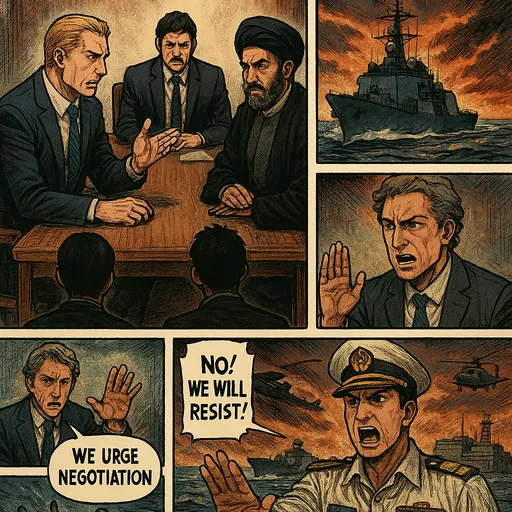
Intense diplomacy is unfolding—largely in Islamabad—with U.S. and Iranian delegations holding extended, expert-level talks aimed at reopening the Strait of Hormuz and de-escalating broader regional tensions. Simultaneously the United States has signalled resolve by deploying warships and announcing mine‑clearing operations, actions Washington says are meant to restore safe passage. Tehran has repeatedly denied U.S. transits, asserted control over the waterway, warned of resistance to military vessels, and discussed economic measures such as transit fees. European and other international actors are pressing for negotiated solutions and proposing roles from mediation to joint patrols, while technical difficulties in locating and clearing mines complicate both navigation and diplomacy.
U.S. statements and reporting emphasize use of naval power and mine‑clearance to ensure freedom of navigation and force Iran to reopen the strait. Washington frames transits and minesweeping as necessary, imminent steps to restore safe shipping while pressing Tehran diplomatically.
Iran and its state media emphasize sovereignty over the Strait, deny U.S. transits, and warn that military vessels risk attack; Tehran also features proposals and rhetoric about charging transit fees. Iranian messaging frames U.S. demands as excessive and insists on preserving influence over the chokepoint.
Diplomatic sources stress that talks—hosted or mediated by Pakistan and involving expert‑level working groups—are the main avenue for de‑escalation, but the Strait’s control remains the central stumbling block. Proposals under discussion include confidence‑building measures, asset releases, joint patrol concepts and technical arrangements, though progress is uneven and sessions have extended without clear breakthroughs.
European leaders and other partners are pushing diplomatic engagement and contingency planning: France and the EU seek to mediate and secure Tehran’s agreement, Italy and Britain voice concerns about trade disruption, and other states propose roles from patrols to technical support. These actors generally favour negotiated reopening and caution about unilateral military steps without broader international backing.
Independent reporting highlights practical obstacles—uncertainty about mine locations and limited Iranian capability to clear fields—that complicate reopening and raise risks for commercial shipping. Minesweeping operations and technical assessments are therefore essential prerequisites to any durable resumption of normal traffic.