
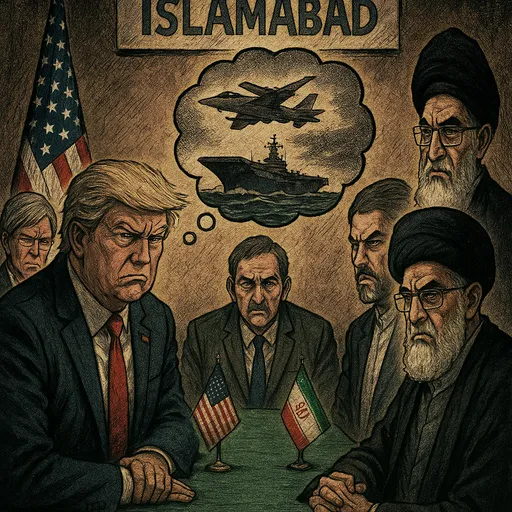
High‑level ceasefire and peace talks held in Islamabad between US and Iranian delegations ended without a firm agreement, leaving core disputes unresolved and diplomatic momentum stalled. Washington signalled mixed signals: officials affirmed engagement while President Trump and senior aides publicly floated tougher pressure measures, including a naval blockade of the Strait of Hormuz and limited military strikes. Tehran publicly rejected key U.S. conditions, presented proposals and insisted it would not yield to what it called unreasonable demands, even as some Iranian voices said a fair deal remained possible. Pakistan continued to play a mediation role and international actors — from European leaders to China and regional states — urged continued diplomacy while analysts warned of market and regional stability risks.
Reporting reflecting U.S. government statements and Trump administration posture emphasizes coercive tools and tactical measures — naval blockades, military strikes and tough negotiating stances — as leverage to bring Iran back to terms. U.S. officials also framed negotiations as conditional and repeatedly signalled readiness to use pressure while keeping diplomatic channels open.
Iranian officials and spokespeople are portrayed as rejecting Washington’s demands, denying accusations about nuclear intent, and insisting on their own proposals and red lines; Tehran frames its negotiating posture as principled and resistant to coercion. At the same time some Iranian statements signalled willingness to seek a fair, balanced settlement if terms respect Iran’s security and political concerns.
Coverage from and about Pakistan highlights Islamabad’s central mediation role: hosting direct talks, urging adherence to a two‑week ceasefire and calling on both sides to sustain de‑escalation while leveraging its diplomatic convening role. Pakistani officials and mediators repeatedly appealed for constructive participation and continuation of dialogue despite the summit’s collapse.
European leaders, regional actors and analysts urged continued diplomacy, warned about the high costs of escalation and assessed China’s possible influence while dissecting strategic options and policy failures. This viewpoint aggregates commentary on diplomatic remedies, lessons from past mistakes, and market and strategic implications of a breakdown — calling for renewed talks and cautious statecraft.
Many outlets provided straightforward, descriptive coverage of the Islamabad meetings’ proceedings and aftermath — documenting start and end times, delegation movements, walkouts, and the absence of a deal while noting the immediate uncertainty about next steps. These pieces frequently recorded official statements from both sides and reactions from mediators without adopting an advocacy position.