
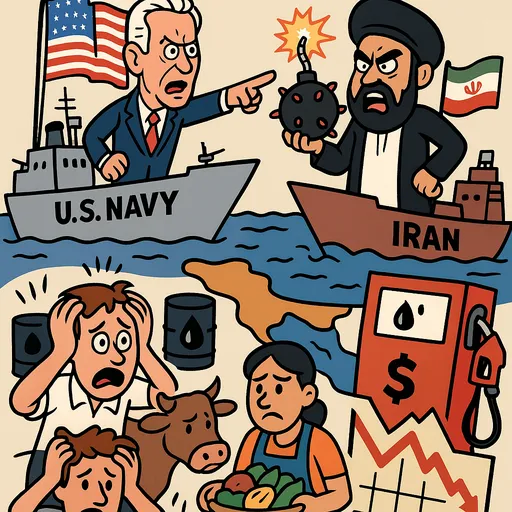
A sustained U.S. naval campaign to block Iranian ports and control the Strait of Hormuz dominates reporting, with repeated announcements from Washington and allied outlets describing enforcement plans and operational details. Tehran and its proxies have pushed back with claims of control over the strait, threats of retaliation, and measures such as transit fees and reported mine-laying, raising the risk of direct confrontation. Commodity markets and consumers are already feeling the impact: oil and gas prices have spiked past $100/barrel, equities have plunged on volatility, and households, farmers, and vendors worldwide face higher fuel and food costs. In response, states and firms are pursuing alternative supply routes, diplomatic fuel talks, and contingency measures — but uncertainty about escalation, sanctions interplay, and maritime security keeps energy markets and policy makers on edge.
Sources focused on U.S. policy present the blockade as a deliberate, enforceable measure to pressure Iran and secure shipping lanes, frequently citing presidential orders, naval deployments, and operational timelines. Coverage emphasizes enforcement mechanics, allied coordination, and the intended strategic message while warning of escalation risks and international reactions.
Regional and Iran-linked sources stress Tehran's assertions of control over the Strait, economic counters like transit fees, and denouncements of the blockade as illegal coercion — portraying Iran as both sovereign defender and resilient actor in the chokepoint. These pieces highlight asymmetric measures (mines, extortion allegations, mined waters) and skepticism about Western narratives, underlining the potential for dangerous miscalculation.
Financial and social-issue coverage emphasizes rapid market reactions — oil jumping above $100–110/bbl and equities falling — and the tangible fallout for consumers, farmers, and vulnerable communities globally. Reports document protests, government emergency meetings, rising fertilizer and fuel costs, and inflationary pressures, framing the blockade as an immediate economic shock with distributional consequences.
Many outlets focus on strategic adjustments: governments and companies seek alternate suppliers, repair pipelines, re-route shipping, negotiate fuel deals, or revisit sanctions policy to manage shortages and mitigate market disruption. This cluster highlights diplomatic missions, regional fuel talks, ship diversions, sanctions uncertainty, and proposals (e.g., Venezuela/China links, Saudi pipeline repairs) as pragmatic responses to chokepoint risks.
Other reports document discrete energy incidents and longer-term sector moves that coexist with the crisis: refinery spills, mining and privatization in resource states, hydro and nuclear infrastructure developments, and logistical safeguards like naval escorts. These pieces place short-term shocks alongside ongoing structural shifts in energy production, investment and safety management.