

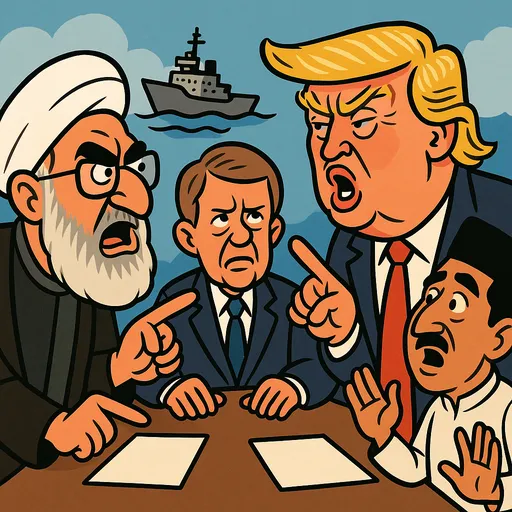
High-level US–Iran talks held in Islamabad produced marathon sessions but no binding agreement, with both sides signalling willingness to continue dialogue even as key gaps remain. Washington, led publicly by figures such as Vice‑President Vance and President Trump, combined offers of diplomacy with hardened rhetoric and maritime pressure, including a naval blockade threat. Pakistan and other mediators have actively pushed for follow-up rounds and urged upkeep of the ceasefire, while the UN and external states called for sustained negotiations to prevent wider escalation. A central sticking point was the nuclear timeline (reports of Iran proposing a five‑year suspension versus US demands for twenty years), and markets briefly reacted to hopes for resumed talks despite the fragile pause in hostilities.
US leaders mix negotiation with coercive measures and blunt rhetoric, insisting on stringent terms and signalling readiness to use economic and naval pressure if talks fail. Officials portray progress on some technical points but emphasise that the ultimate concessions are on Iran's side and frame rejection as Tehran’s responsibility.
Iran frames its positions as defensive and sees some US measures as coercive or unlawful, issuing demands on regional actors and signalling readiness to retaliate to perceived threats. Tehran also uses messaging and symbolic stunts to push back on US rhetoric while engaging—uneasily—in diplomatic channels.
Pakistan positions itself as a central broker, repeatedly proposing and hosting follow-up rounds and urging both parties to return to the table before ceasefire deadlines lapse. Regional mediators emphasise dialogue and enforcement of temporary pauses to avert renewed violence.
International institutions and some states warn against escalation, calling on Washington and Tehran to sustain talks and respect ceasefire commitments. Criticism of unilateral coercive measures—such as a naval blockade—has been voiced by external powers concerned about broader regional consequences.
Numerous outlets chronicle the back‑and‑forth of Islamabad sessions—long negotiation hours, candid briefings that no deal was reached, but repeated signals that channels remain open for further rounds. Coverage emphasises procedural details, possible venues and the tentative nature of any ceasefire or truce.
A decisive stumbling block reported across outlets is the nuclear suspension timeline: Iran’s reported offer of a shorter suspension (circa five years) clashes with US demands for much longer limits (reportedly twenty years). These technical gaps on enrichment and reserves were central to why negotiators could not reach a final deal.
Markets and analysts track how diplomatic signals and maritime measures affect oil prices and economic leverage, with prices easing on hopes for dialogue even as blockades raise pressure on Tehran. Commentators frame the blockade as a test of endurance with economic pain used as leverage in diplomacy.
Commentary and analysis question the efficacy of the US approach, arguing that hardline measures and rhetorical excess risk undermining credibility, alliances and long‑term objectives. Observers also note domestic political consequences for US actors engaged in the diplomacy.