
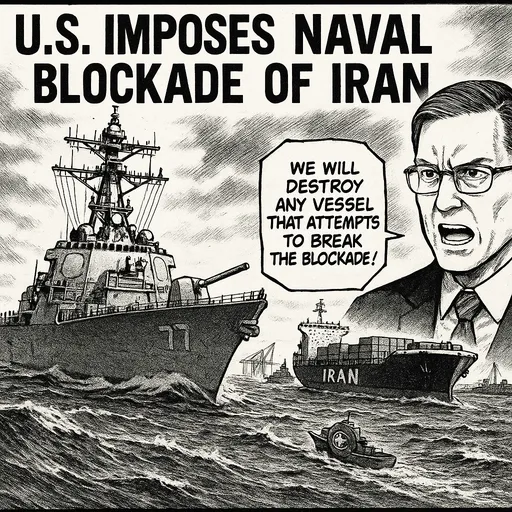
A broad set of reports describes the United States' decision to impose and begin enforcing a naval blockade on Iranian ports and the Strait of Hormuz, including deployments of warships and CENTCOM advisories. U.S. leaders have paired operational measures with hardline rhetoric threatening to destroy or sink vessels that challenge the blockade, raising fears of miscalculation. Analysts and foreign outlets emphasize major consequences for oil flows, shipping routes, insurance costs and global energy markets, while legal and strategic commentators debate implementation, scope and possible Chinese or regional responses. Regional governments, commercial shippers and naval watchers warn of heightened risks to maritime safety and diplomatic escalation as Tehran signals reciprocal measures.
Sources grouped here emphasize the U.S. political and military rhetoric underpinning the blockade: presidential threats to destroy or sink vessels and framing the measure as a show of force. This viewpoint highlights coercion as a primary tool intended to deter Iran but also stresses the risk of rapid escalation.
These reports focus on concrete military actions: announcements that the blockade is in effect or imminent, CENTCOM advisories, the deployment of multiple U.S. warships and detailed enforcement rules for vessels in the region. The perspective treats the blockade primarily as a practical security operation while noting immediate regional tensions and potential confrontations at sea.
This viewpoint stresses economic fallout: how a blockade could disrupt Iranian oil exports, alter global supply routes, affect prices and raise insurance and re‑routing costs for shipping. Articles in this group treat the blockade chiefly through the lens of energy security and commercial vulnerability.
These pieces analyze the blockade’s legal basis, strategic rationale and wider geopolitical implications, including risks of escalation, the role China might play and questions about how the U.S. should practically and lawfully implement such measures. The perspective is analytical, weighing benefits of pressure against operational, diplomatic and legal costs.
This group compiles reporting on individual maritime incidents—interceptions, ships testing the blockade, vessels subject to sanctions, and separate U.S. counter‑narcotics strikes—emphasizing the immediate, concrete encounters at sea that illustrate enforcement and risk. The perspective underscores how interdiction operations and unexpected incidents can complicate blockade enforcement and regional stability.
These reports capture regional and diplomatic responses, including condemnations from affected states, warnings about wider Middle East repercussions and concerns about humanitarian and commercial impacts. The viewpoint highlights international unease and the diplomatic pressures surrounding the blockade decision.