
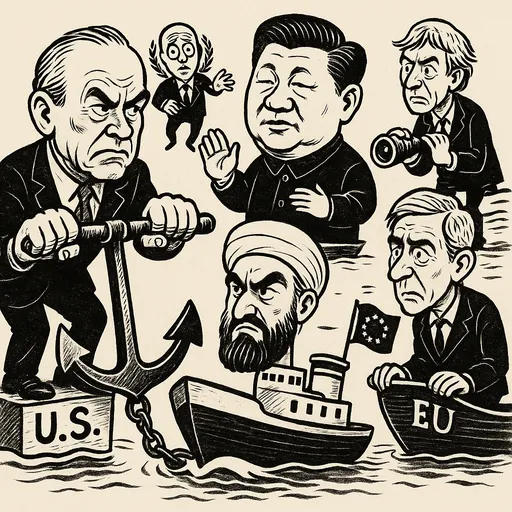
A U.S. decision to impose a naval blockade on Iranian ports has sharply polarized regional and global diplomacy: Washington frames the move as coercive enforcement of red lines, while Tehran has threatened retaliation and proposed alternative routes. China has publicly urged restraint even as Chinese-linked tankers have tested the blockade, exposing limits to enforcement. European governments—led by France and the UK—are pursuing a multinational, ostensibly peaceful mission to secure navigation and have declined to join Washington’s unilateral blockade. The UN and regional Gulf states warn against militarizing the strait; analysts warn that sanctioned ship transits and disrupted oil flows could strain energy markets and global economic confidence.
These pieces foreground U.S. policy: the blockade is presented as a necessary, coercive tool to stop Iranian threats and enforce red lines, with repeated warnings that vessels breaching the blockade could be targeted. Supporters and U.S. officials frame the action as protecting navigation and punishing Iran, even as enforcement proves contentious.
These reports convey Tehran’s pushback — public threats of retaliation, warnings that approach to the strait could violate ceasefires, and moves to propose or open alternative routes amid mine and security fears. Iranian messaging mixes coercion and information operations, including mocking rhetoric aimed at undermining the blockade’s legitimacy.
China’s diplomatic line calls for restraint and attributes volatility to ongoing military conflict, while Chinese-linked vessels have actively tested the blockade, highlighting Beijing’s willingness to defy sanctions in practice. Reports emphasize both Beijing’s peace-plan rhetoric and concrete incidents of tankers transiting or attempting to transit despite U.S. measures.
France and the United Kingdom are promoting a multinational, ostensibly peaceful operation to restore freedom of navigation, and several European actors have explicitly ruled out assisting a U.S. unilateral blockade. European leaders emphasize coordination, legal messaging to Iran and the U.S., and deploying capabilities (e.g., basing mine-countermeasure assets) rather than backing coercive maritime closure.
The United Nations and regional stakeholders underscore legal restraints on militarizing the strait and urge de-escalation; Gulf partners voice anxiety that the blockade risks wider disruptions. Saudi pressure on Washington to lift or moderate the blockade and Gulf-state reporting reflect fears that escalation could imperil other crucial maritime passages and energy exports.
Analytical and economy-focused pieces warn the blockade could undermine global confidence, disrupt oil markets, and impose real costs on import-dependent countries; they also highlight operational challenges in enforcing sanctions as blacklisted or sanctioned ships continue to move. Commentators debate strategic choices—arguing the U.S. may need to ensure open navigation—and catalogue potential national-level consequences in vulnerable states.