
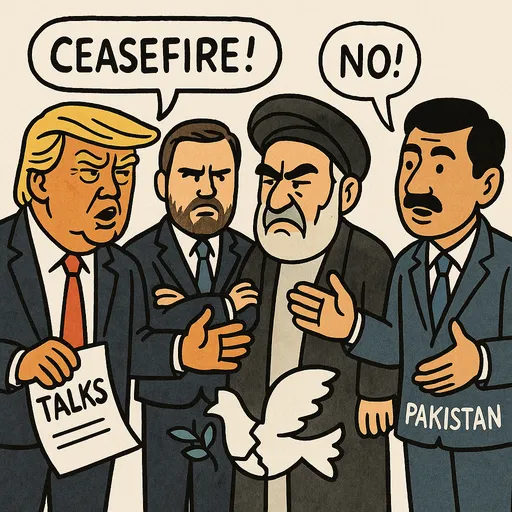
President Donald Trump repeatedly framed the Iran confrontation as nearing its end and signaled readiness to resume talks — often pointing to imminent meetings in Pakistan — while offering temporary ceasefires. At the same time, U.S. officials, notably Vice‑President J.D. Vance and other administration sources, maintained hardline conditions (sanctions, long nuclear suspensions) and tempered expectations about immediate concessions. Iran and its officials voiced resistance to perceived U.S. demands, issued threats in some cases, and emphasized sovereignty, complicating prospects for a quick agreement. Pakistan, the UN, China, Russia and other international actors pushed mediation efforts and proposed frameworks, but multiple rounds of talks repeatedly stalled or collapsed, leaving any ceasefire fragile and global markets and other crises affected.
Many outlets relay President Trump’s repeated statements that the Iran war is almost over and that talks could resume within days, often mentioning Pakistan as a possible venue. This view emphasizes high‑level diplomatic momentum and public signaling aimed at de‑escalation, though it lacks firm commitments or finalized agreements.
U.S. officials and commentators stress conditions, sanctions and strategic leverage — including demands for long nuclear suspensions and tightened oil restrictions — framing diplomacy as conditional on Iranian concessions. Vice‑presidential and administration statements underscore a mix of willingness to negotiate with firm red lines and incentives tied to non‑nuclear behavior.
Iranian leaders and related reporting portray Tehran as distrustful of U.S. demands, unwilling to yield to threats, and in some instances issuing retaliatory warnings, complicating negotiation prospects. Several items highlight Iran’s assertive messaging — from official denials and parliamentary firmness to media and online provocations — showing resistance to perceived U.S. pressure.
Third‑party actors — Pakistan as host, the UN, China, Russia and regional partners — actively sought to facilitate negotiations, offering plans, venues and technical proposals to bridge gaps and preserve a ceasefire. Reporting in this group emphasizes international diplomacy, mediation logistics, proposed frameworks (China’s four‑point plan, Russia’s offer on uranium handling) and market/UN reactions that hoped to sustain momentum.
Multiple reports emphasize that rounds of talks repeatedly stalled or ended without agreements, leaving ceasefires fragile and raising concerns about escalation and spillovers to markets and other crises. Analyses and summaries in this group highlight deadlocked deadlines (nuclear suspension disputes), collapsed Islamabad talks, and political or economic ramifications such as diverted attention from Ukraine and market volatility.