
Allies are juggling cooperation with growing frictions: a running transatlantic spat—exposed by repeated public attacks from Donald Trump on Italy’s Giorgia Meloni—has strained US–Europe dynamics and prompted defensive reactions in Rome. At the same time, symbolic state visits (notably by King Charles and other royals) are being used to repair and reaffirm special-relationship ties even as substantive policy disagreements persist. Washington continues to play a central mediation and security role—hosting Israel–Lebanon talks and coordinating regional drills and security partnerships in Asia—yet these commitments are prompting sovereignty concerns and complaints that attention to the Iran crisis is diverting support from Ukraine. Elsewhere, signs of shifting influence (from Hungary to the Red Sea and new ties in Africa) and allied pushback on trade, sanctions, and defence spending underscore that US diplomacy increasingly depends on delicate management of partner expectations and domestic politics across allied capitals.
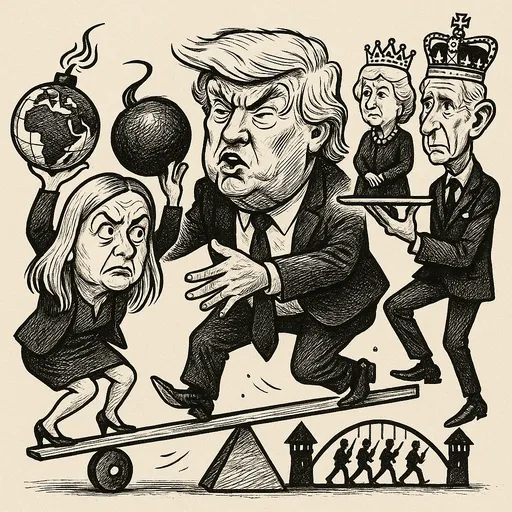
A large set of outlets report a recurring public conflict in which Donald Trump sharply criticises Italian Prime Minister Giorgia Meloni, prompting pushback from Italian officials and discussion of Italy distancing itself from both Trump and some Israeli ties. The perspective highlights how personal political rhetoric from the U.S. side is creating diplomatic friction that could complicate cooperation on Iran, NATO and regional security.
Several reports emphasise state and royal visits (King Charles, Dutch royals) as symbolic, high‑profile efforts to shore up the UK–US and broader transatlantic relationship amid political strains. The view treats ceremonial outreach and meetings with US leaders as deliberate tools to restore goodwill and maintain cooperation despite substantive policy disagreements.
Coverage focused on Washington’s role as host and mediator underlines allied calls for an urgent end to hostilities and welcomes early productive discussions between Israel and Lebanon. The perspective presents the U.S. as central convenor while allied states press for rapid de‑escalation and civilian protection.
Ukrainian officials warn that U.S. attention on the Iran crisis is drawing diplomatic and material resources away from Ukraine, leaving Kyiv short of systems like Patriot missiles. Multiple reports capture frustration among allies that competing crises force painful prioritisation of U.S. support.
Reports describe strengthened U.S. military cooperation in Asia—from drills with the Philippines to potential talks and equipment sales relating to Pakistan and NATO partners—while host countries voice concerns about sovereignty and access. The perspective stresses the trade‑off between enhanced deterrence and domestic unease over foreign basing or military arrangements.
Several pieces document setbacks to U.S. influence—electoral and diplomatic reversals in Hungary, recalibrations in the Red Sea, and new strategic outreach in Africa—while regional actors and smaller states respond to U.S. pressure or seek alternative alignments. The reporting frames these shifts as challenges to Washington’s ability to maintain stable coalitions.
Coverage highlights allied and domestic political responses to U.S. economic and sanctions policy—Canada’s leadership moves, EU trade easing by Washington, scrutiny of far‑right French ties, and Australian criticism of U.S. sanctions. The perspective shows partners asserting independent stances to protect domestic priorities and international norms.
A former NATO chief’s public criticism of the UK prime minister for underfunding defence reflects internal allied debates over burden‑sharing and readiness. The piece treats domestic fiscal choices as directly relevant to collective security commitments.
An analytical perspective flags a recent U.S. policy decision as risky, weighing diplomatic backlash, costs, and strategic miscalculation. The view stresses uncertainty and calls for careful allied consultation to avoid unintended consequences.
Reports on U.S.–Morocco coordination for World Cup 2026 security illustrate practical, event‑driven security partnerships that build operational ties beyond formal defence pacts. The perspective presents such cooperation as pragmatic and confidence‑building.
The U.S. Embassy’s welcome for a unified Libyan budget is presented as Washington endorsing steps toward political and fiscal stabilisation. The perspective frames U.S. backing as crucial for encouraging institutional consolidation.
Coverage of U.S. diplomatic postings (e.g., the chargé d'affaires in Venezuela) emphasises the role of personnel moves in advancing U.S. influence in Latin America and responding to regional crises. The view underscores continuity of diplomatic engagement through personnel decisions.