

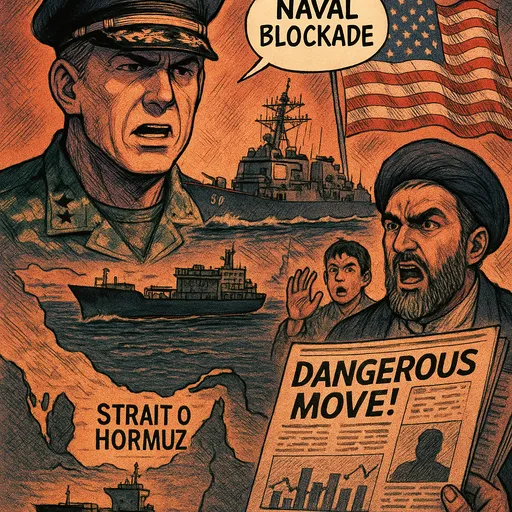
The United States and CENTCOM have declared and deployed a naval blockade on Iranian ports and the Strait of Hormuz, presenting it as a coercive tool to paralyze Iranian maritime trade and enforce sanctions. U.S. statements emphasize operational control and instances of interdiction, while multiple reports and AIS data show vessels transiting or aborting crossings, producing conflicting assessments of the blockade’s effectiveness. International actors and analysts — notably China, regional observers and economic commentators — have criticized the move as dangerous, legally fraught and likely to disrupt global oil markets and supply chains. Independent analyses highlight logistical and legal challenges to sustained enforcement, and escalating rhetoric from both Washington and Tehran raises the risk of broader regional escalation with humanitarian and economic spillovers.
These reports convey the U.S. and allied narrative that a maritime blockade is in effect, emphasizing CENTCOM announcements, interdictions, troop mobilization and measures to prevent Iranian exports. The viewpoint frames the blockade as a deliberate policy instrument to choke Iranian trade and project military control over key Gulf sea lanes.
These pieces highlight vessel movements that contradict U.S. claims of an impermeable blockade, documenting tankers and Iran-linked ships that transited or attempted crossings and cases where ships altered course. The perspective underscores operational limits and conflicting reporting about whether the blockade is fully effective.
This group reflects foreign and regional voices that condemn the blockade as dangerous, irresponsible or provocative and warn of damage to global energy markets and economic confidence. Coverage includes humanitarian protest actions and analyses of how Asia and other importers could be affected, stressing diplomatic and economic fallout.
These articles provide expert and analytical assessments of how a naval blockade could be implemented, its legal standing under the law of naval warfare and the practical logistics involved. The viewpoint is cautious, detailing high risks, enforcement challenges and the complex implications for international shipping and rules-based order.
Some outlets situate the blockade within a wider U.S. maritime posture that includes counter‑narcotics strikes and the creation of offshore detention/holding practices for seized vessels. This angle emphasizes the scope of U.S. naval activity at sea beyond the Iran-specific blockade and notes casualties and legal/logistical issues tied to interdictions.
Several reports focus on aggressive public statements and threats from both U.S. leaders and Tehran, with warnings to eliminate vessels breaching the blockade and retaliatory threats from Iran toward regional targets. The perspective stresses the immediate risk of miscalculation and rapid escalation surrounding enforcement of the maritime restrictions.