
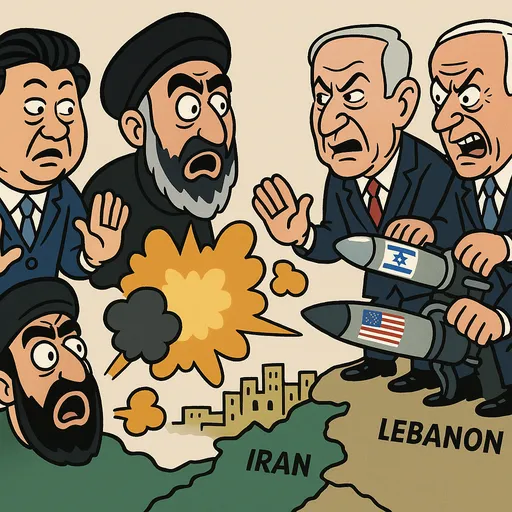
The collection shows a fast-moving escalation centered on US-Israel actions against Iran and expanding fighting along the Lebanon front, with live briefings tracking day-by-day developments. Tehran has responded with maritime threats, large compensation claims and grim economic damage estimates, while Lebanon faces heavy civilian tolls and continuing cross-border strikes. Regional and global powers — Russia, China and the UN — are publicly positioning as mediators or urging ceasefires even as states alter policies (for example Italy’s suspension of military ties with Israel) and consulates prepare evacuations. Warnings about spillover effects include attacks in Iraq, risks to shipping through the Strait of Hormuz, and analyses of potential global economic fallout and humanitarian crises. Overall the reporting portrays a conflict that is militarily intensifying, politically polarizing regional alignments, and producing mounting human and economic costs.
These pieces provide real-time coverage and concise briefings of the unfolding US–Israel–Iran confrontation, focusing on chronology, statements and potential flashpoints. Sources frame the situation as an active, escalating conflict requiring constant updates for readers tracking developments.
This group reflects Tehran-centric claims and state messaging: warnings to naval forces in the Strait of Hormuz, demands for compensation from neighboring states, disclosure of large war-related economic losses, and reports of missile preparations. The coverage emphasizes Iran’s deterrent posture, domestic fiscal strain, and diplomatic assertions of redress.
Articles from and about Lebanon highlight the front-line reality—political shifts at home, resistance strikes, Israeli operations around Bint Jbeil, and severe civilian casualties—portraying Lebanon as both a battlefield and a humanitarian crisis. They stress the fragility of ceasefires and calls to include Lebanon in regional de‑escalation efforts.
These reports document external powers positioning themselves as mediators or strategic actors: Russia offering mediation, China prioritizing ceasefire preservation while seeking regional influence, and the UN urging diplomatic solutions. The perspective underscores diplomatic initiatives and geopolitical competition shaping any pathway out of the crisis.
This cluster highlights concrete diplomatic moves and political signaling—Italy’s suspension of military cooperation with Israel, Qatar’s denial of talks with Iran, and reactions from nonstate actors to such policy changes. The pieces focus on how states are recalibrating relations and alliances in response to the conflict.
Reports here emphasize the wider human and economic fallout: warnings that millions could fall into poverty, analyses of energy‑market and global recession risks, and commentary on long-term reconstruction challenges. The viewpoint stresses that the conflict’s costs extend far beyond immediate military losses and will have prolonged global impacts.
This group collects localized attacks and security warnings that illustrate the conflict’s spillover risk—drone strikes in northern Iraq and high-profile warnings about possible assaults on naval assets. The tone highlights asymmetric attacks and maritime vulnerability as drivers of broader escalation.
This item reports Israeli public sentiment—majority dissatisfaction with war outcomes and skepticism toward the ceasefire—and indicates domestic pressure on leadership that could shape future policy. The focus is on how public opinion may influence government strategy amid ongoing hostilities.
This piece reflects a state-centric, citizen-protection perspective: foreign missions preparing nationals for possible evacuation as tensions rise. It underscores routine diplomatic contingency planning in response to deteriorating security.