

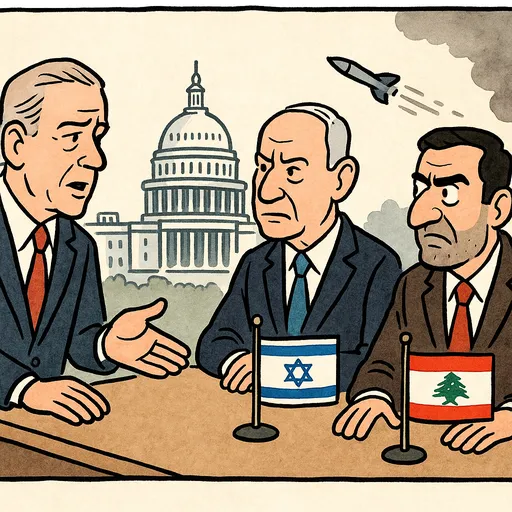
The United States hosted rare direct talks between Israel and Lebanon in Washington, portrayed by many actors as a historic opportunity to open a diplomatic channel after decades. Washington and its partners framed the meetings optimistically, urging a framework for peace and confidence‑building steps while offering mediation. Israel emphasized Hezbollah's disarmament and signaled interest in normalization and security guarantees, whereas Lebanon and many Lebanese voices pressed for an immediate ceasefire and humanitarian relief, with strong domestic skepticism. Talks took place amid ongoing strikes and violence, leaving tangible progress unclear and underscoring that any breakthrough will depend on security arrangements, enforcement mechanisms and buy‑in from non‑state actors.
Sources emphasize Washington's central role as host and mediator, presenting the talks as a historic opportunity to establish a framework for de‑escalation and future negotiations. Reporting from these outlets highlights optimism about a diplomatic process while noting that concrete outcomes remain to be worked out.
These pieces foreground Israel's priorities—pressing for Hezbollah's disarmament, seeking security guarantees and exploring steps toward normalization—while some Israeli officials reject immediate ceasefire proposals. The tone reflects a security‑first approach and occasional insistence on excluding certain external actors from the process.
Reports reflecting Lebanese viewpoints stress calls for an immediate ceasefire, humanitarian measures and wariness of negotiations that might be seen domestically as humiliating or betraying national interests. Several pieces highlight internal divisions in Lebanon and prominent voices that criticize engagement without clear protections or benefits for civilians.
This group focuses on the fragile context in which talks occurred, reporting that meetings happened amid ongoing strikes and that key conditions on the ground remain unchanged, leaving prospects for a durable deal uncertain. Coverage here stresses practical obstacles, the absence of some actors and the risk that diplomacy may be undermined by continued hostilities.