
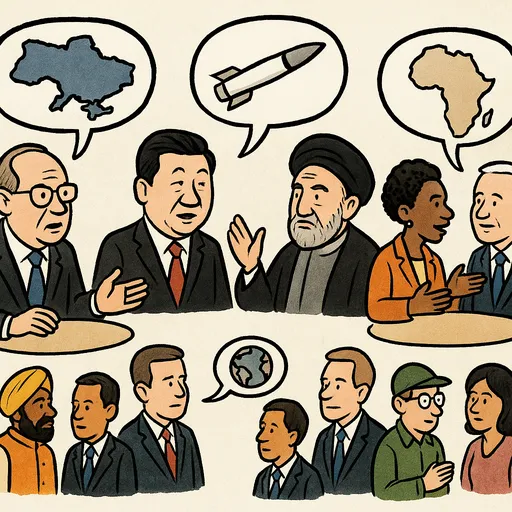
World leaders are engaged in intensive bilateral and multilateral dialogue across multiple theaters, from Europe’s search for ways to address the Russia–Ukraine war to China’s push for de-escalation in the Middle East and expanded global partnerships. European institutions and Kyiv discuss security integration and mediation amid uneven prospects for Moscow’s cooperation, while China urges diplomatic solutions to Iran-related tensions even as Indo‑Pacific rivalries deepen. Regional forums — SCO in Central Asia, AU‑EU and ECOWAS in Africa, and Quad initiatives in the Pacific — are shaping concrete projects and mediation efforts alongside soft‑power and cultural diplomacy. Across smaller states and specialized exchanges, conversations range from neutrality at the UN to tourism and technical cooperation, underscoring a crowded, multipolar diplomatic agenda.
European leaders and Ukraine press for robust political and military support while exploring mediation avenues, though doubts persist about Moscow’s willingness to negotiate. The EU reiterates direct support and integration steps for Kyiv amid appeals to partners, and Ukrainian appeals to foreign leaders underscore the urgency of securing assistance.
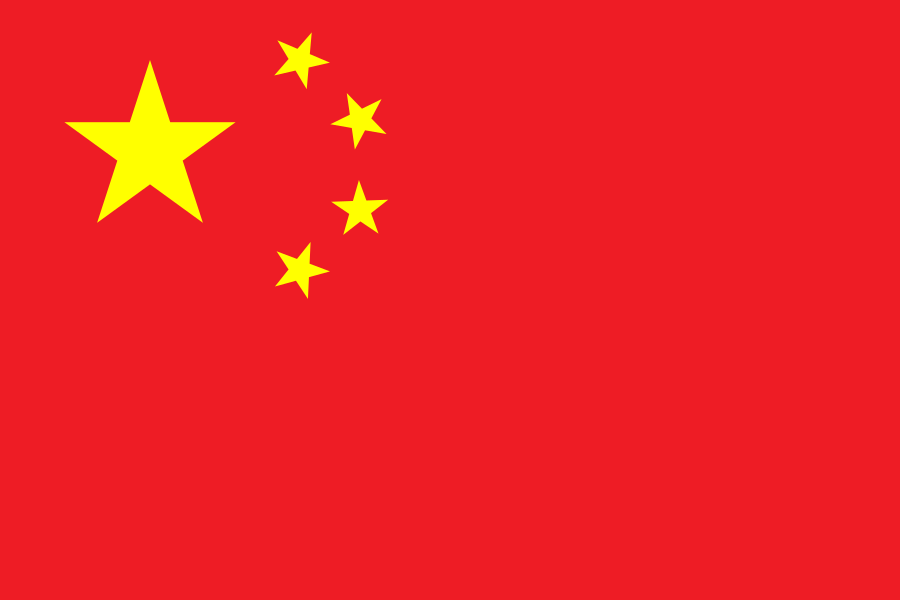
China frames itself as a diplomatic facilitator urging ceasefires and renewed talks over Iran and wider Middle East tensions, calling for negotiated, sustainable outcomes. Beijing’s statements and interventions reflect a desire to stabilize the region and to shape a diplomatic path that reduces the risk of broader escalation.
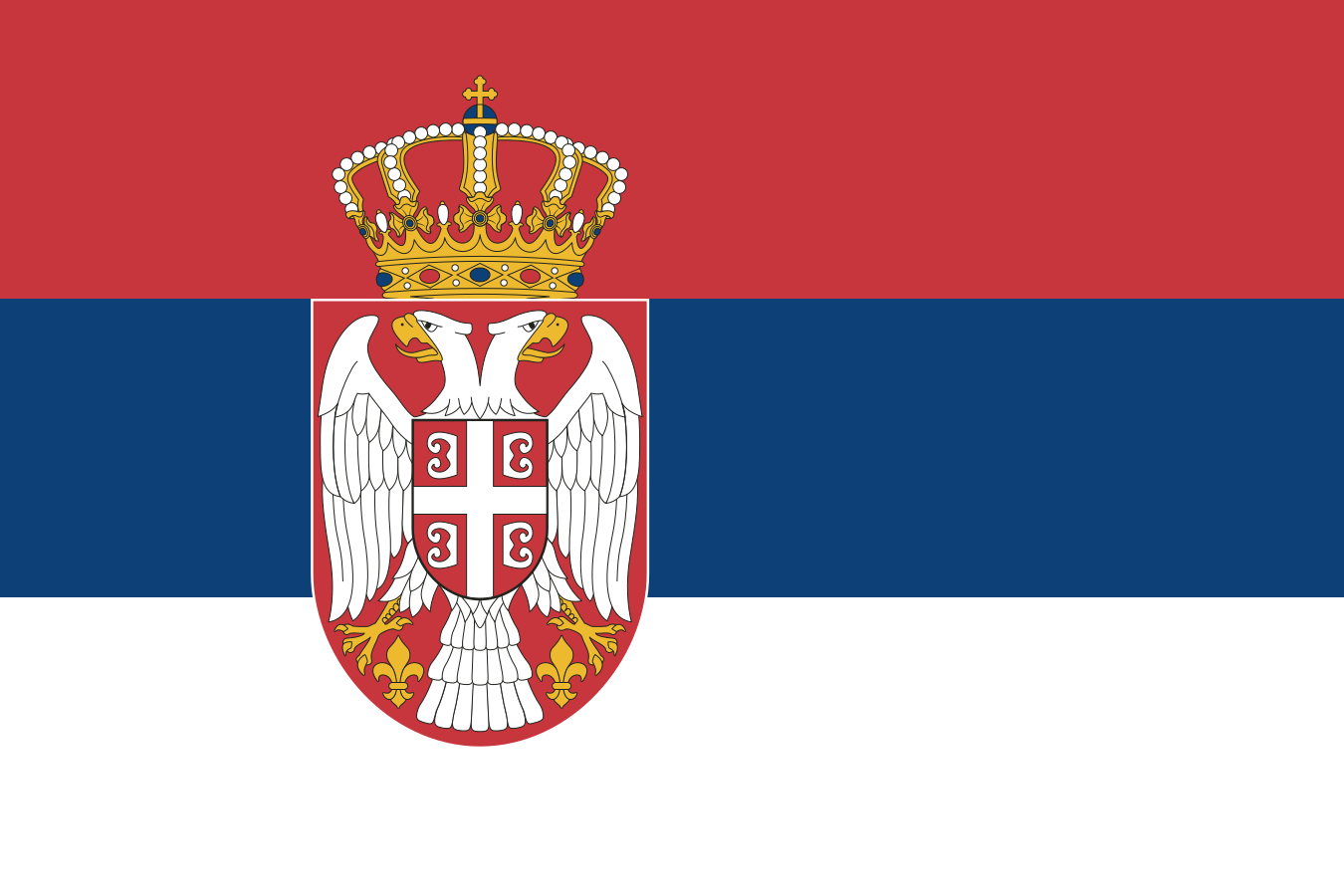
Beijing emphasizes its contributions to multilateral institutions and expands bilateral economic and political ties, presenting China as an active stakeholder in global governance and strategic investment. Chinese leaders and diplomats highlight cooperation with Europe, Serbia and other partners as part of a broad diplomacy of influence and partnership.
Quad members and regional partners are deepening practical cooperation on infrastructure, critical minerals and maritime security as a counterweight to rising strategic competition. China criticizes perceived external meddling and cautions Quad ministers against provocative moves, underlining the tension between cooperative projects and geopolitical rivalry.
Pacific states and visiting envoys highlight concerns about militarisation, push for greater regional research and governance voice, and host high‑level visits that shape local diplomacy. External actors’ engagements — from Tonga to Fiji and beyond — are framed as both strategic and development oriented for Pacific communities.
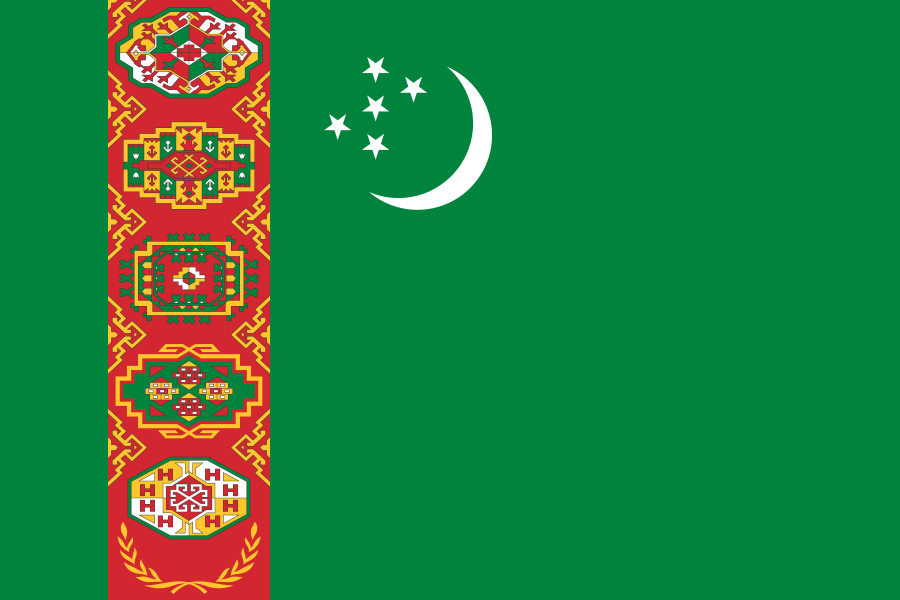
Kyrgyzstan and Turkmenistan host regional forums and prioritize multilateral engagement — from SCO meetings to UN debates — while promoting neutrality and close bilateral ties in the neighbourhood. Historical narrative disputes with Russia add a cultural‑political dimension to diplomatic relations across the region.
China and Pakistan publicly reaffirm an 'all‑weather' partnership and aim to deepen cooperation across trade, security and regional initiatives. Their high‑level meetings are presented as consolidating a long‑term strategic relationship against a backdrop of regional tensions.
Regional and international mediators — through ECOWAS, Francophonie and AU‑EU channels — are actively engaged in conflict management and partnership talks, while cultural diplomacy supports people‑to‑people links. African leaders press for balanced, mutually beneficial cooperation with European partners amid ongoing security and governance challenges.
Recent US political initiatives aimed at Gaza face immediate questions over financing and credibility, with reports highlighting very limited fundraising and criticism of viability. The funding gap undermines the political symbolism of delegations and councils seeking to influence reconstruction and peace processes.
A wide range of routine and symbolic diplomatic acts — embassy statements, cultural exchanges, fisheries talks, clerical visits and consular disputes — reflect everyday statecraft that sustains relationships and manages incidents. These reports show how soft power, protocol and logistical preparation shape broader diplomatic ties.
Moscow frames certain diplomatic actions as hostile while publicly warning about perceived US strategic intentions, stressing breaches in arms control and visa disputes as signs of strained ties. These exchanges underline ongoing strategic mistrust shaping bilateral diplomacy.
Incidents involving sailors and coast guard detentions and regional confidence‑building efforts illustrate how bilateral incidents feed broader diplomatic management needs in Asia. States pursue quiet releases and messaging to de‑escalate such flashpoints.
Southeast Asian diplomacy continues through state visits and regional dialogues on Myanmar and community building, while leaders travel to deepen defence, economic and multilateral ties. These engagements reflect ASEAN’s continuing centrality to regional diplomacy.
United Nations and global summits are spotlighting transnational risks — from heat waves as climate warnings to structural realignments in geopolitics and technology — urging cooperative responses. Leaders and institutions frame these challenges as drivers for collective action and diplomatic engagement.
European ministers emphasize equal treatment under EU rules and resist special concessions for the UK, signaling limited flexibility in post‑Brexit negotiations. The stance reflects a broader insistence on regulatory parity in external relations.
India’s leadership encourages restrained outbound travel while neighbouring Nepal seeks to attract Indian visitors through targeted public diplomacy and influencer campaigns. Coverage underscores soft‑power competition and regional tourism diplomacy in South Asia.