

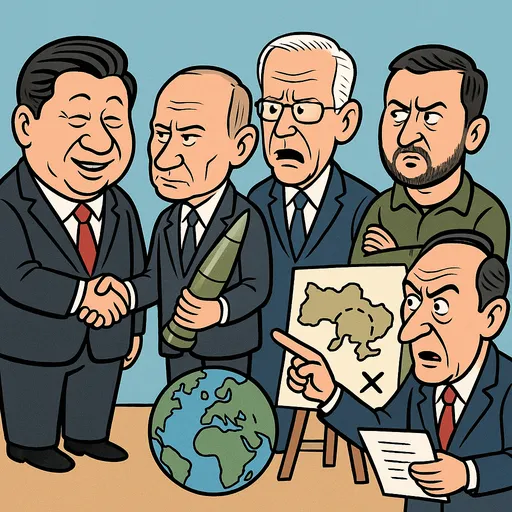
Recent bilateral initiatives span security pacts, trade and transit arrangements, major infrastructure and energy deals, and development cooperation across multiple regions. Russia is deepening ties through transit, energy and defence arrangements while China expands commercial, technological and military partnerships across Asia, Africa and Latin America. Western states are formalizing defence and security commitments and increasing support for Ukraine, even as regional blocs and smaller states sign agreements to boost connectivity, green value chains and tourism. Several countries also reported disputes or denials over proposed security operations, and cultural or regulatory measures (archives, competition probes, pension rules) featured in diplomatic agendas.
From transit and trade to energy and security, Moscow is portrayed as expanding practical and strategic ties across Eurasia, Africa and Latin America. Reports cover Russian-led transit of goods, major energy and nuclear projects, humanitarian and military cooperation, and cultural-scientific initiatives with partner states.
Beijing is portrayed as strengthening industrial, trade and security ties through investment, zero-tariff trade measures and reaffirmed strategic partnerships. Coverage highlights China’s outreach across Latin America, South Asia, Central Asia and Africa via factories, trade deals and military-diplomatic affirmations.
Western actors are depicted strengthening bilateral defence linkages, forming regional security agreements, and supplying significant military aid to Ukraine. Stories cluster around defence treaties, NATO command moves and fighter-jet deliveries or pledges that aim to bolster deterrence and allied capabilities.
Laos is portrayed as deepening economic ties and leveraging infrastructure to boost trade and development, notably via the Laos–China Railway and regional forums. Coverage emphasizes growing transit volumes, UXO-clearance cooperation, and education and parliamentary links that expand bilateral and multilateral engagement.
The Solomon Islands narrative highlights a mix of Australian security development assistance, Saudi developmental financing and Chinese community support. Reports show multiple external partners supporting policing, construction leadership and local transport needs, underscoring competitive development diplomacy in the Pacific.
Curaçao’s bilateral engagement with Dutch institutions focuses on connectivity, maritime safety and cultural restitution. Stories cover new air links, institutional cooperation anniversaries, visits to dependencies and the diplomatic push to repatriate colonial archives.
Reports reflect a dispute over whether Guatemala agreed to joint anti-drug operations with the United States, with official Guatemalan denials countering media claims. The cluster illustrates how security cooperation announcements can be politically sensitive and publicly contested.
Several governments in the region are portrayed coordinating to fight organized crime through shared commitments and regional pacts. Coverage emphasizes intelligence sharing and cross-border coordination to counter transnational criminal networks.
Suriname is actively pursuing practical bilateral cooperation with regional neighbours and partners on oil, infrastructure, social systems and agriculture. Reports emphasize high-level meetings with Brazil and engagement with India on agricultural projects.
New flight routes and the opening of resident embassies signal efforts to strengthen connectivity and diplomatic presence across distant regions. Stories show airlines and foreign ministries pursuing route launches and embassy openings to boost tourism and ties.
African states are deepening bilateral and regional cooperation on infrastructure, economic zones and development finance, often with external partners. Coverage spans strategic agreements between neighboring capitals, joint commissions, and EU-led recovery or cultural engagement efforts.
Diplomatic rifts between Madagascar and France are depicted through expulsions and France’s sending of a crisis diplomat. The coverage frames the relationship as strained, requiring urgent bilateral engagement to stabilise ties.
Moldova’s bilateral pension agreements and proposed recognition of foreign service are presented as steps to reconcile social rights for migrants and retirees. The story focuses on the policy implications for benefits and administrative implementation.
Andorra’s diplomacy involves both ceremonial representation with France and pragmatic tax treaties with EU states. Reports highlight institutional appointments and an agreement to avoid double taxation with Austria to facilitate cross-border economic activity.
A major regional banking consolidation is presented as a significant bilateral-market move, with Butterfield acquiring CIBC Caribbean to reshape financial services across the Caribbean. The deal is framed around regulatory reviews and potential regional impacts.
Profiles of Canada’s ambassador emphasise efforts to strengthen bilateral ties with Denmark and engage in Nordic cooperation. The piece portrays routine diplomatic outreach and public diplomacy as central to ongoing relations.
The sale of Caesars Entertainment is framed as a large-scale private-sector transaction with international ramifications for the gaming and hospitality industry. It is notable for its financial scale and potential strategic shifts in ownership and operations.
Greece’s decision to file a formal protest to Ukraine over a sea drone incident underscores sensitive bilateral security issues in maritime zones. The story situates the protest within broader regional stability concerns.
The Botswana–EU financing agreement reflects EU support for sustainable value-chain development and green economic transition in a partner country. Coverage emphasises funding, local value addition and climate-aligned economic goals.
Analysis suggests Sweden could derive future defence and industrial benefits from closer cooperation with Ukraine, framing security ties as both strategic and economically consequential. The article focuses on potential gains for Sweden’s defence sector.
A US decision to provide benefits to certain drivers is presented as a bilateral-style assistance measure intended to strengthen ties and livelihoods in the partner territory. Coverage emphasises distribution details and expected community impacts.
Calls for a renewed US–Canada partnership reflect a view that North American coordination must deepen to face global disruptions. The piece highlights leadership advocacy for practical collaboration on shared challenges.
EU regulators are scrutinising a deal that would give a Chinese retailer a stake in a French retail group, reflecting concerns about competition and strategic foreign investment. The coverage focuses on potential regulatory outcomes that could shape cross-border acquisitions.
Turkmenistan is engaging both Cuba and Russia in diplomatic talks covering political, economic and humanitarian cooperation, reflecting broad outreach beyond its immediate neighborhood. Reports emphasize interest in expanding practical ties and coordination.
Leading EU economies are depicted taking steps to accelerate economic integration, signalling intent to deepen intra-EU cooperation on policy and markets. The article frames this as a potential catalyst for broader EU reforms.
Private-sector leaders suggest production or industrial cooperation in Ukraine could be feasible, reflecting commercial interest in reconstruction and defence supply chains. The piece focuses on industry readiness and geopolitical constraints.
India’s consideration of releasing predators along a border is presented as an exploratory and controversial deterrent proposal, raising animal welfare, safety and diplomatic concerns. Coverage frames it as a policy under study rather than enacted.
Saint Lucia’s strategy to use Martinique as a gateway to EU exports highlights small-state efforts to improve market access and logistics for local producers. The story emphasises policy shifts to enhance trade opportunities.
Brussels is cautious about unilateral promises to unblock EU funds for Hungary, underscoring conditionality in EU financing and the tension between national pledges and EU oversight. The piece stresses institutional checks on member-state assurances.
Syria is engaging regionally with anti-corruption cooperation, solidarity messages after attacks, and diplomatic goodwill toward Azerbaijan, indicating an active regional diplomatic posture. The cluster highlights governance and political signaling.
Kazakhstan’s ratification of a border agreement with Uzbekistan is framed as a milestone for Central Asian stability and cooperation, expected to reduce disputes and facilitate cross-border engagement. The article presents it as part of a broader normalization trend in the region.
A Chinese social app securing domestic streaming rights for a global sporting event illustrates the interplay of digital platforms and national media strategies. The article emphasises platform reach and changes to the domestic broadcasting landscape.
The new air services agreement is presented as a pragmatic step to boost tourism, trade and regional connectivity between neighbouring Caribbean states. Officials frame it as supportive of passenger movement and cargo facilitation.
Hungary’s proposal to invite Romania into the Visegrad Group is portrayed as geopolitically sensitive, prompting external warnings about instrumentalising formats for influence. The piece explores potential regional political implications.
Oman’s assurance it will not impose tolls on Hormuz Strait transit is framed as a reassurance to maintain open shipping lanes and energy market stability. The exchange is described as part of diplomatic confidence-building with the United States.
A Greek official expresses cautious optimism about the EU starting accession talks with Moldova and Ukraine, reflecting ongoing diplomatic efforts to broaden the Union. The remark underscores the political sensitivities in coordinating 27-member positions.
Indian commentary revisiting the Indus Waters Treaty frames the discussion around water security and national policy priorities, signalling potential reassessments of long-standing transboundary arrangements. The pieces capture both official and public policy debate.
High-level meetings between Indian and Russian officials are presented as efforts to sustain deep defence and energy cooperation, reflecting a long-standing bilateral strategic partnership. The coverage focuses on continuity in practical collaboration.
Guyana and Barbados are cooperating to create an investment fund and ease travel via digital ID, aiming to mobilise regional capital and facilitate cross-border economic activity. The story emphasises integration and facilitation for investors and travellers.
Large public interest in Australia’s labour mobility program underscores strong demand for overseas work opportunities and the centrality of mobility schemes to local livelihoods. The report frames the registration surge as a sign of economic aspiration and regional mobility ties.
Planned intelligence-sharing talks between Japan and the Philippines signal growing bilateral security alignment in response to regional threats. The piece frames the move as part of broader efforts to strengthen defensive cooperation in East Asia.
India’s appeal to curb overseas travel is juxtaposed with neighbouring countries’ efforts to attract Indian visitors, reflecting both domestic policy messaging and regional tourism competition. The article situates travel policy within broader mobility and diplomatic messaging.
Analyses and MOUs depict Thailand and Vietnam simultaneously competing for chip investment and cooperating across aviation, insurance, culture and tourism to deepen bilateral connections. The coverage shows a complex mix of rivalry and partnership shaping regional economic strategies.
A notable uptick in Tajikistan–Iran trade is presented as evidence of strengthening bilateral commerce and diversification of regional economic ties. The short report highlights volume growth over a recent period.
Local leaders claim the UK still exerts heavy control over the Virgin Islands’ constitutional reform, framing the relationship as constrained and prompting calls for greater autonomy. The piece highlights continuing negotiations over governance.
Observers argue Kyrgyzstan and China have untapped tourism potential that could be realised through visa facilitation and joint marketing, framing tourism as a growth area for bilateral relations. The interview highlights barriers and opportunities for cooperative action.