
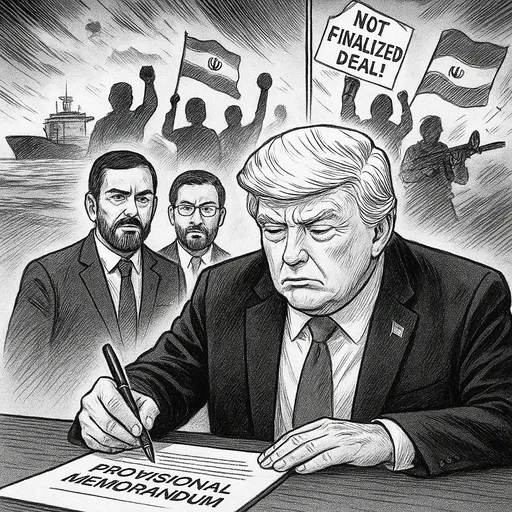
Multiple international reports say U.S. and Iranian negotiators have produced a provisional memorandum to extend a 60‑day ceasefire and potentially reopen the Strait of Hormuz, but implementation repeatedly hinges on President Donald Trump’s final sign‑off. U.S. officials including Vance describe the talks as close while noting outstanding language points, even as Tehran and some Iranian outlets publicly deny any finalized deal. Senior U.S. figures and Trump himself stress they will reject a bad agreement and signal readiness to keep pressure or military options on the table, reflecting deep political constraints. Meanwhile, analysts warn that intermittent exchanges of fire, sanctions actions and competing domestic audiences in both capitals make any fragile agreement vulnerable to collapse.
Many international outlets and U.S. officials report that negotiators from Washington and Tehran have agreed a draft or pre‑agreement — typically a 60‑day ceasefire extension and framework to reopen the Strait of Hormuz — but that it remains subject to presidential approval. Coverage emphasizes cautious progress, remaining language points, and the procedural step of obtaining Trump’s endorsement before the memorandum can take effect.
Iranian state media and officials often push back on press claims of a finalized deal, stressing that negotiations continue and warning against pre‑empting approvals. Tehran’s statements and hardline voices also demand U.S. compliance with commitments and couple diplomatic outreach with rhetorically strong warnings to retain leverage at the negotiating table.
Senior U.S. figures and President Trump repeatedly signal scepticism, rule out easing sanctions, and insist any agreement must be favourable to U.S. interests; some officials frame military options or renewed pressure as backstops. Coverage highlights uncertainty about whether Trump will back a negotiated outcome and underscores political constraints shaping final approval.
Analytical pieces and explainers map out what a provisional agreement would contain—nuclear talks, Hormuz transit assurances, and monitoring challenges—and assess wider regional and historical implications. These reports probe sticking points, leadership dynamics in Tehran, and the potential impact on regional stability and energy markets.
Separate reports document exchanges of fire, raids, and other violent incidents that risk derailing fragile negotiations and complicating verification and trust. Such incidents are presented as immediate spoilers that could unravel a tentative ceasefire or harden domestic political opposition to compromise.