
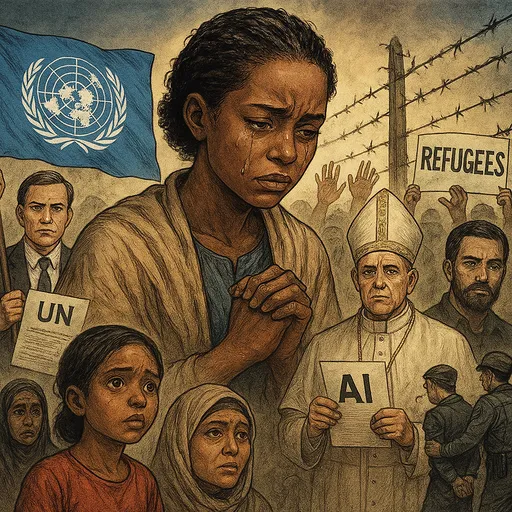
International reporting this cycle is dominated by demands for accountability for wartime abuses, renewed reckonings with colonial-era injustices, and urgent protection for displaced and vulnerable people. The United Nations’ decision to list parties for sexual violence has provoked diplomatic fallout and stronger calls for investigation and sanctions, while the EU has moved to sanction extremist settlers tied to abuses. France’s symbolic repeal of slavery-era laws and allied acknowledgements have rekindled debates about reparations and historical responsibility. At the same time the Vatican has issued ethical guidance on AI and humanitarian appeals, and coverage spotlights asylum policy changes, trafficking networks, press persecution, and domestic human-rights crises across multiple regions.
These pieces reflect a global human-rights and diplomatic perspective emphasizing investigation, naming, and possible consequences for states and actors accused of sexual violence in conflict. Coverage highlights UN listings, allied sanctions, diplomatic ruptures by targeted states, and international calls for accountability and protection of victims.
Reports from multiple countries frame France’s repeal of slavery-era statutes as a symbolic but necessary step toward acknowledging colonial injustices and restarting debates on reparations. Coverage emphasizes emotional parliamentary moments, linked legal corrections, and regional diplomatic responses praising the move as progress driven by international resolutions.
These articles present the Vatican’s perspective that technological and military policies must be guided by moral principles to protect human dignity. The pope’s encyclical and manifesto call for governance of AI, restraint in conflict, and urgent humanitarian relief, framing these as ethical imperatives for states and corporations.
Coverage in this group focuses on state-level refugee policy changes and the diplomatic pathways for displaced communities seeking return or protection. Reports highlight U.S. quota increases, appeals for UN intervention, diasporic leadership in advocacy, and long-running disputes over the right of return for displaced islanders.
These stories emphasize threats to journalists and political dissidents, regional solidarity among editors, and the risks of exile and forced restriction of movement. Coverage ranges from awards recognizing courage in exile to accounts of long detentions, forced returns, and perilous escape attempts, stressing the need for international protection of press freedoms.
Reporting here highlights transnational criminal networks that exploit migrants and the persistent gaps in cross-border law enforcement and protection. Articles call for stronger cooperation, victim protection, and dismantling of recruitment and trafficking routes that funnel vulnerable women into exploitation.
This cluster groups reporting on acute domestic humanitarian crises and social conflicts that demand national and international responses. Articles document shortages, detention abuses, exclusion in civil society debates, grassroots resilience, and calls for aid and policy remedies across Cuba, Venezuela, Ethiopia, South Africa and elsewhere.
These pieces spotlight how state policy and market pressures under authoritarian or illiberal contexts impact labor rights, cultural expression, and the use of private force abroad. Coverage includes gig-economy exploitation, tightened cultural censorship, allegations of external military contractor involvement in conflict, geopolitical critiques of Western influence, and warnings about erosions of civil liberties.