

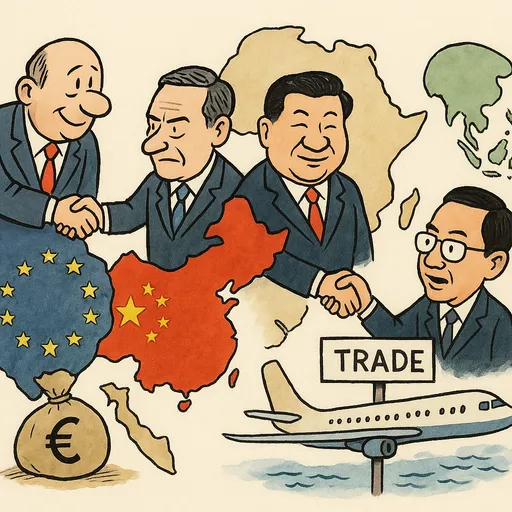
Recent coverage shows an intense uptick in bilateral deals and diplomatic initiatives across regions, spanning EU budgetary leverage, security pacts, trade drives and connectivity projects. The EU’s unfreezing of large tranches for Hungary after political changes highlights conditional engagement as a diplomatic tool, while China and Russia continue to deepen economic and security partnerships across Asia, Africa and Latin America. Southeast Asian states are competing for high-tech investment and expanding trade and transport links, with border corridors and export booms underscoring practical integration. Parallel initiatives — from visa waivers and new air routes to investment roadmaps and development financing — indicate a broad push to convert political commitments into tangible projects and mobility gains.
European institutions frame the release of large funding tranches as contingent on political and governance reforms, while Hungarian leaders press Brussels to restore frozen aid as a priority for economic recovery. Coverage emphasizes procedural and political stakes as the EU seeks to balance oversight with engagement under new Hungarian leadership.
China and Chinese-linked actors are portrayed as actively deepening trade, infrastructure and industrial ties—from rail-enabled agricultural exports and RCEP-era cooperation to joint ventures and state-backed energy partnerships. Reports emphasize Beijing’s use of investment, trade links and high-level invitations to strengthen influence and practical integration with partner states.
Russian sources and partners are depicted advancing security and strategic ties across the region, from alleged plans toward Armenia and warnings about integration to formal military and nuclear cooperation agreements. Coverage frames Moscow as pursuing both geopolitical leverage and transactional defense arrangements with a range of partners.
Southeast Asian countries are shown balancing competition for foreign investment in high-tech sectors with practical steps to boost cross-border commerce and connectivity. Reporting highlights rivalries for chip FDI, surging agricultural exports (notably durian to China), and efforts to streamline trade and customs cooperation to capture regional value chains.
Allied and partner states are portrayed enhancing defense coordination and material support through diplomacy and aid—ranging from talks on wartime command arrangements and intelligence pacts to donations and procurement for partner forces. Coverage frames these moves as efforts to shore up deterrence, interoperability and regional stability amid ongoing tensions.
Governments are negotiating fresh trade pacts and adjusting tariffs to expand market access and ease frictions; coverage ranges from landmark free-trade deals to tariff rollbacks and companies reshoring production amid trade tensions. These items are presented as deliberate policy efforts to recalibrate trade relations and protect strategic industries.
States and private actors are removing travel frictions and launching new links—through visa waivers, restored flights, new routes and joint transport initiatives—to stimulate tourism, commerce and people-to-people ties. The reporting underscores practical gains from easier movement and the role of connectivity in broader economic diplomacy.
Bilateral development finance and investment agreements are presented as central to national development strategies, whether via funds, energy cooperation, infrastructure projects or technical programs. Coverage highlights external financing and cooperation as catalysts for project acceleration, capacity building and regional integration.
States are concluding pragmatic legal and consular measures—double taxation treaties, pension portability rules, consular appointments, and training exchanges—to reduce friction for citizens and businesses and to institutionalize cooperation. These items are framed as technical but impactful steps that underpin deeper bilateral ties.
A final set of reports captures diverse bilateral actions — cultural restitutions, crisis diplomacy, high-level visits, trade diplomacy, logistics and joint exhibitions — reflecting the broad palette of state-to-state engagement beyond headline deals. These items collectively show diplomacy being used to manage crises, showcase soft-power ties and open practical cooperation channels.