
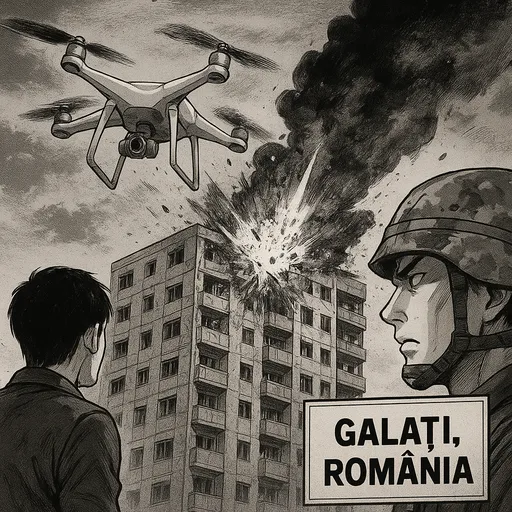
A wave of drone incidents, capped by a device striking an apartment block in Galați, Romania, has intensified fears of the Russo‑Ukrainian war spilling over into NATO territory. Romania and Western allies have condemned the strike, invoked alliance consultations and warned that NATO will defend allied territory, while analysts highlight growing challenges in defending European airspace against kamikaze and long‑range drones. Moscow has repeatedly denied responsibility, suggested the device may have been Ukrainian, and issued warnings and diplomatic reprisals, deepening the political standoff. Meanwhile Kyiv and Western analysts warn of a potential new Russian offensive even as Ukraine expands its own long‑range drone and strike campaigns, and sanctions and economic strains on Russia persist alongside mounting humanitarian costs.
Romania, NATO and many European governments frame the Galați incident as either a Russian attack or a dangerous spillover from the war in Ukraine, demanding accountability and pledging to defend allied territory. Their perspective stresses alliance unity, restraint in immediate kinetic responses, and consultations under NATO mechanisms to deter further incidents.
Russian officials, including President Putin and Kremlin spokespeople, deny responsibility for the Romanian incident, suggest the drone may have been Ukrainian, and frame European actors as biased or provocative. Moscow’s messaging combines denial with threats of rapid diplomatic or retaliatory measures and broader warnings about escalation, while disputing NATO accusations.
Kyiv emphasizes the ongoing threat from Russia, warns of preparations for new large‑scale attacks, and underlines the need for advanced air‑defense systems and Western support. Reports of expanded Ukrainian drone strikes, battlefield shifts, and cross‑border incidents illustrate an active and evolving combat picture that Kyiv frames as justification for continued international assistance.
Security analysts and commentators warn that kamikaze drones, sabotage and hybrid tactics are testing European defenses and alliance cohesion, arguing that air‑defense gaps and information operations increase spillover risks. Wargames, technical studies and reporting highlight how new technologies (AI‑enabled drones, long‑range loitering munitions) reshape logistics, deterrence and civilian vulnerability across NATO’s eastern flank.
Western states continue to target mechanisms of Russian sanctions evasion and also debate the broader economic costs of the war for Moscow, with measures aimed at enforcement alongside assessments of Russia’s wartime financing shortfalls. This perspective treats economic pressure as part of a broad response toolkit to degrade Russia’s capacity to prosecute the war.
Reporting on civilian suffering highlights the human toll inside Ukraine and among border communities, documenting displacement, hardship and attacks on humanitarian actors. These pieces underscore the urgent need for aid, protection of civilians, and the social consequences of prolonged conflict.