
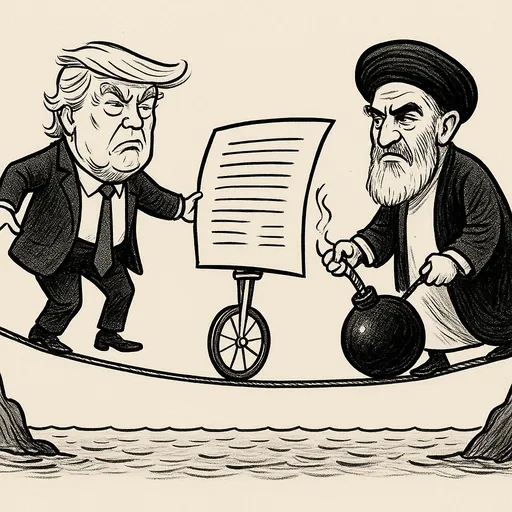
Reporting shows diplomats from Washington and Tehran have in multiple accounts moved toward a preliminary understanding — often described as a 60‑day ceasefire extension and a framework to reopen the Strait of Hormuz — but no binding deal has been finalized. President Trump repeatedly delayed a final decision, insisting any agreement meet his non‑negotiable “red lines” and demanding guarantees such as reopening Hormuz and limits on Iran’s nuclear material. Iranian officials and state media counter that no final agreement exists, warning Tehran retains sovereign rights over the strait and expressing skepticism about U.S. claims. Meanwhile, U.S. sanctions and targeted designations continue alongside diplomatic outreach, and international reporting remains cautious, noting progress on a draft while emphasizing unresolved verification and political approval steps.
U.S. sources and commentators emphasize that progress exists but final presidential sign‑off is withheld until all U.S. conditions are satisfied. Coverage highlights Trump’s insistence on clear red lines — including reopening the Strait of Hormuz and strict non‑proliferation guarantees — and his repeated postponements of a definitive decision while weighing political and security implications.
Iranian officials and state outlets stress that no final agreement has been reached and express distrust of U.S. statements, framing some Western claims as a mix of truth and falsehood. Tehran also asserts its sovereign prerogatives over the Strait of Hormuz and pressures Washington to demonstrate concrete actions rather than rhetoric.
Many foreign and regional reports describe negotiators as ‘very close’ to a preliminary memorandum or a temporary ceasefire extension but consistently underline that the framework remains unfinalized and contingent on political approvals and verification mechanics. Coverage points to incremental diplomatic steps — mediation by regional partners, technical drafts, and outstanding questions on inspections, sanctions relief and enforcement — that keep prospects uncertain.
Several pieces emphasize that U.S. pressure — including targeted sanctions and designations of procurement networks — remains an active tool intended to bring Iran to the negotiating table and constrain its capabilities. These reports underline a dual approach in U.S. policy: pursue a diplomatic off‑ramp while maintaining economic and punitive measures to shape Tehran’s concessions.