
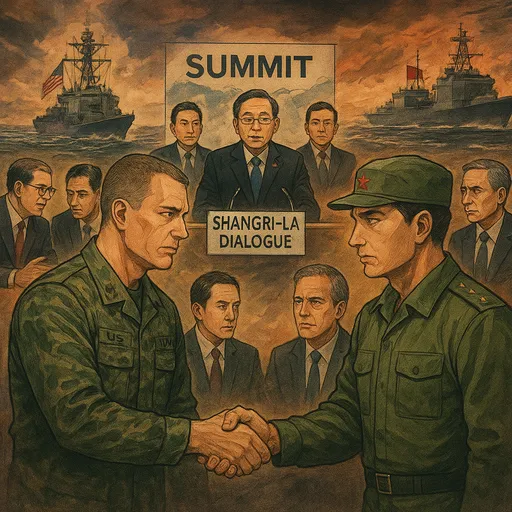
Global leaders and officials are maintaining multiple channels of dialogue even as geopolitical tensions persist. High-profile military-to-military contacts — notably repeated meetings between U.S. and Cuban officers at Guantánamo — signal rare but pragmatic engagement on operational security. In Asia and the Pacific, summit diplomacy (including the Shangri-La Dialogue) and bilateral visits emphasize both cooperative agendas and contestation over maritime claims and influence. Meanwhile, diplomacy addresses regional flashpoints from the Strait of Hormuz and Iran’s nuclear questions to Israel-Lebanon talks under U.S. mediation, while Europe grapples with Russia-related security concerns and multilateral forums press on with governance and development cooperation.
Western and regional outlets emphasize that unusually direct military-to-military meetings between U.S. and Cuban officials at Guantánamo mark pragmatic engagement despite broader political tensions. Coverage highlights the symbolic rarity and potential crisis-management value of these talks, while noting no major agreements were announced.
Cuban sources stress a defensive diplomatic posture, rejecting confrontation with the United States while denouncing perceived threats and blockades. Havana frames its outreach to multilateral partners and public diplomacy as essential to counter pressure and garner solidarity.
Reports from various countries present Beijing as actively pursuing both high-level statecraft and soft-power outreach, from summit diplomacy and bilateral talks to media and cultural exchanges. Coverage highlights China’s push for cooperation on trade, climate, and regional integration while managing rivalries with other major powers.
Sources critical of or concerned about Beijing underline disputes over maritime delimitation and accuse China of overreaching, while Pacific actors and partners stress sovereignty and external influence. The cluster reflects competing perspectives on maritime law, regional influence, and the role of outside powers in the Pacific.
Regional participants and forum coverage stress the dual themes of deterrence and non‑military cooperation, with many leaders urging multilateral approaches beyond pure military buildup. The Shangri‑La Dialogue and related appearances are portrayed as focal points for shaping Asia-Pacific security discourse and signalling priorities.
Regional reporting highlights Tehran’s careful diplomatic positioning: officials discuss management of the Strait of Hormuz with neighbors while simultaneously clarifying or denying negotiation on nuclear matters. The coverage underscores the interplay between maritime security, energy flows, and nuclear negotiation dynamics.
Sources engaged in or reporting on the negotiations frame U.S. mediation as central to de‑escalation efforts between Israel and Lebanon and to broader attempts to revive stalled Gaza peace plans. Reporting notes cautious progress amid intensified hostilities and competing regional agendas.
Several outlets report a sharp diplomatic break between Israel and the UN secretary‑general, highlighting a deterioration in relations with multilateral institutions. Coverage focuses on the consequences for coordination on regional crises and international investigations.
European sources and regional reporting emphasize consultations within NATO and the EU about Russia’s actions, mediation proposals, and sensitive historical memory disputes that affect bilateral relations. The cluster shows a mix of crisis response, alliance consultation, and political sensitivities shaping policymaking in Europe and neighboring states.
Various countries highlight engagement through global governance forums, summit diplomacy, and regional economic blocs to advance development, education, and institutional cooperation. Reporting underscores practical cooperation opportunities alongside calls for reform and stronger partnerships.
Regional reporting raises concerns about militarisation and emphasizes capacity‑building, people‑to‑people links, and scientific cooperation to boost Pacific voices in global forums. Small states seek partnerships that balance development and security needs.
This group collects reporting on bilateral tensions, reconciliation initiatives, and political dynamics ranging from Latin America to Southeast Asia. Articles reflect persistent local disputes and efforts at dialogue, whether over elections, border clashes, or diplomatic visits.
Coverage underscores stalled negotiations and the strategic importance of Greenland, with EU and U.S. attention on Arctic cooperation and contested or slow-moving talks. Reports point to diplomatic friction and the sensitivity of Arctic partnerships.
Reporting on Andorra highlights procedural diplomatic arrangements with France, including personnel changes and the pending association agreement. The pieces convey administrative diplomacy aimed at maintaining customary bilateral ties.