

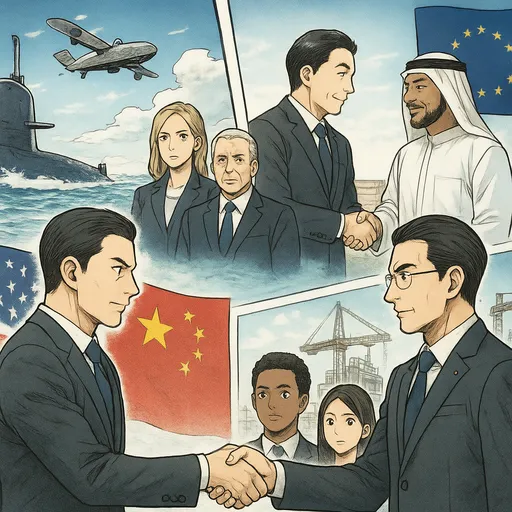
This collection of articles highlights a surge in bilateral deals spanning defence, development and trade across regions. Security partnerships — from AUKUS submarine and unmanned systems initiatives to new defence pacts in Europe and NATO-related arrangements — dominate coverage, reflecting allied efforts to bolster deterrence. At the same time, major powers deepen development and economic ties through investment, infrastructure and technical assistance (China, Japan, EU, Gulf partners), while small island and African states pursue targeted financing and capacity-building. Persistent trade tensions and political disputes (notably between Colombia and Ecuador, and EU conditionality debates with Hungary) show that bilateral agreements can both stabilise and strain regional relations depending on domestic and geopolitical context.
Sources emphasise strengthened trilateral defence ties among the United States, United Kingdom and Australia to accelerate naval capabilities and related technology. Reporting highlights transferred submarines, development of underwater drones, and broader allied defence conversations in the Indo‑Pacific.
Coverage from the region links energy cooperation to potential security alignment, exploring how economic ties (notably LNG) could enable closer military cooperation. Officials in Japan and Korea are reported as exploring practical security and information‑sharing arrangements.
Stories spotlight people-to-people and cultural diplomacy that support tourism and education through bilateral initiatives. These programmes are framed as soft-power cooperation that build trust and promote mutual understanding between partners.
Azerbaijan is portrayed as urging Western endorsement for the Zangezur corridor to secure regional transit and energy links. EU caution and competing regional interests are emphasised as constraints on immediate consensus.
Germany presents itself as a partner ready to provide diplomatic and technical backing to Ethiopia ahead of COP32. The coverage frames the bilateral engagement as part of international support for host preparations and climate diplomacy.
Reporting highlights a range of bilateral African deals focused on infrastructure, security assistance and development finance, with partners including neighboring states and international donors. These agreements are presented as steps to accelerate projects, bolster capacities and stabilise regions facing political or security challenges.
Articles depict China reaffirming strategic ties and delivering infrastructure support across multiple regions, framing Beijing as an active bilateral partner on projects from transport to trade facilitation. Chinese diplomatic messaging and project updates underscore long‑term engagement strategies.
Solomon Islands coverage shows concurrent partnerships with Australia, Saudi development finance and China, reflecting a pragmatic multi‑partner approach to security, development and community projects. The perspective emphasises implementation of programs across policing, construction and local services.
The pastoral visit announcement is framed as a symbolic bilateral event reinforcing longstanding ties between the Holy See and San Marino. Reporting focuses on ceremonial and community significance rather than policy change.
Both capitals are presented as pursuing broad, pragmatic agreements to deepen cooperation across trade, energy and development projects with an emphasis on measurable outcomes. Celebratory diplomatic gestures and honors highlight growing bilateral momentum.
U.S.-hosted negotiations are reported as critical venues for managing Lebanon–Israel tensions, while Lebanese officials insist on full withdrawal as a non‑negotiable condition. The perspective underscores mediation roles and enduring security sensitivities.
Coverage frames France and Norway as exploring extended deterrence arrangements, signalling evolving European security concepts and alternatives to exclusive reliance on U.S. nuclear guarantees. The accounts stress deliberative talks rather than immediate treaty change.
Stories record routine but consequential ambassadorial appointments and representative selections that shape bilateral relations and diplomatic continuity in the region. Reporting treats these moves as indicators of foreign-policy priorities.
Several partner states reaffirm diplomatic support for Morocco’s autonomy proposal regarding Western Sahara, signalling sustained international backing for Rabat’s preferred solution. The reporting frames these positions as continuity in bilateral relations.
Analysts and think‑tanks warn that NATO may need formal arrangements with neighbouring states on air defence to protect alliance territory, reflecting strategic recalibrations amid regional insecurity. The perspective foregrounds contingency planning and alliance adaptation.
Multiple bilateral partners are shown supporting Laos through UXO clearance, medical training, education and economic cooperation, often with a China‑Laos connectivity dimension. Coverage emphasises sustained development partnerships and capacity building.
Reports emphasise Turkmenistan’s use of diplomatic meetings to maintain ties and discuss cooperation with both Pakistan and Ukraine, highlighting routine foreign ministry engagement at multilateral forums. The pieces show an institutional focus on continuity and issue-specific dialogue.
The visit is presented as a high-level effort to strengthen bilateral cooperation on integration, security and development. Coverage frames it as practical diplomacy aimed at deepening neighborly ties.
This bilateral initiative is reported as a concrete industrial and military cooperation step, aiming to produce Ukrainian-designed drones in Canada for frontline use. The coverage frames it as sustained allied support via tech transfer and production partnerships.
Bilateral talks on water management highlight technical cooperation as a priority, with officials seeking to exchange expertise to improve resource governance. Coverage treats such engagements as practical problem-solving partnerships.
Officials are shown meeting foreign envoys and the U.S. ambassador to discuss energy cooperation and deepen ties with European partners, signalling a multi‑directional foreign policy. The reporting stresses continuity in energy diplomacy.
Reports emphasise new agreements and calls for increased EU and UK engagement with Greenland, framing the island as a growing strategic and scientific partner in Arctic affairs. The perspective links educational and research opportunities to broader geopolitical interest.
Actions such as closing consulates, declaring diplomats persona non grata, and deploying frontier surveillance reflect heightened tensions between European states and Russia. Coverage highlights security-driven diplomatic ruptures and new monitoring capabilities.
An announced presidential visit is framed as continuing strong historical and diplomatic ties between Portugal and Cape Verde. The report presents the trip as scheduled high-level bilateral engagement.
Andorra pursues deeper economic cooperation and tax agreements with European partners to modernise fiscal relations and boost investment links. Reporting highlights treaties designed to prevent double taxation and open collaboration avenues.
Caribbean states are advancing practical regional measures—from passport‑free travel using national IDs to joint waste management and law-enforcement leadership changes—aimed at improving connectivity and governance. The reporting frames these initiatives as integration steps within regional frameworks.
A small symbolic gift (a beehive) is presented as a gesture reflecting friendly bilateral ties and cooperation on biodiversity and science. The piece treats the act as emblematic of soft‑power exchange.
Japan, Israel, Australia, the United States and regional institutions are depicted as active partners in Pacific infrastructure, diplomatic presence and capacity‑building. The reporting emphasises projects that improve connectivity, aviation infrastructure and community benefits.
Negotiators in North America are reported pressing content rules and industrial measures to reshape supply chains and boost domestic production, reflecting protectionist pressures baked into bilateral and regional talks. Coverage frames these proposals as contentious for cross‑border industries.
Multiple reports present Colombo’s accusations that Ecuador’s tariff moves and political gestures constitute electoral interference, underscoring how trade policy can be politicised in bilateral relations. The perspective notes rising diplomatic friction and potential regional fallout.
Kyrgyzstan’s forums, visits and signed documents with EAEU partners and Russia are reported as reaffirming security, economic and cultural ties within the regional integration framework. Coverage frames these meetings as continuity in multilateral and bilateral cooperation.
The King’s recent trips to Azerbaijan and the UAE are portrayed as diplomatic outreach intended to expand Eswatini’s international ties and explore economic or political cooperation. Reporting focuses on the visits’ ceremonial and relationship-building aims.
Coverage shows Vietnam and Thailand balancing partnership and competition, especially in courting semiconductor FDI and pursuing green industrial projects, while trade frictions (e.g., shrimp imports) illustrate bilateral trade risks. The reporting highlights mixed incentives to both cooperate and compete.
Cuban biopharma partnerships and diplomatic friction with Ecuador, alongside U.S. statements on sanctions, show a mix of scientific cooperation and contentious diplomacy. The perspective stresses both collaborative health projects and ongoing political disputes affecting missions.
U.S. security assistance and EU/AFD regional recovery initiatives are presented as complementary efforts to stabilise areas affected by insurgency and foster resilience. Articles emphasise both military aid and development finance as parts of a bilateral and multilateral response.
Reports stress steep falls in cross‑border trade flows between Cambodia and Thailand, noting economic dislocation and the need for policy responses. The perspective highlights the vulnerability of regional supply chains to demand and regulatory shifts.
Post‑Brexit bilateral trade deals are framed as efforts to cut tariffs and expand commerce across the Commonwealth, with expected implementation steps and sectoral impacts discussed. Coverage stresses the economic and political significance of such pacts.
U.S. steps to ease trade frictions with the EU are presented as aimed at smoothing transatlantic commerce ahead of high‑level summits and geopolitical tests. The reporting frames these moves as pragmatic efforts to preserve Western unity.
Rising crowding at the border and proposals on unconventional border control measures are depicted as manifestations of shifting political climates and migration dynamics. The perspective emphasises human impacts and policy responses.
Cross-border closures and protests (e.g., Brenner Pass) illustrate tensions over freight pollution and transport policy, with immediate disruptions to commerce and calls for environmental action. Coverage highlights domestic protest tactics with cross‑border consequences.
New bilateral defence arrangements are framed as part of a wider European effort to bolster deterrence against Russia, showing close security alignment between London and Warsaw. The reporting emphasises political signalling and operational cooperation.
Officials and diplomats highlight potential major growth in Canadian exports to China as discussions stress commercial opportunities and bilateral trade expansion. The coverage treats such forecasts as signalling intent to deepen economic ties.
The signing of a military cooperation agreement between Russia and the Taliban is reported as a formal deepening of ties that has implications for regional security dynamics. Coverage emphasises Moscow’s proactive engagement with Afghan authorities.
Disputes over historical memory and political moves affecting candidate countries shape bilateral stances within the EU, with some states blocking progress on accession based on sensitive domestic issues. The reporting highlights how bilateral grievances can influence multilateral accession processes.
States use influencer outreach and messaging to shape cross‑border travel flows and tourism revenues, framing such efforts as mutually beneficial soft‑power strategies. The reporting notes coordination and competition for tourist demand.
Multiple pieces report on EU moves to unlock substantial funding for Hungary following political changes, framing these agreements as conditional economic levers tied to governance and reform. The perspective emphasises the political implications for EU–member relations.
Several bilateral measures show targeted benefits for Pacific states, from airport upgrades and new embassies to resumed transport and cash‑benefit policy changes, underlining the strategic focus of larger partners. Reports stress tangible local impacts of these deals.