

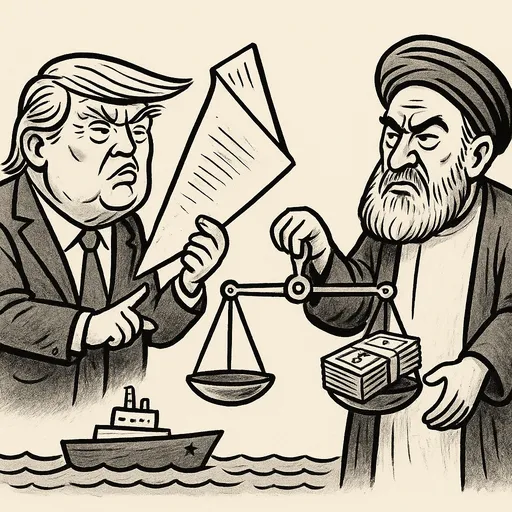
Reporting shows intensive, behind‑the‑scenes diplomacy: negotiators have sketched provisional frameworks and several outlets report a possible extension of a 60‑day ceasefire, but implementation repeatedly awaits President Trump’s sign‑off. Trump is portrayed across sources as tightening terms and insisting on strict red lines, sending revised drafts back to Tehran and delaying a final decision, even as U.S. officials warn of military options if talks fail. Tehran and domestic hardliners respond with skepticism, accusations of betrayal, and firm refusals to trade away Gulf security, keeping any agreement fragile. Maritime incidents, blockade enforcement and disputes over frozen assets underscore that sanctions and financial leverage remain central, while analysts warn the outcome will have broad regional and market consequences.
Sources emphasize that Washington—led by President Trump—is reluctant to sign a deal without meeting strict red lines and has repeatedly revised or delayed approval. Coverage highlights internal White House meetings that end without decisions and reports that tougher terms were sent to Tehran, portraying U.S. diplomacy as conditional and cautious.
Several outlets report that a 60‑day ceasefire extension or provisional truce is near or tentatively agreed, but repeatedly described as contingent on final approval from the U.S. president. These pieces frame any extension as a fragile, interim step that keeps open both diplomacy and the risk of renewed hostilities.
Iranian officials and hardliners are portrayed as skeptical of U.S. statements, accusing Washington of betraying diplomacy, denying reported deals, and warning against concessions on strategic points like the Strait of Hormuz. Coverage shows Tehran balancing public caution with continuing back‑channel talks while domestic hawks attempt to shape or block agreements.
Multiple reports focus on maritime confrontations, strikes on ships alleged to breach blockades, and repeated U.S. warnings that it could resume strikes if diplomacy stalls. These items underline that both coercive military measures and public threats remain levers alongside negotiations, contributing to an atmosphere of brinkmanship.
Coverage highlights that frozen overseas assets and sanctions enforcement are central bargaining chips: reports mention proposed releases of billions in assets, Tehran’s counter‑demands for large asset releases, and U.S. measures to disrupt Iranian procurement and financial networks. Economically focused reporting portrays financial concessions and punitive steps as core to any compromise or continued pressure.
Analytical pieces and allied‑focused reports examine who would benefit from a deal, how it would affect Israel, Lebanon, NATO commitments and markets, and why signatures remain elusive. These accounts stress the diplomatic complexity, domestic politics on all sides, and the broader strategic and economic consequences of any U.S.–Iran outcome.