
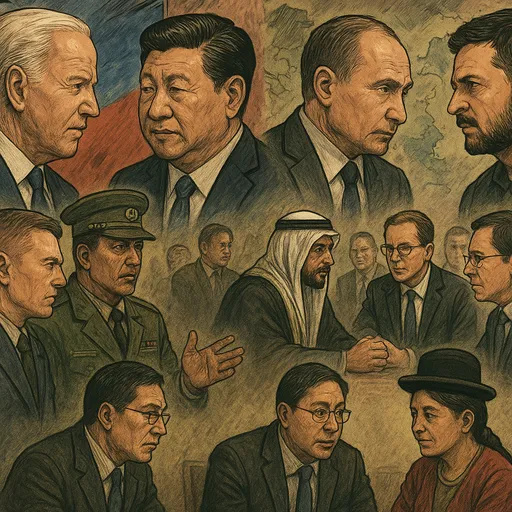
Leaders and officials worldwide are engaged in parallel tracks of strategic dialogue: Asia-Pacific security forums highlight US efforts to sustain a 'stable balance' with China while regional actors reaffirm defence pacts and seek to avoid unnecessary confrontation. Russia and its partners are pushing influence across the post-Soviet space even as negotiations over the Ukraine war remain fraught, with both Kyiv and Western partners preparing for talks amid warnings of escalation. Separate but significant diplomacy includes rare US–Cuba military contacts, Middle Eastern negotiations and arms-control concerns over Iran, and a steady rhythm of multilateral governance conversations on trade, AI and industrial innovation. Many governments are also managing domestic crises through invitations to dialogue—seen in Bolivia and elsewhere—while small states pursue ceremonial and interfaith diplomacy. Overall, the coverage shows states balancing deterrence with dialogue across conflict theatres and global governance forums.
Regional and Western actors emphasize deterrence and alliance cohesion while stressing they seek to avoid unnecessary confrontation with China. China counters by advocating dialogue and restoring bilateral relations where possible, while Pacific and smaller states express concern about militarisation and sovereignty in the region.
Moscow and its regional partners assert influence through high-level meetings and pressure on neighbouring states, framing their actions as protective of regional economic and strategic ties. This bloc seeks to shape outcomes in the post‑Soviet space and to bolster partnerships with like-minded states via forums and bilateral diplomacy.
Actors on both sides signal readiness for talks while remaining cautious, with Kyiv preparing negotiations and allies offering facilitation, even as Moscow rejects preset timelines and Europe resists certain Russian proposals. The cluster highlights continued international concern about escalation and deterrence, including warnings about Belarusian involvement.
Washington and Havana have held an unusual sequence of direct military talks at Guantánamo, signalling pragmatic security engagement despite broader tensions and uncertainty about outcomes. Observers frame these encounters as limited but potentially useful crisis‑management channels in a fraught bilateral relationship.
A mix of regional and international actors emphasize the need for multilateral engagement to resolve nuclear and security challenges, with the IAEA and states calling for decisive steps on Iran and others seeking alternative peacekeeping solutions. Simultaneously, confidence‑building talks—such as Israel‑Lebanon exchanges hosted by the U.S.—reflect pragmatic efforts to reduce tensions.
States and industry stakeholders are pushing multilateral frameworks for digital policy, AI governance and regional economic integration to manage technological change and trade flows. These forums serve as venues for aligning standards, promoting innovation, and shaping the rules that will govern emerging technologies.
Governments in the region pursue varied approaches to unrest and crime, with some inviting dialogue to defuse protests while others reject imported security models in favour of locally tailored strategies. Opposition forces and cross‑border political discussions also continue to shape regional political dynamics.
San Marino’s authorities coordinate international expressions of condolence and preparations for a papal visit, underscoring how small states use ritual and high‑profile visits to maintain diplomatic visibility. Ceremonial incidents elsewhere (such as a flag during a parade) are likewise framed as matters of protocol and state representation.
Ashgabat projects engagement through bilateral talks in Washington and active participation in UN and counter‑terrorism forums, portraying a cooperative posture on security and global governance. Its diplomacy stresses multilateral solutions to transnational threats and reform discussions.
Opposition figures emphasize resilience and the need for broader engagement with Kyiv and international partners, arguing for dialogue that can advance democratic aims within Belarus. Their perspective calls for strategic support and patience toward eventual political change.
NATO and European leaders debate resource and deterrence priorities while local incidents in the Balkans illustrate persistent regional sensitivities. Officials frame defence investment and symbolic actions as central to maintaining cohesion and stability in Europe.
UN bodies and member states stress the urgent need to invest in peacekeeping capacity and to uphold non‑proliferation norms as central pillars of international security. This viewpoint frames diplomacy and institutional reform as prerequisites for de‑escalation and effective conflict management.
Regional actors grapple with internal conflict cycles and strategic outreach to India, which plays a growing role in neighbors’ calculations; analysts call for careful, detail‑oriented engagement to manage complex security and political challenges. The cluster underscores both domestic instability and external balancing efforts.
Religious and interfaith institutions host high‑level exchanges to strengthen ties between Muslim‑majority countries and to promote humanitarian and dialogue initiatives. These meetings highlight soft‑power cooperation and multilateral cultural diplomacy.
Occasional official reticence after high‑level crisis meetings reflects a cautious communications posture amid ongoing sensitive deliberations. Silence can signal either operational secrecy or unsettled outcomes while stakeholders await clarity.