
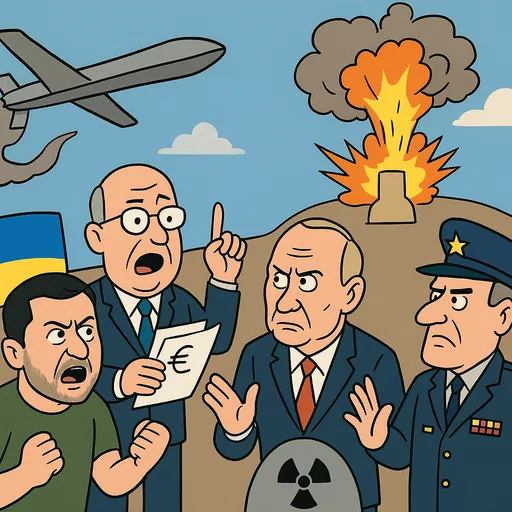
Reporting shows an intensification of drone and long-range strikes that have extended the battlefield into Russian territory and affected occupied areas such as Crimea, prompting fuel rationing and economic strain. Kyiv and its supporters emphasize continued Ukrainian strikes, sanctions alignment with European partners, and denials of accusations about attacks on nuclear infrastructure. Moscow and allied voices stress security measures, assign blame for cross-border incidents, and are expanding domestic air‑defense and counter‑drone structures. NATO members and regional states condemn violations of allied airspace, vow defense guarantees, and increase preparedness while international bodies like the IAEA and independent experts warn of nuclear and humanitarian risks and urge restraint.
Russian officials and allied voices emphasize Moscow's security rationale, report or attribute strikes to Ukraine, and warn the West about escalation. Authorities are also reinforcing domestic defenses and shifting blame for cross‑border incidents while allies signal political alignment.
Kyiv and sympathetic sources focus on Ukrainian strikes into Russian-held territory and energy infrastructure, align sanctions with European partners, and repeatedly deny accusations about attacks on nuclear facilities. Ukrainian leaders also press for more air‑defense support and highlight the war's economic and civilian impacts in occupied regions.
NATO members and European governments condemn incursions that affect alliance territory, pledge collective defense, and step up readiness in the Baltics and neighbor states. Regional leaders frame Russian actions as a direct threat to European security and press for coordinated responses and aid to Ukraine.
The IAEA and other international observers stress the heightened danger of any strikes near nuclear sites and call for verification and restraint, while analysts assess shifting battlefield dynamics and long‑term economic strains. Independent experts also warn about information risks, leaked intelligence, and the broader geopolitical consequences of prolonged conflict.
Media from other regions document the war's global spillovers: foreign fighters and casualties, attacks on tankers and cargo ships, and private companies testing military tech in the conflict zone. These accounts underscore humanitarian costs, maritime security risks, and the wider international implications beyond direct belligerents.