
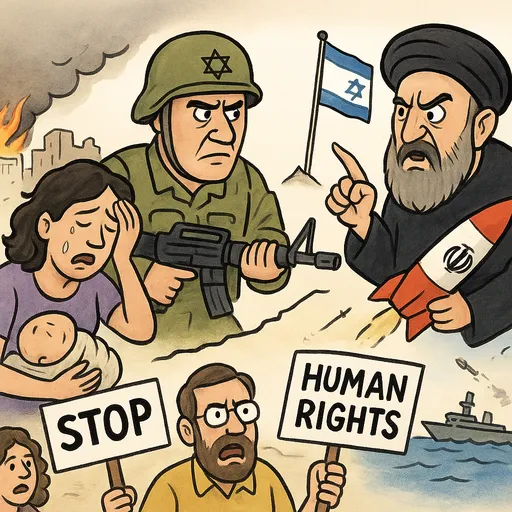
Fighting along the Israel–Lebanon border and deeper Israeli operations in Gaza have surged, prompting evacuation orders for southern Lebanese villages and northern Israeli communities and causing significant civilian casualties reported by Lebanese health authorities. Simultaneously, a parallel confrontation between the United States, its regional partners and Iran has accelerated, with strikes on Iranian facilities, attacks on vessels near the Strait of Hormuz, and Iranian claims of missile strikes and downed US drones. Gulf states and regional organisations have publicly urged restraint and condemned attacks on third states, even as some Gulf actors are reported to have carried out covert strikes against Iran. International protests and human-rights reporting highlight civilian suffering and controversial conduct by combatants, while hawkish US voices and militia declarations warn the situation risks spiralling into a broader regional war.
Reports grouped here focus on active military operations by Israel, the United States and allied regional partners — including ground advances in southern Lebanon and strikes on Iranian-linked targets. These pieces emphasize orders, tactical moves, evacuation notices and incidents at sea that reflect an operational push to degrade opponents and enforce maritime controls.
This cluster captures Iranian and allied-militia perspectives that frame recent operations as deterrence or retaliation, including claims of missile strikes on US bases, downed US drones, and stored missile readiness. Articles focus on Tehran's readiness to respond and on proxy groups reaffirming armament and operational intent.
Sources here convey Lebanon’s official alarm and humanitarian toll, with the prime minister and health authorities denouncing unprecedented escalation, reporting civilian deaths, and calling for state control over decisions of war and peace. These reports stress damage to civilian areas and urgent appeals for ceasefires and international protection.
Qatar and regional organisations present a diplomatic and de-escalatory stance, condemning cross-border missile and drone attacks on third states and calling for respect for sovereignty and reduced tensions in the Gulf. These pieces emphasize diplomatic channels and regional stability concerns.
This grouping reflects statements and action claims from Hezbollah, Hamas and other resistance actors who portray strikes and military operations as defensive or successful resistance against Israeli forces. Articles present lists of operations, battlefield claims, and the rhetoric of armed groups.
These reports highlight civil-society reactions and critical accounts of the conduct of forces, including international protests, investigative pieces on destruction in southern Lebanon and allegations from Israeli soldiers about lethal directives. They focus on civilian protection, rights violations, and domestic controversies tied to the conflict.
This set addresses the wider strategic implications for shipping lanes and allied naval posture, with assessments that the Strait of Hormuz and adjacent maritime routes have become highly risky and analyses questioning the effectiveness of US strategy. Articles discuss blockade enforcement, threat assessments and diplomatic implications for global trade and alliances.