

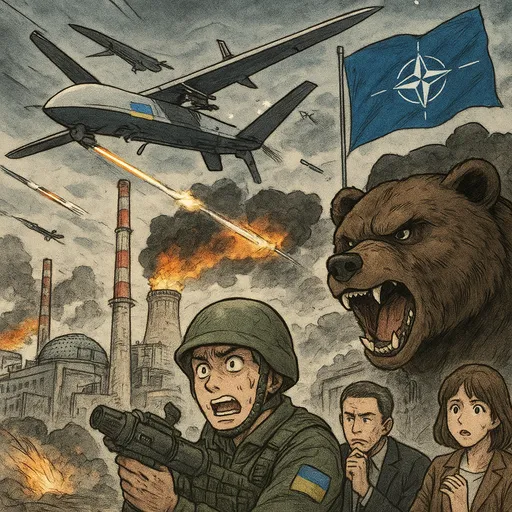
Reporting across countries shows an intensification of strike-and-counterstrike activity: Ukraine increasingly uses drones and other systems to target Russian energy and logistics nodes while Russia continues air and drone strikes inside Ukraine. Several incidents near or at the Zaporizhzhia nuclear plant and other energy sites have drawn repeated IAEA warnings and global concern about nuclear safety. The conflict is spilling beyond front lines, with drones striking buildings in NATO-border states and regional actors condemning attacks, prompting defensive pledges and diplomatic alarm. At the same time Western arms supply, testing of new systems in Ukraine, and worries about missile stockpiles shape debate over how long the war can be sustained, while analyses emphasize mounting strains on Russia’s economy, military logistics and domestic stability.
Reports from Ukrainian sources and supportive outlets emphasize Kyiv’s offensive campaign to degrade Russian energy and logistics, portray gains in contested areas, and highlight calls for international aid and air-defence reinforcements. Zelensky and Ukrainian military statements present strikes on refineries, pipelines and supply nodes as deliberate strategic actions while warning of continued Russian threats.
Kremlin spokespeople and allied actors frame Western policy and EU actions as efforts to prolong the war and accuse Kyiv of provocative strikes, including at sensitive sites, while offering cautious or evasive comments on prospects for ending the conflict. Allied leaders such as Belarus’s Lukashenko issue stark threats or warnings that raise fears of broader escalation.
International actors, led by the IAEA and multiple global newsrooms, stress grave concern about attacks close to or at nuclear facilities and call for protective measures, safety zones and continuous monitoring. Coverage focuses on reported damage, the agency’s assessments of radiation levels, and the diplomatic fallout from contested claims about responsibility.
Authorities in NATO and neighboring countries emphasize the danger of spillover incidents, condemn drone strikes that have hit civilian buildings and shipping, and reiterate commitments to defend alliance territory. National leaders and NATO members call for investigations and accountability after strikes near or across borders.
Coverage highlights Western arms firms testing systems in Ukraine, debates over providing advanced weaponry, and worries about missile stockpiles and the fiscal cost of sustaining support. Industry voices, analysts and critics discuss ethical and strategic implications of using the conflict as a testing ground and the domestic political cost of prolonged aid.
A range of analyses from foreign outlets depict mounting problems for Russia: fiscal overspending on the war, demographic decline, logistical failures, and political vulnerability of the regime. Commentators suggest these systemic pressures drive Kremlin behavior, including attempts to acquire foreign technology and restrict information.
Multiple human-centred reports underscore civilian casualties, deaths of children and foreign students, damaged homes and long-term environmental consequences of infrastructure disasters. These stories emphasize the war’s toll on ordinary people and communities across front-line and affected zones.
International organizations and diplomats call for restraint and urgent diplomacy, warning of dangerous escalation and urging a return to negotiations to prevent further humanitarian suffering. The UN’s statements frame the conflict as a broader threat requiring immediate diplomatic attention.
Analyses and expert discussions from NATO and regional media focus on alliance readiness, counter-drone capabilities, and war-gaming potential Russian attacks on neighboring states. The perspective highlights defence planning, capability gaps and the need to bolster deterrence in the Baltics and Eastern Europe.