

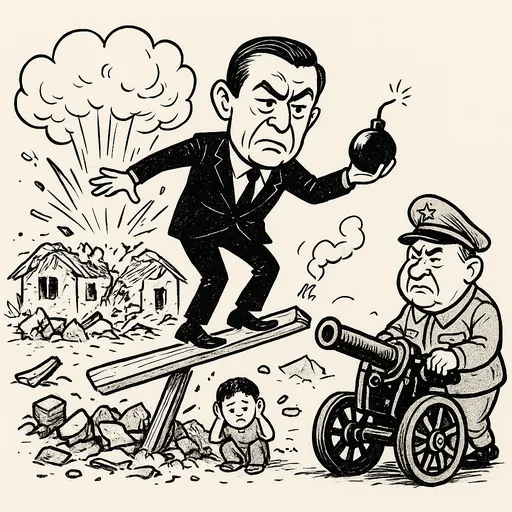
A series of powerful explosions across Myanmar have killed dozens — reports put the toll between about 45 and 55 people — and left many more injured with widespread destruction of homes. Sources diverge on causes: several accounts attribute the blasts to accidental detonations of stored or mining explosives, while others report strikes at ammunition or munitions depots. Many outlets emphasise the incidents occurred in rebel-held or contested areas, linking the events to the country’s ongoing internal conflict and fragile security. Investigations are underway, with local responders working to recover victims and determine responsibility amid concerns for civilians, including children, and broader regional safety implications.
These sources frame the blasts as accidental detonations tied to stored explosives or mining materials, often citing local or rebel statements that the explosions were unintended. Coverage focuses on storage safety failures and the danger of munitions or mining materials kept in populated areas.
This perspective reports the incident as an explosion at an ammunition or munitions depot, emphasising large explosive stockpiles and the extensive destruction they caused. The narrative highlights the acute hazard of depots in or near civilian areas and the resulting humanitarian impact.
These outlets situate the blasts within Myanmar’s armed conflict, stressing that the incidents occurred in rebel-held or contested villages and linking them to the country’s instability. Reporting underscores the risk to civilians amid fighting and the challenge of assigning responsibility in fragmented territories.
This viewpoint emphasises uncertainty, noting that the cause remains undetermined and no group has definitively claimed responsibility. Coverage calls attention to ongoing investigations and the lack of immediate authoritative explanations.