
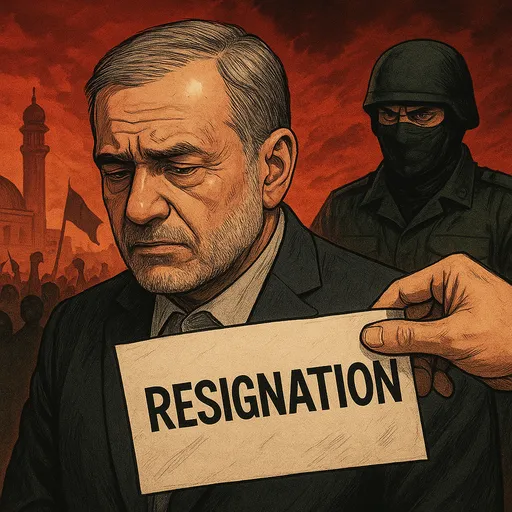
Multiple international outlets reported that Iranian President Masoud Pezeshkian had submitted or was preparing to submit his resignation amid claims of growing IRGC influence and a broader power struggle. Iranian officials and sources close to the presidency repeatedly dismissed these accounts as false rumours and affirmed continuity in presidential duties. Some foreign analyses framed the episode as evidence of the Islamic Revolutionary Guard Corps exerting decisive control over state decision-making. Separately, state-led preparations for a large funeral for a reportedly slain supreme leader were highlighted by other outlets, illustrating how leadership events—real or alleged—are intensifying domestic uncertainty and regional concern.
These reports focus on statements from Iran’s presidency and officials denying any resignation and stressing that the president remains in office. The sources aim to quell circulating rumours and present the situation as one of continuity rather than leadership change.
This viewpoint, expressed by several foreign outlets, presents the story as a symptom of an internal power struggle, with claims that the president submitted a resignation or that the IRGC has seized effective control of the state. These pieces treat the resignation narrative as evidence of political paralysis or a shift in who actually governs Iran.
This perspective highlights official preparations for a large funeral for a reportedly slain supreme leader, framing the events as a moment of national mourning with symbolic and political implications. Coverage suggests such ceremonies could shape domestic politics and regional messaging about leadership succession.