
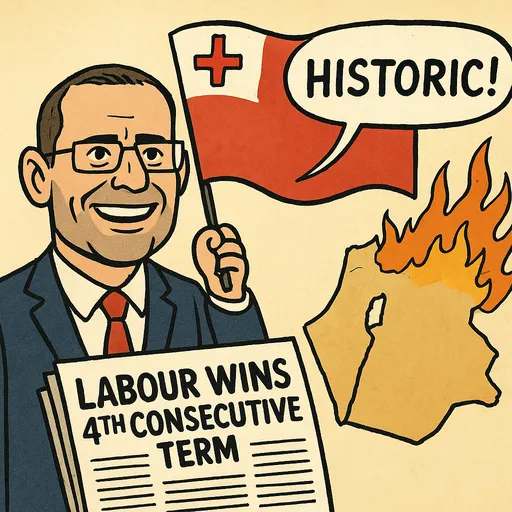
Malta's Labour Party has won a record fourth consecutive parliamentary term under Prime Minister Robert Abela, who called the result historic. Opposition parties acknowledged the outcome and international observers noted the vote's significance. Several reports emphasize that regional geopolitics, particularly the Middle East crisis, played a notable role in shaping voter concerns and campaign messaging. Coverage highlights the likely implications for Malta's domestic agenda, its stance in EU affairs and its role in regional diplomacy going forward.
These sources frame the election primarily as a domestic milestone, highlighting Labour's unprecedented fourth term and Prime Minister Abela's declaration of a historic win. Coverage centers on the immediate political consequences at home, election statistics and reactions from parties and observers.
These reports analyze the vote through the lens of regional geopolitics, arguing that the Middle East crisis and broader international tensions influenced voter sentiment and the campaign narrative. They explore how external conflicts affected public concerns and consider the election's implications for Malta's foreign policy and EU relations.