
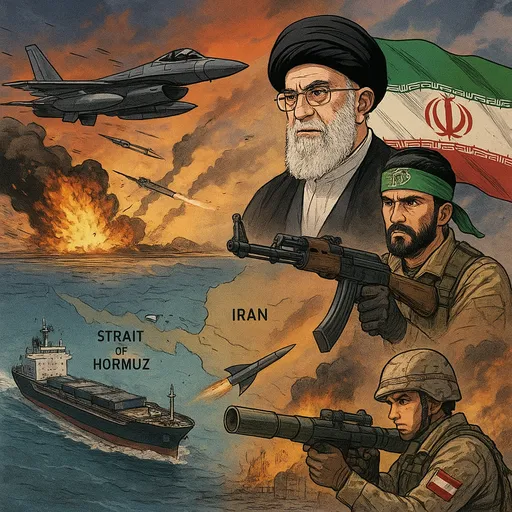
A rapid cycle of attacks and reprisals has reignited a wider Middle East escalation: U.S. forces have carried out multiple waves of airstrikes on Iranian targets while Tehran has closed the Strait of Hormuz and threatened retaliation. Iranian leaders and the IRGC have issued hardline vows of revenge and warnings to regional states and U.S. bases, increasing the risk of broader spillover. Gulf states have mobilized air defences and reported intercepting missile and drone threats as civilian shipping and nearby countries face disruption. At the same time, violence persists on other fronts — in Syria, Lebanon and the occupied Palestinian territories — complicating diplomatic efforts to limit the confrontation.
This cluster presents the situation primarily as U.S. military retaliation aimed at degrading Iran's ability to threaten shipping and regional security; many pieces cite CENTCOM statements and describe successive strike waves ordered by U.S. leadership. Coverage emphasizes the scale of strikes, U.S. objectives and declarations that Washington will continue to act against perceived Iranian threats.
These articles convey Tehran's framing: the closure of the Strait of Hormuz, IRGC operational statements and Supreme Leader rhetoric are presented as defensive and retaliatory measures that respond to U.S. strikes and perceived aggression. The coverage highlights vows of revenge, readiness to respond to any attacks on Iranian soil or interests, and warnings directed at U.S. bases and regional adversaries.
Reporting from Gulf and neighbouring states emphasizes the immediate security impact on the region: activation of air-defence systems, air-raid alerts, and interceptions as Iran and its adversaries exchange strikes. These pieces stress risks to civilian populations, disruptions to navigation and local governments’ measures to protect territory and infrastructure.
This group covers separate but related frontlines where hostilities and civil incidents continue: Israeli operations in Syria and Lebanon, settler violence and attacks on journalists, and Palestinian protests and civilian harm in the West Bank and Gaza. These pieces portray localized violence that both reflects and risks amplifying the broader regional tense environment.
This cluster contains broader international summaries, analytical pieces and casualty or incident reports that synthesize events and highlight humanitarian and geopolitical implications. Coverage focuses on the evolving sequence of strikes, reported explosions and casualties, implications for the interim ceasefire and the risk of wider destabilization and economic effects on shipping and energy markets.