
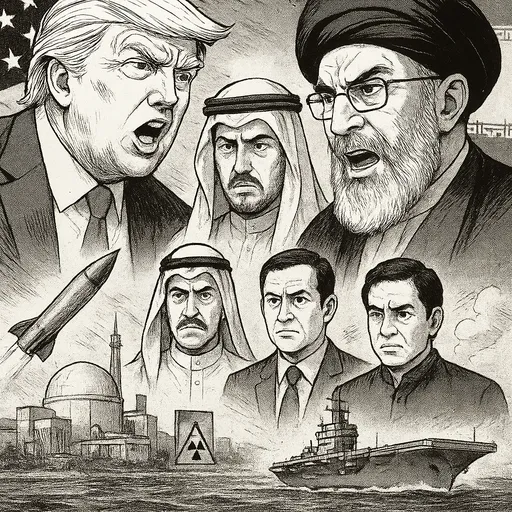
Reporting shows a tense mix of diplomacy and maximum‑pressure rhetoric: President Trump repeatedly says he is willing to resume talks with Iran but insists the ceasefire is over and issues blunt threats of severe military retaliation. Tehran’s leadership answers with vows of revenge, warnings of full‑scale defence, and insistence that it has honored prior commitments. Regional mediators from Qatar, Oman, Saudi Arabia, Egypt and Pakistan are actively trying to revive indirect talks and secure guarantees such as keeping the Strait of Hormuz open, while intelligence reports and allegations of assassination plots raise alarm. Analysts warn that coercive measures and covert actions have so far failed to produce a stable strategy, and technical disputes over uranium stockpiles and nuclear sites complicate any durable agreement.
US‑sourced coverage emphasizes a conditional willingness to negotiate while maintaining strong coercive posture. Officials and President Trump frame talks as possible only under strict public terms and repeatedly warn Iran they are ready to use overwhelming force if threatened or if assassination attempts occur.
Sources aligned with or reporting on Iran highlight defiant rhetoric from Tehran’s leadership, promises of revenge and pledges of full‑scale defence. Iranian officials often claim compliance with agreements while condemning US strikes and warning of countermeasures, narrowing diplomatic space.
Regional actors and mediators (Qatar, Oman, Saudi Arabia, Pakistan, Egypt, Türkiye and others) are portrayed as actively shuttling to revive indirect negotiations and de‑escalate tensions. These reports stress pragmatic confidence in diplomacy, calls for restraint, and efforts to secure public guarantees such as reopening the Strait of Hormuz to shipping.
Several outlets report alleged assassination plots, intelligence warnings and the legacy of covert action, which amplify perceived threats and drive urgent security postures on both sides. These stories increase mistrust and make negotiators more cautious, as operational risk feeds political escalation.
Analytical pieces argue that repeated coercion, strikes and provisional deals have not secured US objectives and question whether the administration has a viable alternative strategy. Commentators stress domestic political constraints, the consequences of prior covert operations, and the need for a clearer, credible policy mix of pressure and diplomacy.
Some reporting focuses on granular diplomatic hurdles: US demands for Iran to relinquish enriched uranium, satellite signs of activity at nuclear sites like Parchin, and strict verification terms. These technical disputes are depicted as key obstacles to reaching any durable agreement.
A small set of reports describes a remotely signed memorandum aimed at ending the war and signals of de‑escalation, presenting the clearest evidence of diplomatic progress amid otherwise fraught rhetoric. These items are framed as tentative steps that still face major verification and political hurdles.