
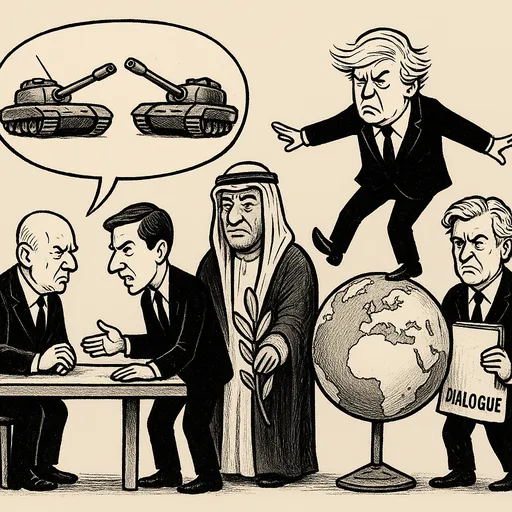
Leaders and governments across regions are intensifying bilateral and multilateral dialogues to manage security crises, from Lebanon–Israel border talks and Gulf navigation to negotiations over Ukraine and Russia. Transatlantic and NATO unity faces scrutiny as alliance members debate strategy and divergent policies, even as China and other global actors press their own diplomatic initiatives. Regional states and middle powers — Oman, Pakistan, Turkey and European mediators — are positioning themselves as interlocutors or conveners to reduce escalation and broker confidence-building measures. Simultaneously, global South actors and development bodies push multilateral forums for cooperation on economic and governance issues, while contested domestic politics (from Latin America to the UK) shape external alignments. Across these reports, dialogue is both a mechanism to de-escalate and a stage where shifting influence and credibility are being contested.
Ukrainian and neighbouring European voices present Russia as a shared adversary, calling for sustained support, accountability and remembrance of past grievances that shape current diplomacy. These actors stress the need for concrete assistance and coordination rather than rhetoric alone.
Western capitals and commentators express concern over fractures in alliance cohesion, debating burden-sharing, strategy and political alignment with the United States. The perspective highlights how domestic politics and divergent policies risk undermining collective deterrence and diplomatic credibility.
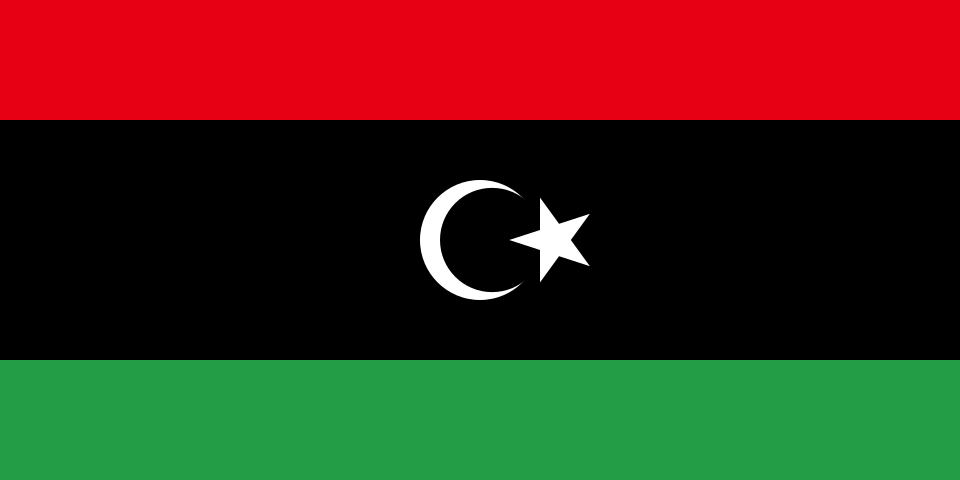
Regional and European actors frame talks over southern Lebanon as urgent, with multiple rounds of mediation and proposals aimed at stabilising the border and piloting security arrangements. The stance emphasizes multilateral engagement and U.S./European involvement to secure local confidence-building measures.
Gulf states and regional interlocutors underline continued diplomacy with Iran — from navigation in the Hormuz Strait to responses to attacks — as central to regional stability. Countries stress dialogue, technical talks, and coordinated condemnations or positions to manage security risks and preserve maritime and energy flows.
Western parties, international funders and civil society voices debate sanctions, recognition, peacebuilding funds and election prospects as complementary elements of policy toward Israel and Palestine. The perspective combines calls for accountability with pragmatic support for institutions and electoral processes, reflecting divided international approaches.
Turkey is depicted as deploying high-profile gestures and expanding its regional footprint — from diplomatic gifts in Western forums to seeking a larger role in Lebanon — signaling active, transactional diplomacy. Observers treat Ankara’s moves as efforts to broaden influence while managing ties with Western partners.
Beijing frames its diplomacy around openness, economic cooperation and assertive territorial narratives, using high-level summits and academic claims to project influence. The perspective emphasizes China’s bid to set agenda priorities amid rising geopolitical competition.
Smaller states, regional blocs and development institutions stress multilateral forums as essential platforms for finance, governance and collective problem-solving. This viewpoint prioritises practical cooperation, hosting of major meetings and coordinated responses to shared challenges.
Southeast Asian actors are depicted engaging to rebuild ties and sustain regional dialogue, from Indonesia’s outreach to Iran to ASEAN’s continued engagement with Myanmar. The perspective highlights pragmatic regionalism and efforts to keep diplomatic channels open despite political sensitivities.
India’s global outreach and Pacific states’ security concerns are presented as linked priorities, with major powers and researchers urging cooperation on development and transnational threats. The viewpoint underscores regional capacity-building and diplomatic engagement to manage emerging risks.
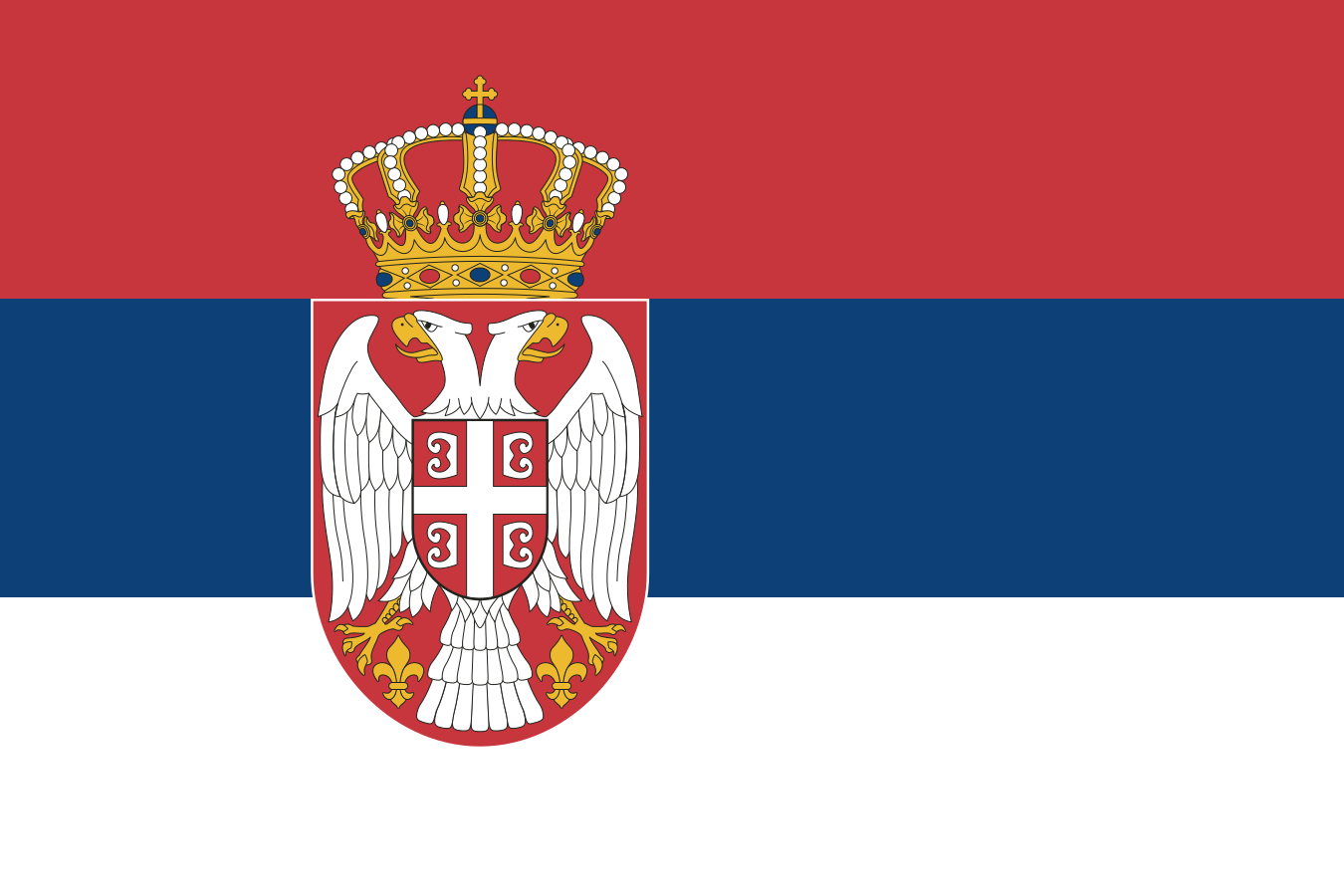
Diplomatic activity in the Caucasus and Western Balkans reflects competing influences from Moscow and Brussels, with integration and territorial disputes shaping state outreach. The perspective emphasises the strategic competition over influence and the role of EU accession dynamics.
North Korea publicly condemns NATO summits and alliance policies, framing denuclearisation debates as hypocritical and calling for different sequencing in talks. This viewpoint highlights Pyongyang’s use of international summits to rebut Western security narratives.
Countries such as Pakistan are positioning themselves as mediators in external conflicts, offering to broker US-backed initiatives and highlighting regional states’ interest in conflict resolution. The perspective stresses the value and limits of outside mediation in fragmented conflicts.
Regional actors register ideological shifts and contestation that affect relations with external partners, with countries endorsing democratic outcomes or navigating US influence and internal rivalries. The viewpoint shows how domestic results reverberate across diplomatic alignments.
High-level meetings between Turkmenistan and U.S. lawmakers underscore energy and resource diplomacy as a key avenue for engagement with external powers. The perspective frames bilateral talks as pragmatic, technocratic steps to advance cooperation on resources.
Populist commentators and activists in Western contexts offer stark forecasts about geopolitical and cultural trends, influencing domestic debates and potentially impacting foreign policy stances. The viewpoint highlights the interplay between rhetoric and political influence in international affairs.