

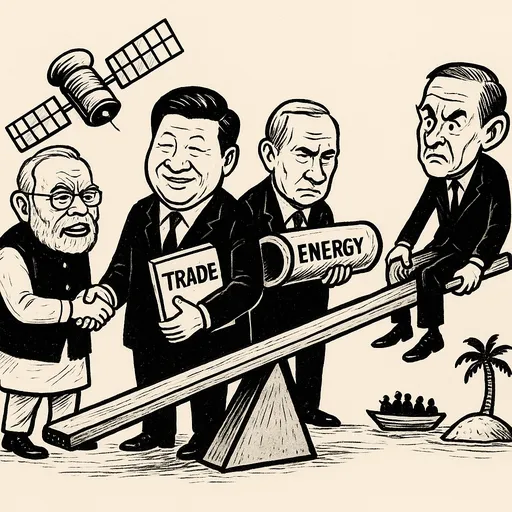
Recent bilateral agreements and diplomatic engagements show states diversifying partnerships across security, trade, technology and development. Major powers — notably India, China, Russia, the EU and the United States — are advancing targeted pacts that range from defense and energy to space and infrastructure. Small states and regional actors are securing financing, visa arrangements and capacity-building programs, while Pacific islands attract competing development and security attention. At the same time migration, sovereignty disputes and environmental concerns are shaping the political context for many deals.
India is actively diversifying its external partnerships, signing defense and energy deals and elevating strategic links with partners in the Indo-Pacific and beyond. New pacts and higher-level engagements frame India as seeking broader geopolitical and economic options.
China is consolidating influence through diplomatic outreach and reaffirmations of long-standing ties across regions, from the Pacific to Africa and the Korean peninsula. Beijing emphasizes trade, development and political solidarity in these bilateral engagements.
Russia is pursuing closer ties with a range of partners, reviewing defence, political and economic cooperation and promoting commercial links. Moscow’s diplomacy spans Africa, Asia and the post-Soviet space and includes state-level meetings and company-driven projects.
Australia is intensifying engagement in the Indo-Pacific through security, development and trade initiatives designed to bolster regional capacity and economic ties. Canberra frames these bilateral programs as investments in stability and deeper cooperation with island and regional partners.
European actors are using a mix of development projects, formal initiatives and diplomatic measures to advance policy goals and regional influence. France, the EU and their partners combine soft-power projects with negotiations and occasional diplomatic sanctions or protest actions.
Western states and NATO-aligned partners are coordinating arms, modernization and security assistance for partner countries, reflecting continued focus on defense interoperability and military capacity. Offers and funding are often presented alongside calls for burden-sharing among allies.
Across Africa, countries are signing infrastructure, trade and cooperation agreements with a variety of external partners to spur growth and regional connectivity. These deals encompass rail and trade frameworks, border and security cooperation, and efforts to attract foreign investment.
Bilateral arrangements on visas, official visits and repatriation reflect both facilitation and friction in mobility and protocol. The mix of reciprocal visa exemptions, diplomatic postings and migration operations underscores how travel rules and incidents still shape bilateral relations.
States and financial institutions are concluding cross-border financing, trade and connectivity agreements to enable corporate transactions, transport links and new data or infrastructure investments. These arrangements are framed as economic modernization and regional integration measures.
Small island states are securing development financing and reaffirming regional partnerships that cover infrastructure, security and ceremonial diplomacy. External partners — from Gulf funds to regional neighbours — are active in funding and formalising these arrangements.
Asian states are striking pacts that emphasize high-technology collaboration, space cooperation and expanded trade targets, reflecting a regional push to capture value in advanced industries. These agreements aim to boost competitiveness and deepen economic interdependence.
Neighbouring states in Eurasia and Southeast Asia are using state visits and ministerial talks to strengthen defence cooperation and manage border or regional security concerns. These contacts focus on practical defence collaboration and reaffirming traditional ties.
Bilateral engagement also targets human-capacity building, education and technical trials — from schooling initiatives to agricultural and financial experiments — showcasing softer, programmatic cooperation. Partners present these efforts as investments in resilience and institutional capacity.
The United States is reaffirming and expanding security cooperation with African partners to address regional threats and promote stability through intelligence-sharing and capacity-building programs. Washington frames these deals as supporting governance and countering transnational risks.
Countries across the Middle East and Mediterranean are negotiating strategic ties and regional initiatives that span security, trade and diplomatic realignment. These bilateral moves underscore competing influences and efforts to build new cooperative frameworks.
Bilateral diplomacy in the Atlantic and Latin America continues to revolve around sovereignty disputes and external influence, from contested territories to political control over economic decisions. These issues shape domestic debate and regional relations.
European institutions are considering trade-policy tools — from licensing to tariffs or bans — to address political and legal questions about goods from occupied territories. The debate demonstrates EU use of trade policy to pursue normative and political objectives.
European states are forging industrial and naval cooperation deals to develop next-generation maritime capabilities and strengthen interoperability. These pacts reflect a continent-wide push to bolster maritime defence amid heightened security concerns.