

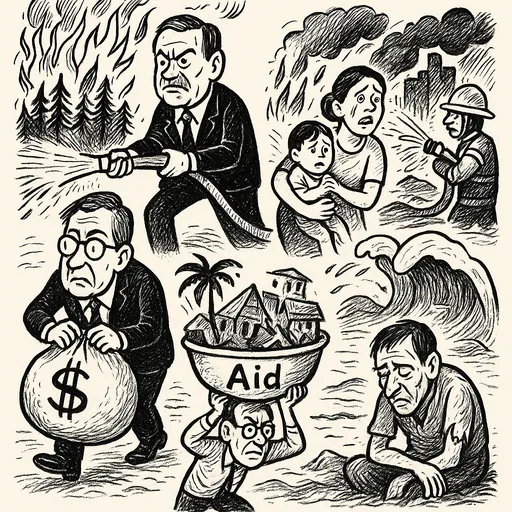
This set of reports describes simultaneous large-scale emergency operations: extensive wildfires across southern Europe and near Paris that have scorched thousands of hectares, produced multiple fatalities, led to arrests on suspected arson and prompted criticism of preparedness. Deadly urban fires in Bangkok are the focus of intense rescue, casualty identification and safety-code investigations as survivors and families call for answers. International humanitarian efforts for Gaza feature major donor pledges and reconstruction funds while UN officials and local authorities dispute access and obstruction of aid, complicating relief delivery. South Asia’s monsoon-driven floods and landslides have caused dozens of deaths and displaced large populations, while typhoon evacuations in China and other climate extremes are triggering mass removals and contingency operations. Separate but related crises — Ebola outbreaks, malnutrition risks, refugee hunger in host camps and transport accidents — further strain international relief capacity and highlight gaps in protection, logistics and local response systems.
European and regional outlets emphasize the scale, cross-border consequences and human toll of wildfires in Spain and France, focusing on evacuations, acreage burned and arrests where arson is suspected. Reporting highlights strain on firefighting resources, scrutiny of government preparedness and the interplay of extreme heat with fire risk.
Coverage from Thai and international sources centers on the catastrophic nightclub and bar fires in Bangkok, documenting high casualty counts, survivor accounts and family searches. Authorities and media stress investigations into safety standards, blocked exits and possible negligence while emergency teams manage identification and medical response.
Reports from a range of international sources highlight large donor commitments—led by EU institutions and several states—to fund reconstruction and relief in Gaza while UN officials and some outlets assert that aid deliveries are being obstructed. Coverage captures both donor pledges and the political, security and administrative disputes (including denials by Hamas) that complicate distribution and civilian access to assistance.
Regional reporting documents heavy monsoon rains, flash floods and landslides affecting Bangladesh and nearby areas, emphasizing immediate death tolls, mass displacement and ongoing search-and-rescue operations. Outlets call attention to large numbers affected and urgent needs for humanitarian assistance and shelter.
Coverage from Latin American and international sources outlines Venezuela’s compounding crises—major earthquakes, collapsing or poor-quality social housing, severe food insecurity and diplomatic frictions over aid delivery. Articles spotlight the scale of reconstruction challenges, displaced populations in temporary housing and incoming international shipments of humanitarian assistance.
Reports from multiple regions focus on the human consequences of conflict and disaster: returns to damaged capitals, refugee camps at risk of food shortages, and prolonged hardship for displaced families. Sources stress gaps in basic services and calls from aid groups for sustained support to reintegration and camp operations.
Meteorological and regional outlets report on Typhoon Bavi’s impact, noting large-scale evacuations and emergency preparations as the storm made landfall and inland progress. Coverage stresses government-led evacuations, transport disruptions and pre-emptive safety measures to limit casualties and infrastructure damage.
Health-focused reporting highlights epidemic threats and humanitarian access issues: the Ebola outbreak in DRC, acute malnutrition risks in Afghanistan, alternative local disease responses in conflict zones, attacks affecting medical evacuation assets, and cross-border delivery of WFP supplies. The perspective underlines how conflict and logistics hinder standard public-health and humanitarian operations.
News pieces from diverse outlets cover fatal transport incidents—from a bus plunging into a river in Ivory Coast to road crashes in Mexico and Indonesia and a tourist boat capsize—focusing on casualty counts, rescue activity and preliminary investigations. The reporting underlines persistent safety risks in regional transport systems and the immediate burden on emergency responders.
These items describe targeted search-and-rescue or evacuation missions—school or student rescues, mountain and sea searches, and helicopter extractions—emphasizing coordination between local authorities and emergency teams. Coverage highlights operational challenges, international coordination in some rescues, and relief actions for stranded or kidnapped persons.
Domestic U.S. reporting documents record high temperatures and public-health warnings as cities face acute heat stress, illustrating another dimension of climate-driven emergencies. The piece underscores heat’s direct threat to public health and infrastructure.
Coverage from European security-focused sources reports on civil-defense preparations, such as protective measures in schools, reflecting concerns about resilience to attacks or disasters. The perspective emphasizes precautionary steps and community-level readiness as part of broader emergency planning.
Seismological bulletins and regional reporting relay details of earthquake activity, noting magnitudes, epicenters and preliminary monitoring data to inform the public and preparedness agencies. The focus is on early information and situational awareness rather than casualty reporting.