
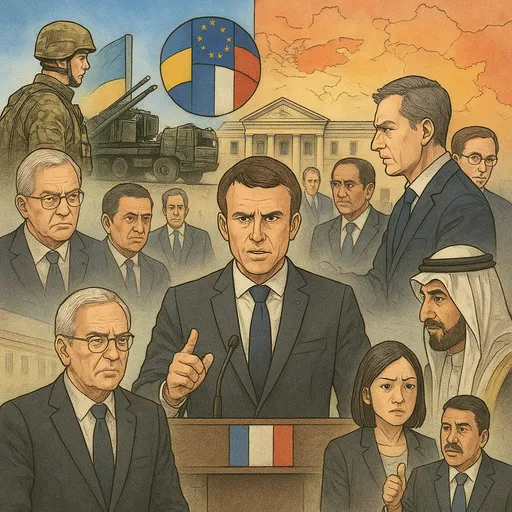
World leaders and officials are intensifying multilateral and bilateral engagement across several hotspots, with a strong Western push to bolster Ukraine’s air and missile defenses through coalitions, financing and coordinated meetings in Paris. The European Union continues to debate sanctions, enlargement and strategic posture toward Russia while France’s leadership frames a more muscular defense stance. Regional diplomacy is active in the Middle East and Gulf, where de-escalation, condolence messages and bilateral visits seek to manage crises, alongside reconstruction and outreach efforts in the Caucasus. Elsewhere, Asia–Pacific states adjust to strategic competition with China, Latin American and Caribbean politics reshape diplomatic alignments, and domestic political currents in Western countries are visibly influencing foreign-policy debates.
Western and European governments are coordinating to build integrated air and missile defence capabilities for Ukraine and for Europe, combining political pledges, coalition frameworks and financial support. Paris-hosted meetings and multilateral pledges signal a readiness to pool capabilities and sustain long-term deterrence against aerial threats.
The EU and its members are navigating calibrated pressure on Russia while debating the scope and targets of sanctions and broader strategic integration. Internal debates—from SPD critiques to NATO relationship analyses—reflect tensions about how forcefully and coherently Europe should respond.
French leadership is emphasizing a strong posture in defence of democratic values, with President Macron framing readiness to defend freedom as central to policy and continental security. That rhetoric reinforces French calls for deeper European defence cooperation.
Gulf and regional capitals have exchanged condolences and solidarity messages following sensitive incidents, using personal outreach to stabilise relations and show regional cohesion. These gestures underscore the role of ceremonial diplomacy in calming tensions and maintaining channels for dialogue.
A range of congratulatory messages, cultural celebrations and representation at international forums show smaller states and envoys reinforcing bilateral ties and soft-power links. Participation in global summits and academic invitations also signal efforts to sustain visibility and cooperative partnerships.
Participants at the Shusha Global Media Forum are prioritising media collaboration to counter disinformation and to observe reconstruction work in Karabakh. The initiative highlights post-conflict confidence-building and regional information strategies tied to reconstruction efforts.
Political appointments and ideological commemorations are reshaping diplomatic signals in Latin America and the Caribbean, from Venezuela’s new foreign minister to debates over peace institutions in Colombia and Cuba’s continuing embrace of multilateralism. U.S. influence and partisan perspectives on Venezuela remain prominent in regional diplomacy.
Regional leaders are engaged in high-level consultations to stress de-escalation and to coordinate on security, while other dialogues—such as US visits by Iraqi officials and Lebanon–Israel negotiations—seek to manage flashpoints. Parallel engagements with actors like Sana’a reflect a complex mix of international, regional and local diplomacy.
International actors show divergent approaches to Israel–Palestine issues, ranging from funding peacebuilding initiatives to criticism of settlement-related events and calls for sanctions or recognition. These reactions illustrate fragmented international stances and domestic political pressures shaping policy toward the conflict.
Commentators and media in Belarus debate scenarios about ultimatums and broader regional shifts involving Kyiv and Moscow, reflecting heightened insecurity and speculative analysis of geopolitical trajectories. The conversations signal concern about spillover effects and policy uncertainty in the neighbourhood.
Iran’s refusal to allow UN inspections at certain nuclear sites, coupled with internal events that prompt public speculation, projects a posture of resistance to external oversight while domestic symbolism continues to attract international attention. These developments complicate diplomatic engagement and verification efforts.
Asia‑Pacific states are responding to Chinese influence with new regional alignments, ASEAN engagement and debates over military activity; online public sentiment is also shaping Beijing’s outreach. These dynamics reflect a growing emphasis on regional coordination and reputational management.
African states and regional organisations continue to address security architectures and diplomatic frictions, from efforts to create coherent regional forces to postponements of high‑level visits amid domestic tensions. The coverage highlights both capacity gaps and ongoing attempts to stabilise inter‑state relations.
Commentators and political figures in Western countries are influencing foreign‑policy narratives, often reframing international issues through partisan or populist lenses. These domestic conversations affect relations with allies and responses to international crises.
Controversial remarks by Spanish political figures provoked diplomatic backlash from France and domestic criticism, underscoring how national identity rhetoric can quickly escalate into bilateral diplomatic disputes. Both governments demanded clarifications or apologies to contain the fallout.