

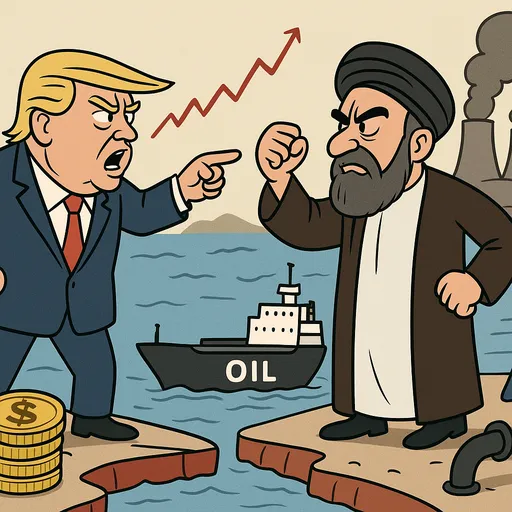
Coverage is dominated by a new US‑Iran confrontation over the Strait of Hormuz, with US proposals to reinstate blockades, resume naval control and levy transit fees spurring diplomatic pushback and legal concerns. Markets reacted quickly: oil prices jumped and financial volatility rose as traders priced the risk of supply disruptions while shipping flows slowed and dozens of vessels were delayed. Regional and commercial actors are moving to mitigate chokepoint risk—most notably UAE port and route diversification projects—while analysts flag the broader strategic consequences for global energy routes. At the same time, attacks on refineries, climate‑driven grid stresses and cross‑border outages highlight structural vulnerabilities in energy infrastructure even as renewables and EV innovations advance long‑term supply and demand dynamics.
Voices aligned with the US hardline posture frame control of the Strait as a security responsibility that can be monetized to fund protection and deter Iran, endorsing blockades and transit fees as policy tools. These pieces present the moves as deliberate pressure to secure maritime routes and compel compliance.
European and other international interlocutors stress freedom of navigation and challenge unilateral monetization of a strategic international waterway, warning of legal and economic consequences. Some governments and leaders frame US proposals as coercive or costly for third‑party shippers and economies.
Gulf commercial and state actors are pursuing infrastructure diversification—new eastern UAE ports and alternative corridors—to reduce dependence on Hormuz and insulate trade from geopolitical shocks. These plans are framed as pragmatic risk‑management to protect logistics and energy flows.
Reporting from shipping and security perspectives highlights slowed traffic, ships stranded on either side of Hormuz, and operational challenges including mine‑clearing and escort operations. Coverage stresses immediate risks to commercial navigation and the technical and diplomatic work needed to keep the lane open.
Market and business outlets focus on price moves and economic fallout as oil spikes, equities wobble and inflation/rate fears surface in response to Gulf escalations. These stories link geopolitical events directly to commodity markets, trade costs and national economic impacts.
Coverage examines how the Ukraine conflict and sanctions pressures are reshaping European gas flows and Russia’s refining capacity, while attacks on energy infrastructure add operational risk. Analysts see shifting import patterns and degraded refining as complicating both war dynamics and European energy security.
National stories emphasize vulnerabilities in grids and production systems—from heat‑reduced nuclear output in France to cross‑border transmission faults, countrywide blackouts and ongoing energy sector procurement and exploration. These accounts underline how weather, maintenance and investment shortfalls can disrupt supply independent of geopolitics.
Technology and transition coverage highlights advances in EV battery tech and expanding renewables deployment, framing these developments as strategic levers to reduce long‑term fossil fuel exposure and import vulnerability. Such pieces point to structural shifts that could alter geopolitics over time even as short‑term risks persist.