
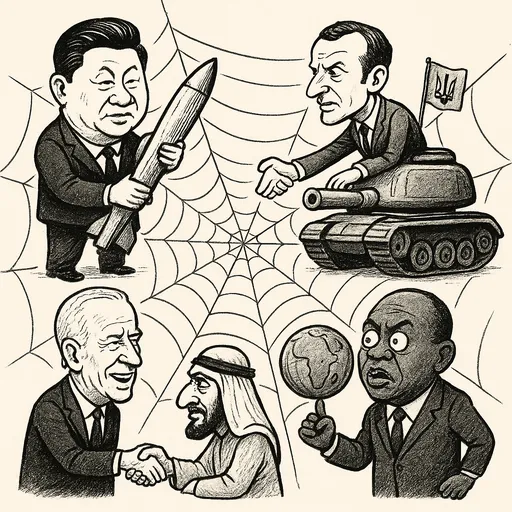
World leaders are engaged in a dense web of bilateral and multilateral diplomacy across regions, from China’s assertive messaging in the Asia–Pacific to France-led European initiatives on defense and support for Ukraine. The United States is actively pursuing bilateral engagements and mediating tense Middle East and Levant conversations while regional powers press competing security narratives. Africa and Latin America show intense internal and inter‑state diplomacy — from Russia’s influence in some Sahel states and African UN ambitions to renewed peace dialogues and political bargaining in Colombia and Venezuela. Meanwhile global cooperation continues in targeted domains such as space, maritime governance, and coalition-building for missile defence, even as multilateral institutions and resource disputes face pressure. These strands highlight both sustained channels for conflict management and growing contestation over strategic influence and norms.
China is projecting influence through security warnings in the Pacific, public diplomacy initiatives, and framing global governance initiatives to promote its multilateral vision. Beijing’s narrative emphasizes restraint by others while promoting Chinese-led forums and cultural diplomacy to consolidate regional sway.
France and several European partners are foregrounding collective defence, military signalling and intensified support for Ukraine, linking symbolic diplomacy with concrete capability pledges. Paris’s leadership frames European security revival, deeper EU engagement with Ukraine, and multinational defence initiatives as central to regional stability.
The United States continues high‑level bilateral engagement and acts as a mediator in Levant talks, balancing strategic partnerships with pressure on allied force posture. Washington’s interactions aim to manage regional escalations while reinforcing ties with partners across the Middle East and beyond.
Sudanese authorities and external mediators are at odds over truce proposals and contested territorial decisions, with the army’s stance and political reactions shaping prospects for peace. Conflicting accounts and local protests underline the fragility of external initiatives and the centrality of internal actors to any settlement.
Across the region, governments, opposition forces and former combatants are engaged in negotiations and public roadmaps to fortify democratic processes and preserve peace accords. Debates over transitional justice and institutional reforms reflect competing domestic visions and international scrutiny.
African leaders are navigating between external partners — including growing Russian influence in some states — and appeals for more balanced AU‑EU relations and leadership roles within the UN selection process. Campaigns for international posts and summit diplomacy underscore Africa’s push for equitable partnerships and diverse external backing.
Small Caribbean states are increasing collective action on security, migration and representation, using OECS mechanisms to coordinate positions and endorse regional UN candidacies. The bloc’s diplomacy balances external engagement with efforts to preserve autonomy and shared development priorities.
Leaders are using ceremonial gestures—condolences, congratulatory messages and high‑level visits—to reaffirm bilateral ties and regional solidarity during sensitive moments. These symbolic acts sustain diplomatic channels and signal continuity of relationships amid broader geopolitical shifts.
Ethiopia’s leadership is engaged in internal national dialogue and regional diplomacy over the GERD and Nile governance, countered by persistent Egyptian concerns and critical commentary. The debate mixes appeals to historical rights, calls for multilateral management, and exchanges of diplomatic advice and visits.
European and Western actors are debating policy tools—from recognition and sanctions to funding for peacebuilding—while Israeli domestic politics complicate prospects for durable solutions. The cluster highlights a mix of diplomatic pressure, coalition funding for peace initiatives, and intense electoral-era scrutiny.
The contested process to select a UN Secretary‑General reflects shifting regional ambitions and questions about equitable geographic representation, with non‑European candidates gaining traction. The campaign underscores the role of diplomatic travel and regional lobbying in multilateral appointments.
Despite wider geopolitical tensions, international crewed space missions and high‑level visits to partner facilities demonstrate continuity in scientific and operational cooperation. Space engagement remains a domain where pragmatic collaboration persists across rivalries.
Russia continues to back preferred actors in breakaway regions and faces scrutiny from neighbouring and Western states, while relations with allied states (including Belarus) feature strategic conversations and occasional public disagreements. These dynamics reflect persistent contestation over influence in the post‑Soviet space.
States are advancing maritime norms and treaties to protect high seas ecosystems, signaling renewed multilateral attention to ocean governance alongside security concerns at sea. Environmental diplomacy is thus intersecting with broader geopolitical priorities.
ASEAN and neighbouring states are reinforcing bilateral cooperation on infrastructure, training and military‑educational exchange to strengthen stability and mutual understanding. These exchanges emphasize pragmatic institution‑building alongside broader strategic balancing.
Gulf states and regional actors are engaged in crisis management, protest‑averse messaging, and reciprocal diplomatic moves—ranging from summoning envoys over maritime attacks to bilateral visits and condemnations of cross‑border strikes. The cluster underscores an active regional security diplomacy shaped by maritime incidents and alliance politics.
Celebrity activism, historical disputes and political scandals are spilling into diplomacy and public debate, illustrating how cultural and business controversies can influence bilateral ties and domestic politics. These incidents prompt reputational and diplomatic reactions beyond traditional state channels.
Religious and interfaith organizations convene cross‑border scholarly and commemorative events that reinforce soft‑power links and mutual appreciation among Muslim‑majority states. These forums serve diplomatic as well as cultural functions in regional relations.
A coalition of states reaffirmed the South China Sea arbitration ruling as final and binding, signaling legal support for the Philippines and pushing back against expansive maritime claims. The stance highlights rule‑based diplomacy as a tool for smaller states and their partners.
India projects its development and partnership agenda through high‑profile international visits that aim to deepen economic and strategic ties, particularly with Asia‑Pacific partners. Such engagements underscore New Delhi’s growing global role.
New Zealand’s preparations for hosting a major Pacific Islands Forum face fiscal constraints, illustrating how logistical and budgetary issues can shape regional diplomacy and forum effectiveness. Financial pressures may influence agenda‑setting and participation in multilateral gatherings.
Tensions between Kosovo and Serbia persist in diplomatic measures and reciprocal declarations, reflecting the continuing fragility of relations in the Western Balkans. Persona non grata declarations spotlight ongoing sovereignty disputes and their diplomatic fallout.
Cuban diplomacy continues to emphasize a narrative of resistance to the U.S. blockade, using multilateral platforms to press for sanctions relief and depict the blockade as economic warfare. Havana’s messaging seeks global solidarity and persistent condemnation of U.S. policy.