

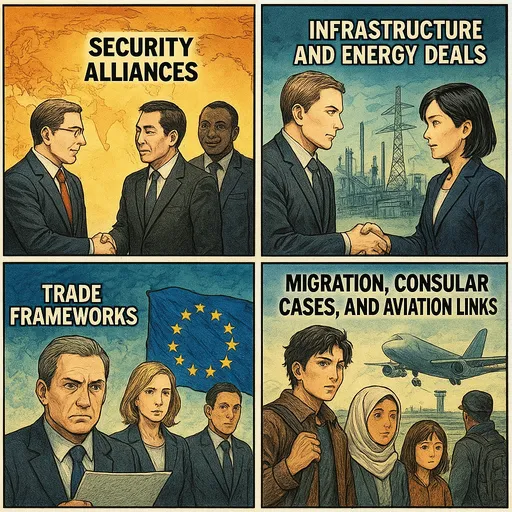
Recent reporting shows a burst of bilateral agreements and diplomatic engagements spanning the Pacific, Europe, Central Asia, Africa and the Americas. Major powers and regional partners are combining security alliances, infrastructure and energy deals, and trade frameworks to consolidate influence and respond to economic and climate needs. Simultaneously, Europe is normalizing long-standing border and trade arrangements while tightening oversight on external imports; defence partnerships and missile-cooperation frameworks underscore rising security cooperation. Migration, consular cases and aviation links also figure prominently, reflecting how practical issues accompany high-level pacts across diverse regions.
Australia and close partners present a narrative of deepening strategic and economic engagement across the Indo‑Pacific, promoting security frameworks and development programs. Canberra highlights alliances, trade and capacity building to bolster regional resilience and influence.
China frames bilateral projects as green-energy and infrastructure cooperation that strengthen long-term ties with small states and African partners. Beijing emphasizes resilience, shared development and historical friendship as the basis for these deals.
European institutions and EU member states foreground regulatory reform, border normalization and coordinated foreign-policy responses, including trade oversight and settlement-related measures. Brussels and partner governments stress legal and political frameworks to stabilize regional relations and rebalance trade exposure.
Sources around the negotiations present the Rome talks as a US‑brokered effort to operationalize a framework accord that could reduce tensions and improve security on the ground. Diplomatic actors emphasize cautious progress contingent on mutual confidence and external guarantees.
Central Asian governments frame recent encounters as efforts to strengthen inter‑state ties, parliamentary links, border coordination and transport links across the region. Officials stress historical friendship, practical cooperation and expanding civil and economic connectivity as stabilizing factors.
African and partner-state reports emphasize deals on minerals, power, IP cooperation and development finance as measures to secure investment and build infrastructure. Leaders portray these pacts as essential to industrial policy, supply‑chain security and regional development goals.
Small Pacific states and their partners highlight diverse bilateral support—funding, healthcare upgrades and institutional linkages—to advance local infrastructure and services. Donors and island governments present these arrangements as practical investments in livelihoods and connectivity.
Regional actors stress targeted cooperation—trade, five‑year agreements and resumed diplomatic ties—to deepen economic integration and address shared priorities. Caribbean and Latin American sources highlight tourism, cultural links and market access as immediate benefits.
Airlines and governments present route expansions and aviation partnerships as practical ways to boost tourism, trade and regional integration. Improved flight links are portrayed as low‑cost, high‑impact measures to connect markets and people.
States frame recent pacts and pledges as efforts to strengthen deterrence, interoperability and regional security arrangements amid persistent tensions. Defence diplomacy ranges from missile‑interception frameworks to new military partnerships and debates over basing and cost‑sharing.
Governments emphasize concluding trade deals and adjusting regulatory frameworks to enhance market access, address unfair competition and meet trade targets. Bilateral and multilateral negotiations are presented as central to economic diversification and industrial policy.
Reports highlight bilateral arrangements and controversies over deportations, temporary third‑country transfers, citizenship‑by‑investment and labour mobility as pressing diplomatic and human‑rights issues. Governments and civil society frame responses around legal safeguards, consular protection and security concerns.
Bilateral cultural and development initiatives are showcased as soft‑power diplomacy that cements historical and religious ties, while separate South Asian entries underline contestation over shared resources. Countries present such gestures as confidence‑building even as transboundary disputes persist.