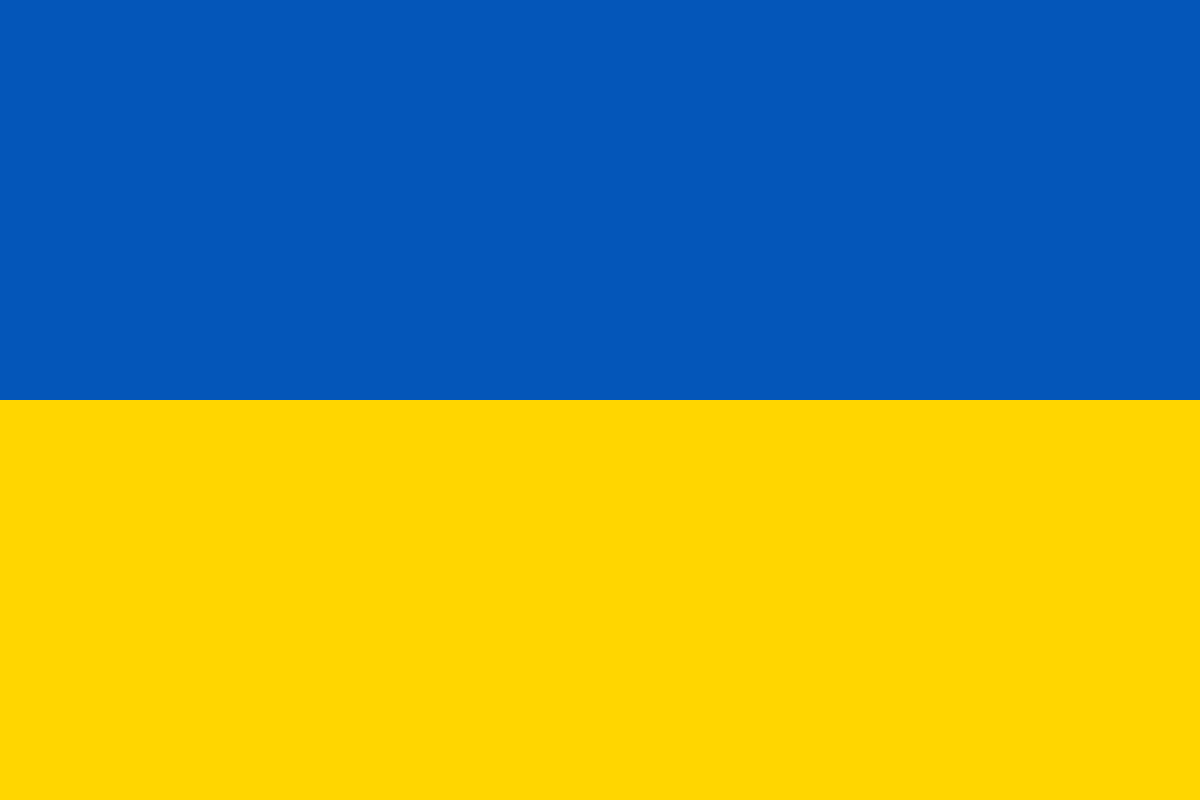

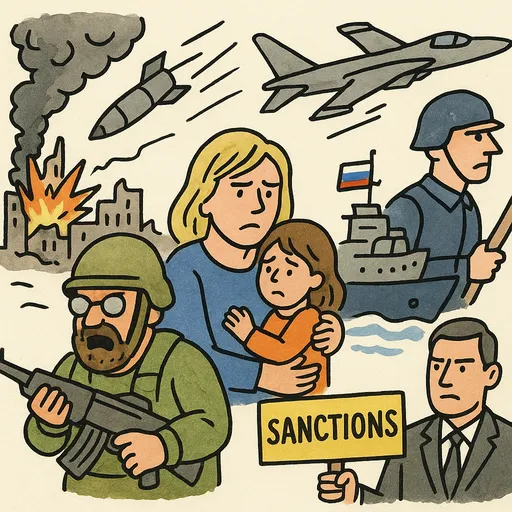
Reporting across countries shows an intensification of Russia–Ukraine hostilities with heavy tolls on civilians and recurrent strikes on cities, ports and merchant vessels. Maritime and Azov Sea operations are disrupting shipping and prompting reciprocal measures, while NATO and regional air forces remain on high alert after multiple intercepts and border incidents. Western states display unified deterrence through parades, joint exercises and a push for tougher sanctions, even as some governments debate transparency and coalition membership. Parallel concerns about covert operations, foreign recruitment, espionage and information warfare underline the conflict’s widening regional and global repercussions.
Multiple outlets emphasize the human cost of intensified Russian strikes and the rising civilian death toll, citing monitoring groups and on-the-ground reports. These pieces frame the conflict as producing worsening humanitarian conditions and call for accountability and aid.
Reporting from diverse sources highlights the Black Sea and Sea of Azov as active battlefronts where strikes, ship sinkings and suspended maritime traffic are disrupting trade and killing seafarers. The pieces stress the strategic importance of naval corridors and the escalating maritime contest between Russia and Ukraine.
Baltic and regional outlets report NATO and national air forces scrambling to intercept Russian reconnaissance flights and noting unusual border drills, portraying these events as part of persistent Russian probing. The perspective underscores allied readiness and concern over Moscow’s military activities near NATO airspace.
European coverage frames high-profile military parades, joint drills and new defense pacts as deliberate signals of unity and deterrence in support of Ukraine. These articles view public displays and collaborative initiatives as intended to reassure partners and warn Moscow.
Reporting from transatlantic sources highlights legislative momentum for tougher Russia sanctions, with proposals tied to oil imports and other economic levers. These pieces present sanctions as a central non‑military tool to pressure Moscow and shape global responses.
Several national reports focus on political decisions at home — from court orders to declassify military aid to government withdrawals from support coalitions — reflecting domestic debates over assistance to Ukraine. The coverage highlights how internal politics shape each country’s stance on the conflict.
Regional reporting examines allegations and investigations into recruitment of foreign fighters for Russia and the role of Russian paramilitary allies abroad. The perspective raises concerns about transnational networks, legal probes, and Moscow’s influence beyond the immediate battlefield.
Several pieces document or analyze Ukrainian drone and sabotage operations reaching into Russian territory and naval actions against Russian vessels, presenting them as escalation or retaliation with strategic aims. The viewpoint highlights the widening geographic scope of kinetic operations and the risks of further escalation.
Analyses and cultural pieces describe how propaganda, espionage and viral media shape perceptions of the war, from satirical takes to reported Russian intelligence activity abroad. The coverage treats information operations as a key battlefield that affects international opinion and policy.
Commentary and expert analysis probe Russian vulnerabilities, shifts in Kremlin plans, and the wider geopolitical signals from actors like China, framing possible future scenarios. These articles aim to assess long‑term implications for the conflict and allied strategy.
Some reports focus on social unrest, draft protests and regional diplomatic tensions linked to the war, as well as concerns about pressure on neighboring Belarus. The perspective emphasizes how the conflict strains domestic cohesion in Ukraine and creates spillover risks for adjacent states.