

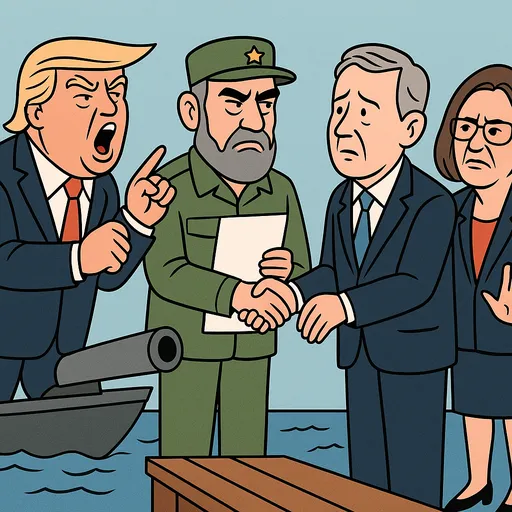
Across these pieces, commentators from multiple countries argue that recent U.S. conduct — from personnel purges and strategic blunders to public gaffes and sharp rhetoric — has eroded traditional diplomacy and diminished American credibility. Several articles link domestic political signaling and partisan posturing to real diplomatic costs, especially in relations with allies and with Cuba. Cuban sources frame U.S. policy as long-standing coercive gunboat diplomacy and criticize prominent U.S. politicians for ignoring historical context. The combined critiques call for a return to professional, multilateral diplomacy to repair alliances and stabilize regional perceptions of the United States.
This perspective argues that personnel changes and policy shifts at the State Department have hollowed out traditional diplomatic capacity. It warns that undermining professional diplomacy weakens alliances and U.S. global influence.
The Swedish critique emphasizes a pattern of strategic errors that damage credibility with partners and destabilize regions. It calls for policy adjustments to restore trust and effectiveness in U.S. foreign policy.
This report highlights U.S. Democratic lawmakers' stark language comparing Cuba to a 'silent Gaza,' signaling heightened political rhetoric with potential diplomatic repercussions. It suggests such framing could complicate bilateral relations and provoke international concern.
The Colombian analysis links the global decline in America's image to diplomatic tensions, polarization, and messaging from U.S. leadership. It stresses that reputational damage has tangible effects on influence in regions like Latin America.
From an Egyptian viewpoint, repeated public misstatements about allies — exemplified by errors concerning Japan — undermine the seriousness of U.S. diplomacy. Such verbal flubs are seen as damaging to bilateral trust and international perceptions.
Cuban sources portray U.S. policy as a consistent, coercive 'gunboat' approach driven by entrenched power structures and criticize politicians who ignore historical context. They call for multilateralism, principled diplomacy, and reflection on past U.S. actions toward Cuba.